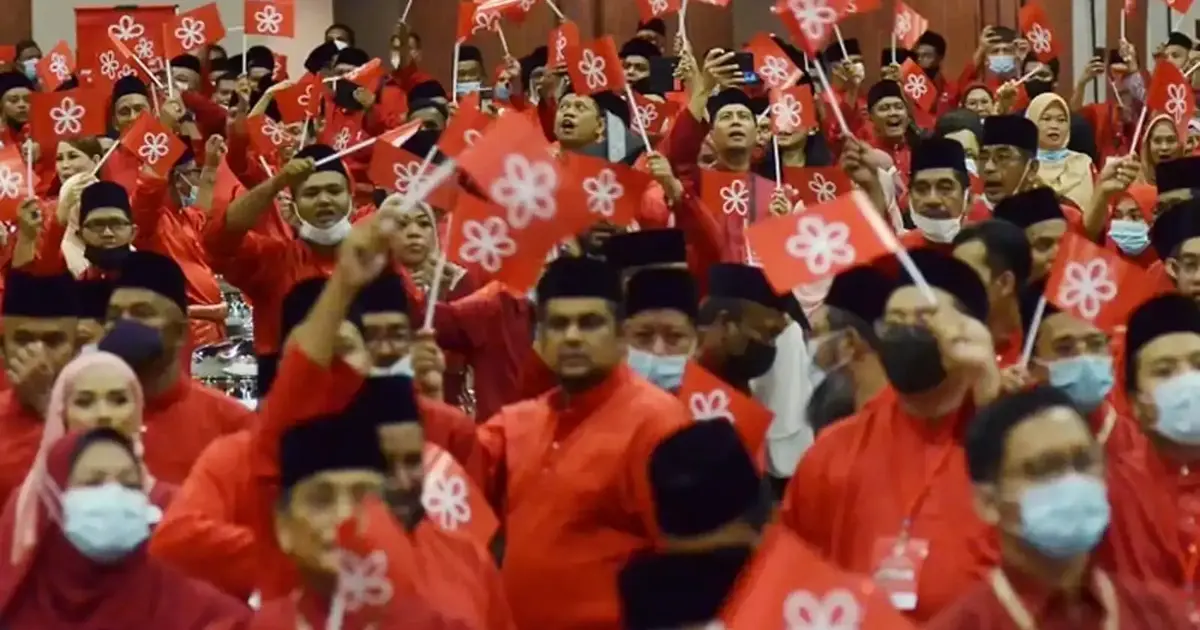
Friction within Malaysia's Perikatan Nasional coalition deepened on Wednesday when PAS treasurer Iskandar Abdul Samad publicly questioned whether Bersatu can realistically sustain its participation in the political alliance, pointing to what he characterised as an increasingly unsustainable position for the smaller party.
Iskandar's comments strike at the heart of persistent tensions that have periodically threatened the stability of the Perikatan Nasional arrangement. The coalition, which emerged as a significant political force over recent years, has served as a counterweight to the ruling Pakatan Harapan government. However, the bloc has grappled with internal divisions between its constituent parties—primarily PAS and Bersatu—that have occasionally overshadowed its legislative effectiveness and public messaging.
Bersatu, which commands a considerably smaller parliamentary footprint compared to PAS, has found itself in an increasingly precarious position within the coalition framework. The party's relevance and influence have come under scrutiny, particularly as demographic and political shifts reshape the electoral landscape. Iskandar's intervention suggests that influential figures within PAS view Bersatu's continued membership in Perikatan Nasional as creating operational difficulties rather than advancing shared strategic objectives.
The challenge confronting Bersatu is multifaceted. Beyond simple arithmetic in terms of seat counts, the party faces questions about its distinct political identity within an alliance dominated by PAS's Islamic agenda and organisational machinery. For Malaysian coalition politics, where smaller partners often struggle to maintain visibility and policy influence, Bersatu's situation represents a recurring dilemma: how to justify participation when leverage appears diminished and public distinctiveness fades.
PAS, as the dominant force within Perikatan Nasional, holds substantially greater sway over the coalition's direction and public face. This asymmetry has created friction on occasion, with Bersatu occasionally seeking to carve out independent positions on certain policy matters. These efforts at differentiation, however, risk reinforcing perceptions of an incoherent coalition and may actually undermine the bloc's collective electoral appeal.
The political context in which Iskandar voiced these concerns carries particular significance. Malaysia's electoral environment remains volatile, with voters increasingly unpredictable in their behaviour at both federal and state levels. Coalition stability has become paramount for opposition groups seeking to present credible governing alternatives. When senior figures from one coalition partner question another's continued viability, such statements inevitably trigger speculation about restructuring, realignment, or potential defections.
For Bersatu specifically, the options appear constrained. Remaining within Perikatan Nasional offers institutional legitimacy and shared resources, yet perpetual marginality within the alliance may frustrate party ambitions. Departing the coalition carries risks of further irrelevance and the loss of whatever influence the party currently exercises. These are the calculations that will now occupy Bersatu leadership as they respond to PAS's apparent dissatisfaction with their continued participation.
The broader implications extend beyond these two parties. Coalition stability remains central to Malaysia's political balance. Perikatan Nasional's apparent vulnerability invites scrutiny of whether non-Pakatan Harapan opposition elements can genuinely function as unified political blocs, or whether they are fundamentally unstable arrangements held together principally by shared opposition to the government rather than positive programmatic alignment.
Iskandar Abdul Samad's position as PAS treasurer grants his remarks considerable weight within party circles and beyond. Such senior officials do not typically make public statements questioning allied parties without consultation and broad backing from their party leadership. His comments therefore likely reflect considered party sentiment rather than maverick commentary, suggesting this represents a genuine escalation in intra-coalition tensions rather than a passing rhetorical flourish.
The resolution of these coalition dynamics remains unclear. Whether Perikatan Nasional leaders will engage in behind-the-scenes negotiations to shore up the partnership, or whether these tensions will continue surfacing publicly, will shape opposition politics in coming months. For Bersatu, the challenge is demonstrating sufficient independent relevance that remaining in the alliance makes strategic sense, rather than simply accepting a subordinate position that constrains party development and electoral prospects.
Malaysian observers will watch closely for Bersatu's response to PAS's implicit ultimatum. The party's reaction—whether defensive and reassertive or conciliatory and accommodating—will signal whether Perikatan Nasional can overcome this challenge or whether more fundamental structural problems with the coalition arrangement are now becoming apparent. Given the stakes involved in opposition coalition politics, expect both parties to engage in careful calculation before making further public moves that might accelerate any potential unravelling of their political partnership.

%22%2F%3E%3C%2Fpattern%3E%3C%2Fdefs%3E%3Crect%20width%3D%22100%25%22%20height%3D%22100%25%22%20fill%3D%22url(%23ph40buhg)%22%2F%3E%3Crect%20width%3D%22100%25%22%20height%3D%22100%25%22%20fill%3D%22url(%23ph40buhp)%22%2F%3E%3Ctext%20x%3D%2250%25%22%20y%3D%2250%25%22%20text-anchor%3D%22middle%22%20dominant-baseline%3D%22central%22%20fill%3D%22rgba(255%2C255%2C255%2C0.95)%22%20font-family%3D%22Georgia%2C%20'Times%20New%20Roman'%2C%20serif%22%20font-weight%3D%22700%22%20font-size%3D%22320%22%20letter-spacing%3D%22-0.02em%22%3EGRS%3C%2Ftext%3E%3C%2Fsvg%3E)