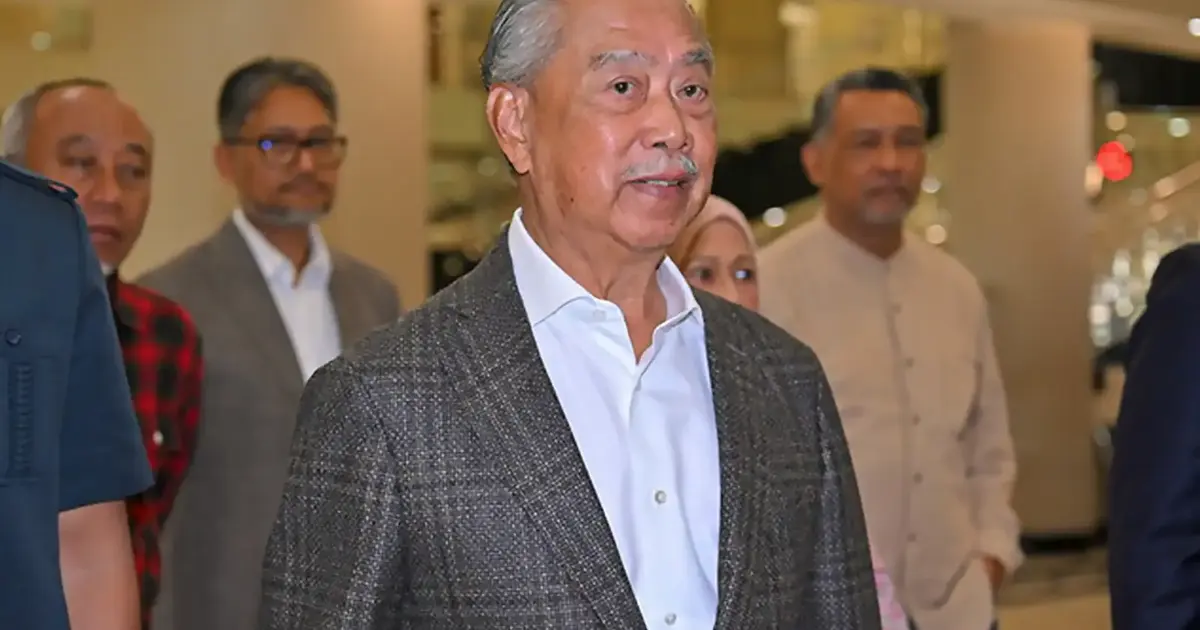
The High Court has dealt a significant legal setback to Bersatu, rejecting the party's attempt to lift restrictions on its frozen bank accounts at CIMB and AmBank. In its judgment, the court determined that Bersatu had not successfully demonstrated that the Malaysian Anti-Corruption Commission (MACC) exceeded its legal powers or acted improperly in imposing the account freeze.
This ruling carries substantial implications for the political party, which has found itself embroiled in financial disputes amid ongoing investigations into its activities. The court's decision underscores the difficulty of challenging regulatory actions by enforcement agencies, particularly when those agencies can point to legitimate investigative grounds. For Bersatu, the loss means continued restrictions on accessing funds held in these accounts, further constraining the party's operational capacity during a critical period of political manoeuvring in Malaysian politics.
The MACC's decision to freeze the accounts appears to have been tied to investigations the anti-corruption body was conducting. Such asset freezes are typically employed as a precautionary measure during investigations into suspected financial wrongdoing, intended to prevent the movement or disposal of funds that may be relevant to an inquiry. The High Court's acceptance of the MACC's justification suggests that the commission successfully argued that sufficient grounds existed for the freeze and that it had acted within its statutory authority.
For Malaysian readers following corporate governance and regulatory enforcement, this case illustrates how courts typically defer to the substantive judgments of specialised enforcement agencies. Unless an applicant can produce compelling evidence of procedural unfairness, abuse of discretion, or clear violation of established legal principles, courts are reluctant to interfere with executive action by bodies tasked with investigating corruption and financial misconduct. Bersatu's failure to meet this threshold reveals the steep evidentiary burden placed on organisations seeking to overturn official regulatory decisions.
The frozen accounts at CIMB and AmBank represent a significant portion of Bersatu's accessible capital. Political parties in Malaysia rely on such accounts to fund operations, staff salaries, campaign activities, and organisational infrastructure. The prolonged freeze therefore has practical consequences beyond the immediate financial impact, affecting the party's ability to function as a cohesive political entity and respond to opportunities or challenges in the electoral landscape. This constraint may influence Bersatu's strategic positioning ahead of potential general elections.
Within the context of Malaysian party politics, Bersatu has already experienced considerable turbulence. The party's earlier cycles of internal conflict, leadership transitions, and shifting coalition alignments have left it navigating a complex political environment. The addition of financial restrictions from regulatory enforcement compounds these organisational challenges, potentially weakening its negotiating position within any broader political coalition and limiting its capacity to maintain party discipline and attract or retain senior political figures.
The MACC investigation underlying the freeze remains ongoing, and the High Court's ruling does not necessarily indicate the conclusion of that inquiry. Should the commission's investigation eventually result in formal charges or findings against the party or its officials, the frozen accounts may remain restricted as part of asset recovery procedures or conditions of legal proceedings. This uncertainty creates a prolonged period of operational disruption for Bersatu, extending beyond the immediate financial freeze to encompass planning and strategic decision-making.
From a regulatory perspective, the judgment affirms that Malaysian enforcement agencies possess substantial latitude in deploying account freezes as an investigative tool. This reinforces the MACC's position as a powerful institution capable of significantly constraining the operations of entities under investigation. While such powers are theoretically necessary to prevent destruction of evidence or dissipation of potentially tainted assets, they also concentrate considerable discretionary authority in a single institution, raising questions about oversight and appeals mechanisms that Malaysian civil society and legal observers continue to debate.
The ruling also has broader implications for how political parties structure their financial operations and maintain liquidity reserves. The incident may prompt other Malaysian political organisations to diversify their banking relationships, maintain contingency funds in alternative forms, or establish clearer governance protocols designed to demonstrate financial propriety to regulators. Transparency in party financing becomes increasingly important in an environment where investigation and asset freezes can rapidly deplete operational capacity.
For Bersatu specifically, the court's decision forces the party to exhaust remaining legal remedies or accept the account restrictions as a prolonged feature of its operational landscape. The party may consider seeking leave to appeal to a higher court, though such an appeal would face similarly demanding evidentiary requirements. Alternatively, Bersatu might focus efforts on demonstrating to the MACC that the investigative basis for the freeze has been satisfied, potentially leading to voluntary lifting of restrictions as investigations conclude.
The High Court's judgment also signals to other Malaysian political entities that challenging regulatory enforcement actions requires substantive proof of misconduct by the enforcement agency itself, not merely assertion that restrictions are inconvenient or damaging. This raises the bar for political parties seeking judicial intervention in their disputes with investigatory bodies, reinforcing the courts' general reluctance to second-guess the professional judgment of specialised enforcement institutions absent clear evidence of overreach.

%22%2F%3E%3C%2Fpattern%3E%3C%2Fdefs%3E%3Crect%20width%3D%22100%25%22%20height%3D%22100%25%22%20fill%3D%22url(%23ph40buhg)%22%2F%3E%3Crect%20width%3D%22100%25%22%20height%3D%22100%25%22%20fill%3D%22url(%23ph40buhp)%22%2F%3E%3Ctext%20x%3D%2250%25%22%20y%3D%2250%25%22%20text-anchor%3D%22middle%22%20dominant-baseline%3D%22central%22%20fill%3D%22rgba(255%2C255%2C255%2C0.95)%22%20font-family%3D%22Georgia%2C%20'Times%20New%20Roman'%2C%20serif%22%20font-weight%3D%22700%22%20font-size%3D%22320%22%20letter-spacing%3D%22-0.02em%22%3EGRS%3C%2Ftext%3E%3C%2Fsvg%3E)