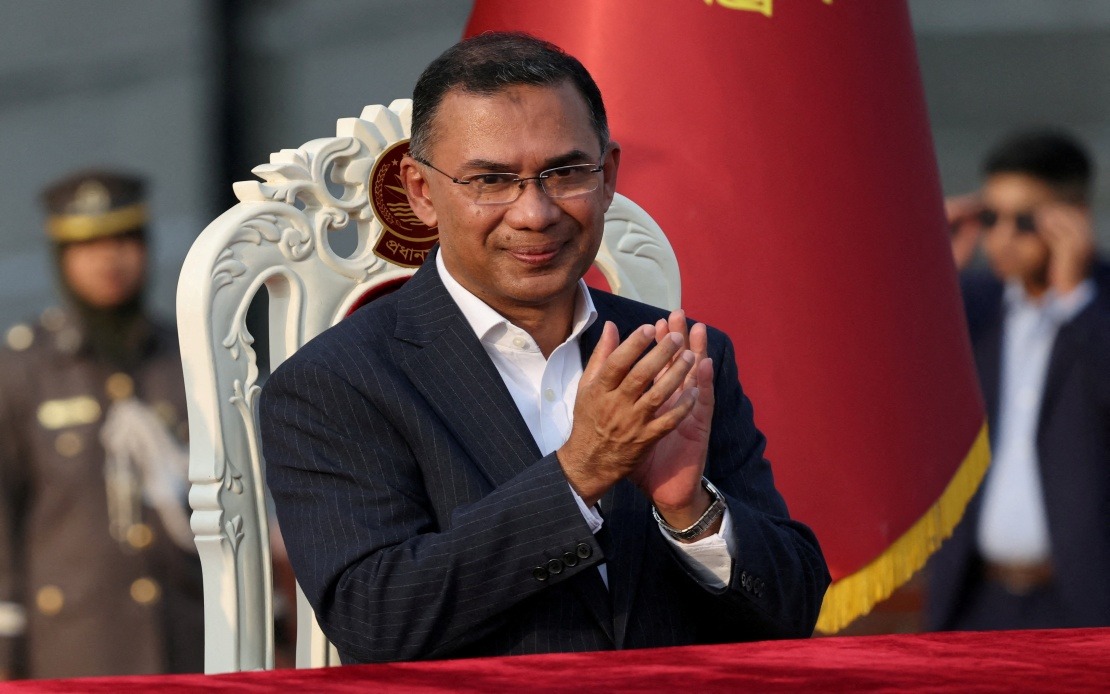
Bangladesh Prime Minister Tarique Rahman will arrive in Malaysia on June 22 for an official state visit at the invitation of Prime Minister Datuk Seri Anwar Ibrahim. The trip represents a significant diplomatic milestone, serving as Rahman's inaugural bilateral visit abroad since he assumed the highest office in Bangladesh four months earlier, in February 2026. The Malaysian government has indicated that the visit will focus on deepening bilateral partnerships and identifying fresh opportunities for cooperation in areas of strategic importance to both nations.
The itinerary reflects the ceremonial and substantive weight attached to this engagement. Upon arrival, Rahman will be received with a full official welcoming ceremony at the Perdana Putra Complex, where he will hold a formal bilateral meeting with Anwar. The protocol surrounding the reception underscores Malaysia's commitment to honouring the Bangladesh leadership and acknowledges the importance of relations between Kuala Lumpur and Dhaka in the broader South Asian and Southeast Asian contexts.
During their talks, both leaders intend to comprehensively review the trajectory of Malaysia–Bangladesh relations and explore concrete avenues for deepening collaboration. The agreed priority sectors span a diverse range of economic and technological domains. Trade and investment feature prominently, reflecting the substantial commercial ties already in place. Semiconductor manufacturing and energy cooperation have emerged as growth areas with considerable potential for expansion. Human resource management, particularly the mobility of skilled labour between the two countries, remains an ongoing concern. Additionally, agriculture and education are viewed as sectors where mutual benefits can be realised through structured partnership arrangements.
The visit will culminate in the signing of several binding agreements. A memorandum of understanding on cultural cooperation will be executed, seeking to broaden people-to-people exchanges and preserve historical and civilisational links between Bangladesh and Malaysia. Two separate exchanges of notes will also take place: one addressing counter-terrorism research collaboration and another focused on investment promotion and facilitation. These instruments demonstrate a comprehensive approach to bilateral engagement that spans security, cultural, economic, and institutional dimensions.
Prime Minister Anwar will host an official luncheon in honour of his Bangladeshi counterpart, providing an informal setting for further dialogue. Rahman's delegation will include his spouse Dr Zubaida Rahman, Bangladesh Foreign Minister Dr Khalilur Rahman, and other senior government representatives, signalling the high-level nature of the mission and Bangladesh's serious intent regarding the bilateral partnership.
The bilateral relationship is anchored in substantial trade flows. In 2025, total merchandise trade between Malaysia and Bangladesh reached RM12.18 billion, equivalent to approximately US$2.84 billion. This volume positions Bangladesh as Malaysia's 28th largest trading partner globally, a ranking that underscores the significance of this bilateral economic relationship. Within South Asia specifically, Bangladesh ranks second only to India across multiple metrics: it is Malaysia's second largest export destination, second largest source of imports, and second largest trading partner in the region.
Malaysia's export profile to Bangladesh is heavily concentrated in energy products. Malaysian exports totalled RM10.08 billion in 2025, with petroleum products dominating the commodity mix. This concentration reflects Bangladesh's substantial energy requirements as it pursues rapid industrialisation and infrastructure development. Diversifying the export base—extending beyond hydrocarbons into higher-value manufacturing, services, and technology sectors—presents a strategic opportunity for Malaysian enterprises and could feature in discussions regarding bilateral economic expansion.
Bangladesh's exports to Malaysia, valued at RM2.10 billion in 2025, are dominated by textiles, apparel, and footwear products. These sectors represent areas where Bangladesh possesses competitive advantages rooted in labour-intensive manufacturing capabilities and established supply chain infrastructure. For Malaysia, Bangladesh serves as an important source of processed textile goods and clothing, complementing domestic production and supporting regional trade networks. The relatively modest import volume compared to exports suggests potential headroom for increased purchasing of Bangladeshi products, particularly in light of growing regional labour costs.
The timing of this visit reflects broader regional dynamics. Bangladesh has experienced significant political and institutional transitions in recent years, with Rahman's assumption of the premiership representing a new chapter in the country's governance narrative. His selection of Malaysia for his first official bilateral engagement carries diplomatic weight, signalling that Dhaka views the relationship with Kuala Lumpur as sufficiently important to prioritise early in his tenure. This gesture also reflects Malaysia's standing as a trusted partner and potential model for development within the South Asian region.
For Malaysia, the visit presents an opportunity to strengthen its influence and engagement across South Asia at a moment when regional dynamics are shifting. Enhanced ties with Bangladesh can contribute to Malaysia's positioning as a bridge between Southeast Asia and South Asia, facilitating knowledge transfer, investment flows, and security cooperation. The agreements on counter-terrorism research are particularly significant given the transnational security challenges confronting both nations and the broader region.
The cooperation frameworks being formalised during this visit align with medium-term strategic priorities articulated by both governments. Bangladesh's ambitious development agenda—targeting rapid industrialisation, infrastructure modernisation, and technological advancement—creates natural synergies with Malaysia's technological capabilities and investment expertise. Conversely, Bangladesh's manufacturing sector and demographic advantages offer complementary opportunities for Malaysian investors seeking to diversify their regional exposure.
Economic integration between the two countries could deepen through structured mechanisms such as joint ventures in semiconductor assembly and testing, collaborative investment in renewable energy projects, and expanded educational exchanges. The cultural cooperation agreement may facilitate greater tourism flows in both directions and support heritage conservation initiatives of mutual interest. Enhanced institutional linkages between research bodies, universities, and government agencies can multiply the returns on bilateral engagement.
As both nations navigate a rapidly evolving regional and global environment characterised by geopolitical competition, climate change imperatives, and technological disruption, the relationship offers a foundation for navigating shared challenges. The Rahman visit to Malaysia thus represents not merely a ceremonial occasion but a substantive effort to anchor bilateral relations in concrete partnerships and mutual commitment.