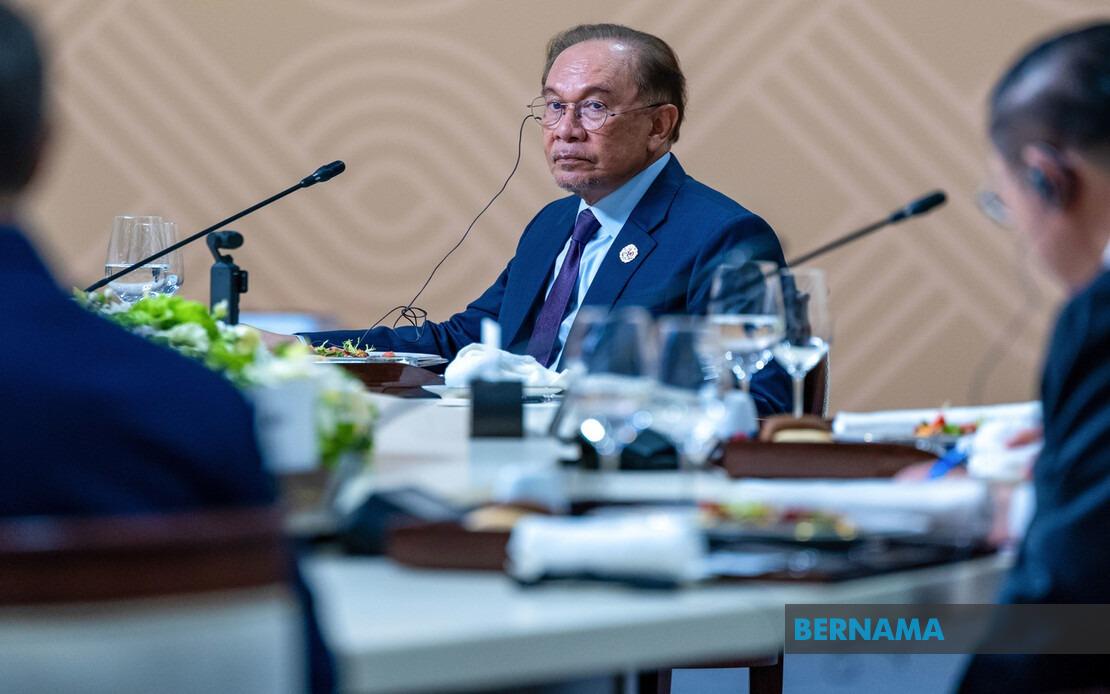
Prime Minister Datuk Seri Anwar Ibrahim has made a case for deeper integration between ASEAN and the Shanghai Cooperation Organisation, arguing that both regional groupings should leverage their combined strengths to address security threats and energy challenges that transcend national borders. Speaking during the ASEAN-Russia Commemorative Summit in Kazan, the Russian city serving as the capital of Tatarstan, Anwar contended that pooling resources represents the only viable path toward effectively managing issues that individual nations struggle to control alone.
The foundation for expanded cooperation already exists, Anwar noted, pointing to a memorandum of understanding signed in 2005 that commits both organisations to joint efforts in counter-terrorism, drug control, money laundering prevention, and economic and energy collaboration. Rather than establishing entirely new frameworks, Anwar suggested that ASEAN and the SCO should systematically build upon this existing agreement by identifying specific priority areas where concrete results can be delivered within realistic timeframes. This pragmatic approach reflects a broader regional trend toward focusing multilateral initiatives on measurable outcomes rather than aspirational declarations.
The transnational nature of contemporary criminal enterprises poses perhaps the most pressing challenge requiring immediate cooperative action. Anwar highlighted how online scams, illicit financial flows, and human trafficking operations now operate across borders with alarming speed, outpacing the response capabilities of individual nations relying solely on domestic enforcement mechanisms. Intelligence sharing and capacity-building initiatives would enable member states to respond more rapidly and effectively to these evolving threats. The digital dimension of modern crime means that traditional policing approaches prove inadequate without real-time information exchange and coordinated enforcement strategies spanning multiple jurisdictions.
Energy cooperation represents another critical domain where the SCO membership structure creates exceptional opportunities for ASEAN engagement. The Shanghai Cooperation Organisation brings together major energy-producing nations alongside countries developing sophisticated energy technologies, creating a unique ecosystem for practical collaboration. Anwar, who also holds the Finance Minister portfolio, emphasised that this combination of production capacity and technological expertise opens genuine possibilities for advancing energy security while simultaneously accelerating transitions toward cleaner energy sources. The geopolitical importance of energy stability in Southeast Asia, where supply chain vulnerabilities remain significant, underscores why Malaysian engagement with SCO energy initiatives carries strategic weight.
Malaysia's approach to energy cooperation extends beyond traditional fossil fuel considerations, encompassing a broader vision of sustainable infrastructure development. Anwar outlined specific priority areas including energy efficiency improvements, grid modernisation and reliability, liquefied natural gas and conventional gas systems, renewable energy integration, and knowledge exchanges regarding safety protocols and system resilience. This comprehensive framework demonstrates how ASEAN nations can benefit from SCO expertise while contributing their own experience in managing tropical climates and archipelagic energy distribution challenges. The emphasis on technology transfer and practical knowledge-sharing reflects recognition that infrastructure modernisation requires not merely capital investment but also human capacity development.
The Shanghai Cooperation Organisation itself represents a significant geopolitical player in its own right, comprising ten full member states including China, Russia, India, Iran, and Central Asian republics, along with two observer states. The organisation's evolution since its 2001 establishment from a primarily security-focused entity toward a comprehensive political, economic, and security platform demonstrates how regional groupings can adapt to serve multiple objectives. For ASEAN, which maintains its own distinct identity and decision-making processes, strategic engagement with SCO mechanisms offers pathways to influence broader Eurasian developments while maintaining the association's cherished operational independence.
Beyond the SCO framework, Anwar advocated for similarly structured approaches to strengthening ASEAN's relationship with the Eurasian Economic Union, a Russia-led trade bloc that encompasses Belarus, Kazakhstan, Kyrgyzstan, Russia, and Tajikistan. Existing agreements between ASEAN and the EAEU provide institutional foundations that remain underutilised, according to the Prime Minister's assessment. He argued that activating these frameworks through enhanced business engagement, expanded private-sector dialogue, and targeted commercial initiatives could generate tangible benefits for enterprises and workers throughout both regions. This strategic positioning reflects Malaysia's broader commitment to maintaining balanced relationships across Eurasian and Asian geographies.
Private-sector mobilisation emerges as essential to translating political commitments into commercial reality. Anwar proposed that businesses from ASEAN and the EAEU should interact more frequently, with enhanced participation in each other's major economic forums. Events such as the Eastern Economic Forum held annually in Russia's Far East and the St Petersburg International Economic Forum represent platforms where informal networking can catalyse substantive business relationships. For Malaysian entrepreneurs, such engagement expands market access possibilities and creates opportunities for identifying technology partnerships and joint venture prospects. The emphasis on private-sector leadership reflects modern understanding that government facilitation alone proves insufficient without active business participation.
Smaller enterprises deserve particular attention within these expanded cooperative frameworks, as they typically lack the resources and market intelligence necessary to navigate regional trade opportunities independently. Anwar identified three critical support mechanisms: ensuring adequate market access through reduced regulatory barriers, facilitating technology transfer, and building workforce skills for utilising imported technologies effectively. This focus on small and medium enterprises represents acknowledgment that regional integration benefits extending beyond multinational corporations require deliberate policy attention and institutional support. Southeast Asian economies, where small businesses represent significant employment sources, stand to gain substantially from capacity-building initiatives targeting this crucial sector.
Emerging economic frontiers warrant equivalent attention to traditional cooperation domains. Anwar highlighted the digital economy, artificial intelligence development, cybersecurity infrastructure, and food security as areas where ASEAN and EAEU interests increasingly converge. These sectors carry heightened strategic importance given accelerating technological disruption and climate-related risks affecting agricultural productivity across both regions. Collaborative initiatives in these domains would enable knowledge-sharing regarding regulatory frameworks, technical standards, and best practices while positioning ASEAN as an active participant in shaping emerging technologies rather than merely adopting external innovations. The intersection of these issues with Malaysia's own national development priorities suggests multiple channels through which regional cooperation can advance domestic objectives.
Anwar's visit to Kazan for the ASEAN-Russia Commemorative Summit demonstrates Malaysia's sustained commitment to strengthening Southeast Asia's engagement with Eurasian powers. This diplomatic initiative reflects broader regional strategy acknowledging that ASEAN's future prosperity depends partly on cultivating robust partnerships throughout Asia and beyond. By articulating concrete proposals for security and energy cooperation rather than issuing vague solidarity statements, Anwar sought to translate diplomatic gatherings into frameworks generating tangible benefits for citizens and businesses throughout participating nations. The emphasis on actionable priorities within defined timeframes suggests recognition that multilateral organisations succeed or fail based on their capacity to deliver measurable results, a lesson increasingly shaping how regional powers structure their collaborative initiatives.

%22%2F%3E%3C%2Fpattern%3E%3C%2Fdefs%3E%3Crect%20width%3D%22100%25%22%20height%3D%22100%25%22%20fill%3D%22url(%23ph40buhg)%22%2F%3E%3Crect%20width%3D%22100%25%22%20height%3D%22100%25%22%20fill%3D%22url(%23ph40buhp)%22%2F%3E%3Ctext%20x%3D%2250%25%22%20y%3D%2250%25%22%20text-anchor%3D%22middle%22%20dominant-baseline%3D%22central%22%20fill%3D%22rgba(255%2C255%2C255%2C0.95)%22%20font-family%3D%22Georgia%2C%20'Times%20New%20Roman'%2C%20serif%22%20font-weight%3D%22700%22%20font-size%3D%22320%22%20letter-spacing%3D%22-0.02em%22%3EGRS%3C%2Ftext%3E%3C%2Fsvg%3E)