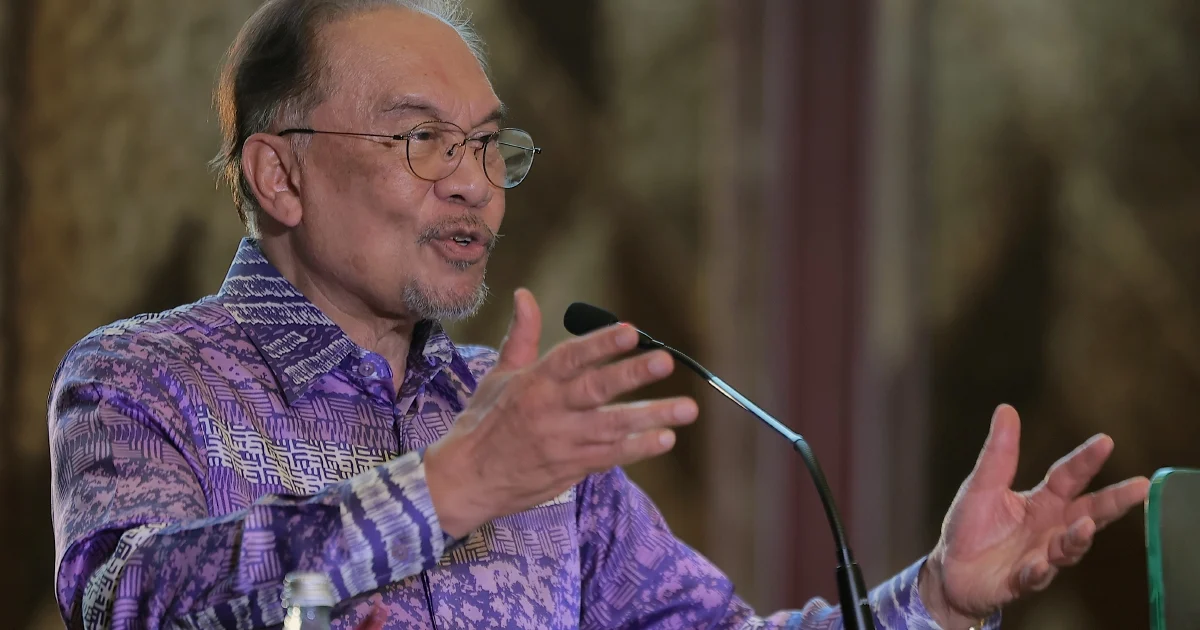
Prime Minister Datuk Seri Anwar Ibrahim is set to undertake a carefully calibrated diplomatic mission to Kazan, Russia's historic Volga region metropolis, beginning June 17. During the two-day working visit, Anwar will hold substantive discussions with Rustam Minnikhanov, the Rais (president) of the Republic of Tatarstan, signalling Malaysia's commitment to fostering deeper engagement with key regional players within the Russian Federation. The timing and location of this visit underscore the strategic importance both nations place on their bilateral relationship and the broader geopolitical landscape of Southeast Asia.
Russia's federal structure means that engagement with regional leaders such as Minnikhanov carries significant diplomatic weight. Tatarstan, historically one of Russia's most economically dynamic regions and a centre of Turkic-Muslim cultural influence, serves as a natural bridge between Malaysia and Moscow. The republican government in Kazan has longstanding commercial interests spanning energy, technology, and logistics—sectors where Malaysia possesses complementary strengths and growing expertise. By directing high-level attention to Tatarstan, Anwar demonstrates recognition of regional diversity within the Russian state and indicates Malaysian interest in diversifying partnership avenues beyond the federal capital.
The visit arrives at a period of considerable geopolitical flux. Malaysia, as chair of ASEAN in 2024, bears particular responsibility for maintaining the bloc's strategic autonomy and balanced engagement with major powers. Russia, despite international sanctions and diplomatic isolation from the West, remains a significant actor in global energy markets, nuclear technology, and security affairs. The proposed discussions between Anwar and Minnikhanov will likely explore mechanisms for enhanced cooperation on issues ranging from trade facilitation to people-to-people exchanges, while carefully preserving ASEAN's stated commitment to non-alignment and inclusive multilateralism.
From Malaysia's perspective, strengthening relations with Russia serves multiple strategic objectives. First, it reinforces the principle that ASEAN nations maintain autonomous foreign policies unconstrained by pressure from either Western or Chinese blocs. Malaysian officials have repeatedly emphasised their country's desire to engage all major powers on an equal and dignified basis. A high-profile visit by the Prime Minister to Kazan reaffirms this positioning and signals to Western interlocutors that ASEAN will not voluntarily align itself against Russia or any other power. This stance resonates broadly across Southeast Asia, where most governments harbour deep reservations about Cold War-style confrontation.
The economic dimension of the bilateral engagement warrants particular attention. Although Malaysia and Russia currently maintain modest direct trade volumes, potential exists for expansion in sectors including palm oil and agricultural products, where Malaysia holds competitive advantages. Conversely, Russian expertise in nuclear energy technology and certain defence-related industries could prove valuable as Malaysia pursues strategic infrastructure projects and considers energy diversification beyond fossil fuels. Investment flows in both directions could accelerate if bilateral mechanisms are strengthened and regulatory frameworks clarified through high-level diplomatic channels.
ANWAR's journey to Kazan also carries implications for ASEAN's institutional relationship with Russia. The bloc has long grappled with how to maintain engagement with Moscow while avoiding association with Russian positions that contradict ASEAN's core principles—including respect for national sovereignty and international law. By demonstrating Malaysia's willingness to conduct substantive dialogue with Russian regional leaders, the visit may embolden other Southeast Asian nations to pursue similar initiatives. This incremental deepening of ASEAN-Russia ties could eventually translate into more structured institutional arrangements, whether through expanded dialogue mechanisms or collaborative projects in non-contentious areas such as academic exchange, tourism, and cultural preservation.
Domestically, the mission provides Anwar with an opportunity to showcase his personal diplomatic credentials and his vision of Malaysia as an active regional power capable of engaging productively across the full spectrum of international partners. Coming at a juncture when domestic political considerations invariably intersect with foreign policy priorities, the successful execution of a high-profile international engagement reinforces the Prime Minister's standing as a statesman of regional consequence. Malaysian media coverage and diplomatic briefings surrounding the visit will be monitored closely by regional and international observers assessing the trajectory of Malaysian foreign policy under current leadership.
The two-day format of the visit suggests a structured agenda encompassing both formal bilateral discussions and more informal opportunities for candid dialogue. Minnikhanov, as a seasoned administrator with considerable influence over Tatarstan's internal affairs and representation within Russia's Federal Council, commands respect within Moscow's decision-making circles. His willingness to receive the Malaysian Prime Minister at this level indicates openness on the Russian side toward maintaining and expanding ties with Southeast Asian partners. Such receptiveness reflects broader Russian strategic thinking, which increasingly emphasises cultivation of partnerships in Asia as Western relations remain constrained by sanctions and geopolitical rivalry.
Looking forward, the Kazan visit should be understood as one element within Malaysia's broader strategic recalibration as it confronts a more multipolar international environment. Rather than viewing engagement with Russia as incompatible with relations elsewhere, the Malaysian approach treats such contacts as natural expressions of an independent foreign policy. The visit demonstrates that Southeast Asian nations, and Malaysia in particular, refuse to accept artificial constraints on their diplomatic options. For observers tracking ASEAN's trajectory in an era of great power competition, this mission exemplifies how the bloc's member states continue to navigate complexity through selective engagement, strategic ambiguity, and principled pragmatism.

%22%2F%3E%3C%2Fpattern%3E%3C%2Fdefs%3E%3Crect%20width%3D%22100%25%22%20height%3D%22100%25%22%20fill%3D%22url(%23ph40buhg)%22%2F%3E%3Crect%20width%3D%22100%25%22%20height%3D%22100%25%22%20fill%3D%22url(%23ph40buhp)%22%2F%3E%3Ctext%20x%3D%2250%25%22%20y%3D%2250%25%22%20text-anchor%3D%22middle%22%20dominant-baseline%3D%22central%22%20fill%3D%22rgba(255%2C255%2C255%2C0.95)%22%20font-family%3D%22Georgia%2C%20'Times%20New%20Roman'%2C%20serif%22%20font-weight%3D%22700%22%20font-size%3D%22320%22%20letter-spacing%3D%22-0.02em%22%3EGRS%3C%2Ftext%3E%3C%2Fsvg%3E)