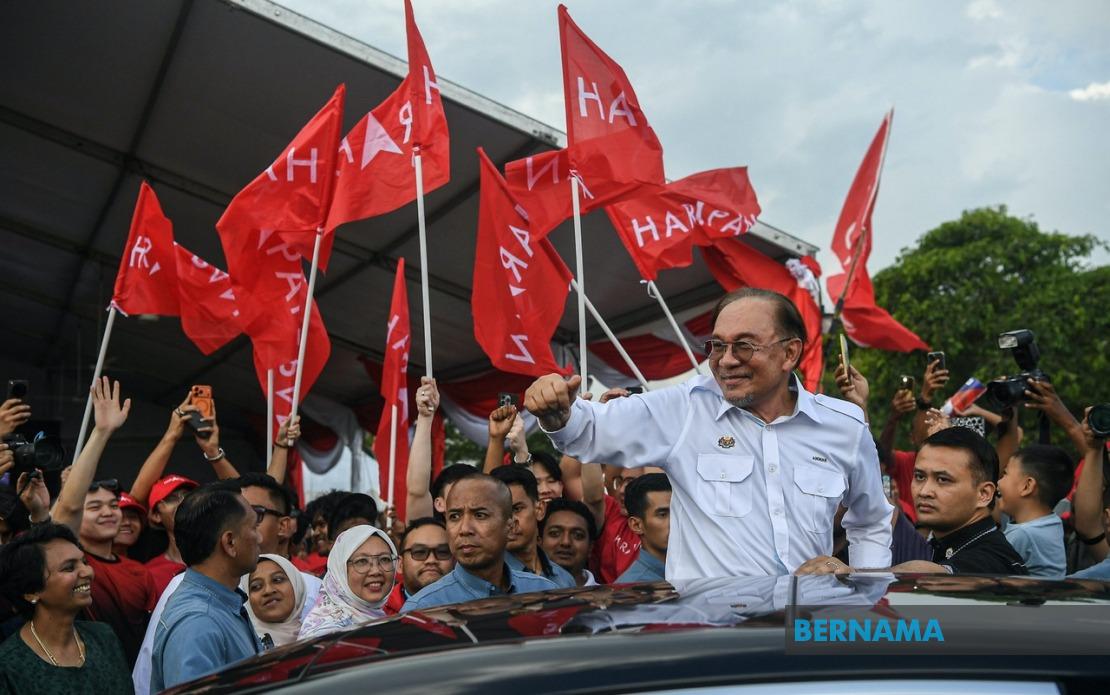
The presence of Prime Minister Datuk Seri Anwar Ibrahim on the campaign trail has injected visible momentum into Pakatan Harapan's push to retain influence in the Johor State Election, with party officials citing tangible signs of grassroots support across the southern state. Communications Minister Datuk Fahmi Fadzil, who accompanied the PM during recent campaign stops, described the reception as exceptionally encouraging, pointing to unscripted moments of public interaction that suggest genuine enthusiasm rather than orchestrated political theatre. The contrast between carefully managed political events and organic community response provides a useful barometer for assessing PH's standing in a crucial electoral contest that will shape the political landscape of Malaysia's most developed state.
Fahmi's account of campaigning in the Batu Pahat district captured telling details about the tenor of public engagement. He recounted witnessing an elderly man transport his wife by trishaw specifically to encounter the Prime Minister, a vignette that illustrates the drawing power of Anwar's personal appeal across demographic lines. Such anecdotes matter in Malaysian electoral politics because they suggest that beyond formal endorsements and partisan messaging, there exists a reservoir of popular interest in the PH narrative and its leadership. The Communications Minister framed these observations not merely as political theatre but as evidence that the coalition's campaign messaging has resonated sufficiently to motivate people to make deliberate efforts to see the PM in person.
The intensity of Anwar's campaign schedule underscores the significance PH places on the Johor contest. Over a single weekend spanning Saturday and Sunday in early July, the Prime Minister conducted 15 separate campaign events across the state, a demanding schedule designed to energise the party machinery while lending his personal authority to candidates competing across all 56 State Legislative Assembly seats. This comprehensive geographic coverage reflects both the scale of ambition in Johor and the recognition that marginal seats can be influenced by visible leadership presence. In Malaysia's increasingly presidential political environment, where individual leaders carry disproportionate weight in shaping voter perceptions, Anwar's extensive itinerary served multiple strategic purposes simultaneously.
The decision to field PH candidates in every single seat represents a confident positioning by the coalition, signalling that the party sees the Johor contest not as a holding operation but as an opportunity for expansion or consolidation of influence. This full-slate approach contrasts with earlier electoral arrangements where coalitions negotiated seat allocations and agreed on which constituencies they would contest. The comprehensive candidacy reflects transformed internal party dynamics and evolving perceptions about PH's competitive standing in Johor, a state where UMNO has historically maintained considerable organisational presence and community networks. By contesting comprehensively, PH commits substantial resources and accepts the risk of potential losses, but simultaneously projects confidence and challenges the incumbent political establishment.
The electoral mathematics of the Johor State Election involve 172 candidates competing for 56 seats, indicating intense multi-cornered contests across most constituencies. This fragmentation of the vote creates strategic complexities for both established and emerging political forces. In such a dispersed field, leadership visibility and campaign momentum become particularly consequential factors in determining how voters allocate their support. The presence of Anwar, representing the highest authority of the federal government, carries implications beyond symbolic value; it communicates federal backing and reinforces narratives about PH's governing capability and forward momentum.
Fahmi's interpretation of community response as reflecting both substantive support and genuine interest suggests he views the campaign dynamics as fundamentally about converting curiosity and awareness into actual electoral support. The distinction matters because political awareness does not automatically translate into votes; voters may demonstrate interest in leadership figures while ultimately supporting rival candidates due to local considerations, community ties, or specific policy concerns. However, Fahmi appeared optimistic that this groundswell of public engagement creates conditions favourable for PH's electoral performance. His articulation of this chain of causation—from spontaneous community engagement to translated political support—reflects a confidence that the party's campaign narrative has achieved sufficient penetration.
The timing of Anwar's campaign blitz immediately preceding the poll represented a tactical calculation about when maximum media attention and voter attention converge. Campaign organisers conventionally concentrate their highest-profile interventions in the final stretch before voting, reasoning that recency effects and final impressions exercise disproportionate influence on electoral decisions. By concentrating his 15 appearances into a two-day window, Anwar ensured that news coverage remained dominated by PH campaign messaging while maintaining momentum heading into the actual voting exercise. This compression of activity also conveyed a sense of urgency and intensity that can reshape the perceived trajectory of a campaign.
For Malaysian observers beyond Johor, this state election carries significance as a test case for PH's broader electoral viability under Anwar's leadership. The coalition has undergone substantial transformation since the 2022 general election, including the incorporation of UMNO into the federal government through the Madani framework. Johor's response to this evolving political architecture will provide data points about whether voters distinguish between different levels of government alignment, whether PH maintains appeal in states where it competes against its own federal allies, and whether leadership visibility translates into measurable electoral gains. The state's economic importance and population size ensure that election results will generate significant national political commentary.
The contrast between PH's comprehensive campaign efforts and the broader electoral environment reveals underlying strategic calculations. By mobilising the Prime Minister's personal authority and scheduling intensive campaign activities, PH effectively communicates that it views the Johor contest as essential to its political trajectory. The decision to contest all 56 seats, coupled with Anwar's visible participation, signals that the coalition perceives opportunities for political advancement in the southern state. Whether these efforts translate into anticipated electoral performance will become apparent when voters cast their ballots, but the investment of leadership resources and campaign intensity demonstrates that PH regards this election as far more than a routine state-level contest.
The grassroots dimension that Fahmi emphasised carries particular importance for understanding how campaigns function in contemporary Malaysia. Beyond statistical polling and formal endorsements, the genuine enthusiasm of ordinary voters—demonstrated through their deliberate efforts to see political leaders—provides qualitative evidence about campaign resonance. An elderly man arranging transport via trishaw to meet the Prime Minister exemplifies the kinds of moments that, while individually modest, collectively suggest shifts in voter sentiment and engagement levels. PH's campaign organisers evidently recognised the value of such authentic interactions and positioned Anwar to maximise these opportunities for personal connection across diverse communities.

