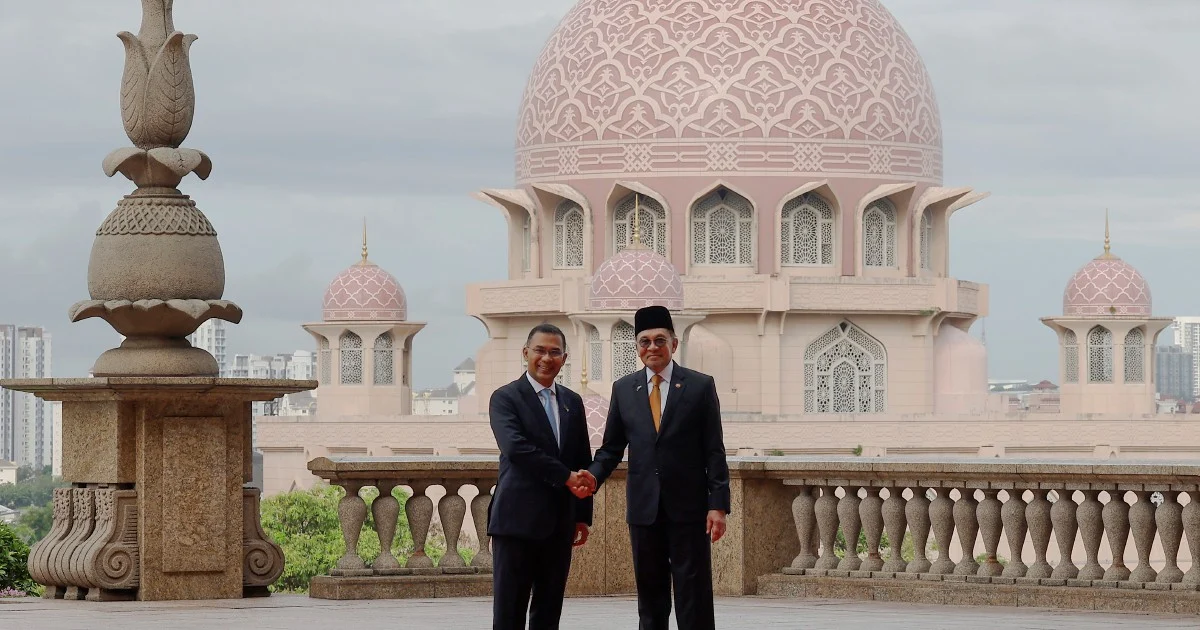
Bangladesh Prime Minister Tarique Rahman touched down in Malaysia for a two-day official state visit, marking an important diplomatic engagement between the two South and Southeast Asian nations. The visiting dignitary was formally received at the Perdana Putra Complex in Putrajaya, where Prime Minister Anwar Ibrahim extended an official welcome ceremony befitting the occasion.
The visit underscores the growing importance of bilateral relations between Malaysia and Bangladesh, two predominantly Muslim-majority democracies with significant economic and strategic interests in the region. For Malaysia, Bangladesh represents a substantial diplomatic footprint in South Asia, with longstanding people-to-people connections through trade, religious networks, and shared governance experiences. The timing of this state visit reflects efforts by both governments to deepen institutional cooperation at the highest political levels.
Tarique Rahman's tenure as Prime Minister of Bangladesh brings fresh momentum to diplomatic engagement. His administration has signalled openness to strengthening regional partnerships across Asia, and Malaysia—as a well-established regional power with deep Southeast Asian roots—occupies a central place in those strategic calculations. The formal welcome at Perdana Putra, the traditional venue for high-level state ceremonies, signals Malaysia's commitment to treating this engagement with appropriate gravity.
The two-day duration of the visit suggests an ambitious agenda spanning multiple sectors. Such official visits typically encompass bilateral meetings between senior cabinet ministers, discussions on trade and investment frameworks, cultural exchanges, and potentially joint initiatives on regional security matters. For Malaysian policymakers, Bangladesh offers opportunities to explore enhanced commercial partnerships and coordinate positions on issues affecting the Indo-Pacific region.
Bangladesh, as South Asia's second-most populous nation and a significant manufacturing hub, holds particular relevance for Malaysian businesses seeking diversification and access to South Asian markets. The garment industry, textile manufacturing, and increasingly, technology and pharmaceuticals create natural synergies with Malaysian enterprises. High-level political engagement at this scale often precedes concrete business initiatives and sectoral cooperation agreements.
From the broader regional perspective, this visit reflects Malaysia's balanced approach to maintaining strong ties across South Asia while simultaneously anchoring itself within Southeast Asia through ASEAN. Bangladesh, despite its South Asian location, has become increasingly engaged with Southeast Asian forums and initiatives, making bilateral engagement with Malaysia a natural extension of regional multilateralism. Such connections help weave a more interconnected Indo-Pacific framework.
The visit also carries implications for regional stability and cooperation on maritime security, counter-terrorism, and humanitarian challenges. Both nations share concerns about extremism, transnational crime, and climate-related vulnerabilities, particularly given Bangladesh's acute exposure to environmental risks. Malaysia's experience in managing diverse religious communities and its institutional frameworks for interfaith dialogue offer valuable reference points for exchange.
Cultural and educational dimensions form another significant pillar of such state visits. Malaysia hosts a notable Bangladeshi diaspora engaged in various professions, from healthcare to construction to academia. Strengthening governmental ties facilitates better protections, working conditions, and opportunities for this community while enhancing mutual understanding between populations. Educational cooperation, student exchanges, and professional certifications reciprocity often emerge from high-level political engagement.
For the Anwar Ibrahim administration specifically, this visit represents an opportunity to showcase Malaysia's renewed diplomatic engagement in the Islamic world. Bangladesh, with its 170 million Muslim population and democratic institutions, represents a significant partner in global Muslim-majority countries. Malaysia's diplomatic activism under Anwar's leadership has emphasised balanced engagement rather than alignment with any particular bloc, and bilateral engagement with Bangladesh exemplifies this philosophy.
The ceremonial aspects of receiving a state visitor at Perdana Putra carry symbolic weight beyond their surface formality. The choice of venue, the delegation composition, and the ceremonial protocols all communicate messages about how seriously Malaysia regards Bangladesh and its leadership. Such gestures matter in international diplomacy, particularly when building momentum for deeper cooperation.
Looking forward, observers will watch for any joint declarations or memoranda of understanding emerging from this visit. Typical state visits culminate in formal statements outlining areas of cooperation, often structured across defence, trade, education, and cultural frameworks. These documents, while sometimes appearing ceremonial, frequently signal genuine policy intentions and establish roadmaps for future implementation through designated government agencies.
The visit also occurs against the backdrop of Bangladesh's continued economic development and political stabilization efforts. Malaysia, as a regional success story that has navigated modernization while maintaining Islamic identity, represents an instructive model. Policy discussions during this visit likely touch upon development pathways, governance practices, and regional economic integration strategies—issues of mutual concern for both administrations.
Ultimately, this state visit exemplifies the quiet diplomacy that sustains regional order and builds institutional capacity for cooperation. While headlines may focus on ceremonial welcomes, the substantive work occurs in bilateral meetings, technical discussions, and the gradual expansion of shared interests. Such engagements between Malaysia and Bangladesh strengthen the broader Indo-Pacific architecture and create frameworks for addressing transnational challenges that respect national sovereignty while enabling collaborative solutions.