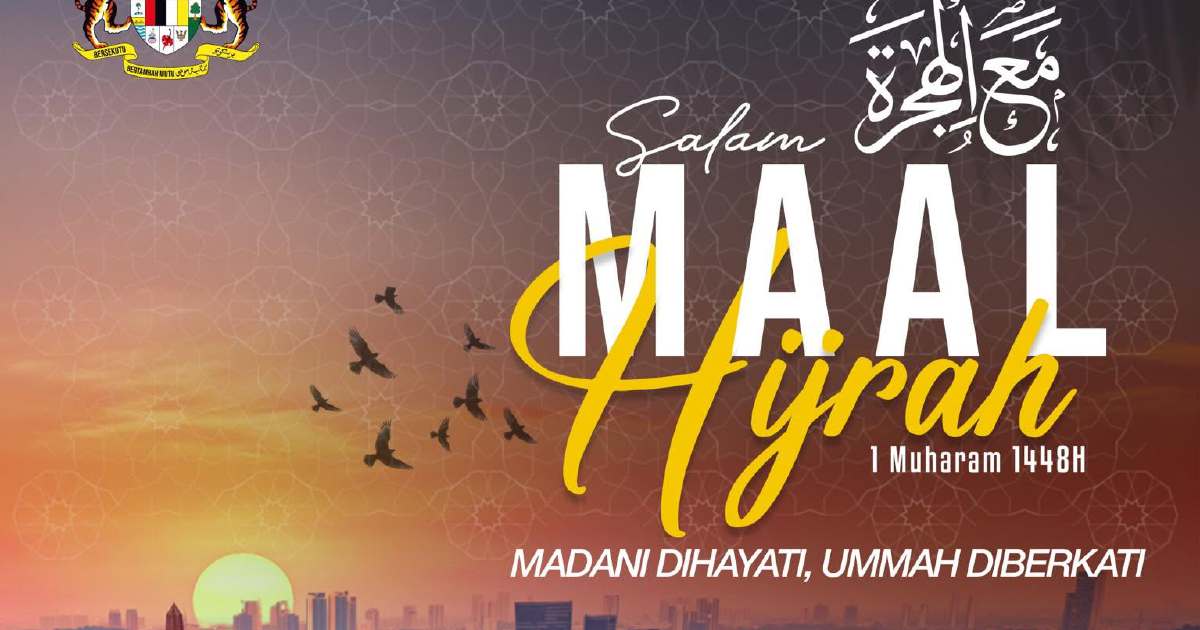
Prime Minister Datuk Seri Anwar Ibrahim has urged Malaysians to adopt the principles of Hijrah as a unifying framework for national development, anchoring the call around three foundational values: the pursuit of truth, the achievement of widespread prosperity, and the maintenance of security across society.
The Hijrah concept, rooted in Islamic tradition, carries deeper meaning than its historical narrative of migration. In the Malaysian context, Datuk Seri Anwar's invocation of Hijrah principles speaks to a contemporary reimagining of the term—one that extends beyond religious communities to encompass the nation's broader aspirations for ethical governance, economic wellbeing, and social stability. By framing these objectives within the language of Hijrah, the Prime Minister seeks to connect Malaysia's multicultural identity with values that resonate across different segments of the population.
The emphasis on truth represents a fundamental challenge in contemporary governance. In an era of misinformation and political polarisation, the call to embrace truthfulness appears directed at public discourse, institutional accountability, and the quality of information consumed by citizens. For Malaysia's diverse society, where rumours and unverified claims can quickly inflame communal tensions, a renewed commitment to verifiable facts and transparent communication becomes essential infrastructure for national cohesion.
Prosperity, as articulated through the Hijrah framework, suggests an inclusive economic model rather than narrow growth metrics. The Prime Minister's reference implies that development should be measured not merely by GDP figures but by tangible improvements in living standards, job creation, and opportunity distribution across socioeconomic strata. In Malaysia's current economic context, where inflation has pressured household budgets and youth unemployment remains a concern, this framing positions prosperity as a shared responsibility and collective aspiration rather than an abstract economic indicator.
The security dimension of Datuk Seri Anwar's message carries particular relevance for Southeast Asia's strategic environment. Security encompasses not only conventional national defence but also the security of critical infrastructure, cybersecurity resilience, and the safeguarding of institutions from erosion. In Malaysia's case, this speaks to protecting democratic institutions, judicial independence, and the rule of law—elements that underpin the stability necessary for any nation to pursue prosperity and establish truth as a governing principle.
By weaving these three elements together under the Hijrah banner, the Prime Minister signals an attempt to move beyond narrow partisan or ideological divides. The Hijrah spirit, when properly understood, transcends religious boundaries and appeals to humanistic values that most Malaysians, regardless of faith or ethnicity, can recognise and support. This represents a rhetorical strategy aimed at building consensus around shared national objectives in a country where political divisions have sometimes overshadowed common ground.
For the Malaysian business community and investors, Datuk Seri Anwar's message carries practical implications. A commitment to truth in governance and economic reporting builds investor confidence, reduces corruption-related risks, and strengthens institutional credibility. Prosperity framed as inclusive growth suggests policy directions favouring small and medium enterprises, skill development, and regional economic corridors that benefit communities beyond major urban centres. Security frameworks, meanwhile, become prerequisites for business continuity and regional trade expansion.
The call also resonates within Malaysia's Islamic community, where Hijrah carries profound spiritual and historical significance. By invoking these principles in a national governance context, Datuk Seri Anwar acknowledges Islam's contribution to Malaysian identity while simultaneously universalising the values embedded within the Hijrah narrative. This approach respects religious heritage while avoiding exclusionary messaging that might alienate non-Muslim citizens.
For Southeast Asian neighbours and international observers, the Malaysian Prime Minister's emphasis on truth, prosperity, and security reflects broader regional concerns. Throughout ASEAN, countries grapple with misinformation, economic inequalities, and security challenges ranging from transnational crime to geopolitical pressures. Malaysia's articulation of these challenges through the Hijrah framework offers a culturally grounded alternative to generic governance discourse, potentially influencing how other nations in the region conceptualise development priorities.
Implementing the Hijrah spirit as envisioned requires institutional commitment beyond rhetorical endorsement. Government agencies must demonstrate transparency through accessible data and open policymaking processes. Economic strategies need tangible mechanisms for broad-based benefit distribution rather than concentration of wealth. Security institutions must balance protective functions with respect for civil liberties and constitutional rights. The gap between aspirational messaging and actual implementation often determines whether such calls resonate or fade into political rhetoric.
The challenge for Datuk Seri Anwar lies in translating this conceptual framework into measurable outcomes that citizens can experience in their daily lives. Malaysians will assess the government's commitment to truth by evaluating media freedom, corruption investigations, and institutional accountability. Prosperity will be judged through wage growth, affordable housing, and improved public services. Security will be measured by personal safety, property protection, and institutional stability. Success depends on whether the Hijrah spirit remains a guiding principle throughout the government's policy formulation and implementation cycles.
Ultimately, the Prime Minister's call represents an effort to reorient national discourse toward shared values in a fractured political environment. Whether Malaysians embrace this invitation and hold their leaders accountable to these standards will shape the nation's trajectory over coming years and determine the practical relevance of the Hijrah spirit beyond its rhetorical deployment.

%22%2F%3E%3C%2Fpattern%3E%3C%2Fdefs%3E%3Crect%20width%3D%22100%25%22%20height%3D%22100%25%22%20fill%3D%22url(%23ph40buhg)%22%2F%3E%3Crect%20width%3D%22100%25%22%20height%3D%22100%25%22%20fill%3D%22url(%23ph40buhp)%22%2F%3E%3Ctext%20x%3D%2250%25%22%20y%3D%2250%25%22%20text-anchor%3D%22middle%22%20dominant-baseline%3D%22central%22%20fill%3D%22rgba(255%2C255%2C255%2C0.95)%22%20font-family%3D%22Georgia%2C%20'Times%20New%20Roman'%2C%20serif%22%20font-weight%3D%22700%22%20font-size%3D%22320%22%20letter-spacing%3D%22-0.02em%22%3EGRS%3C%2Ftext%3E%3C%2Fsvg%3E)