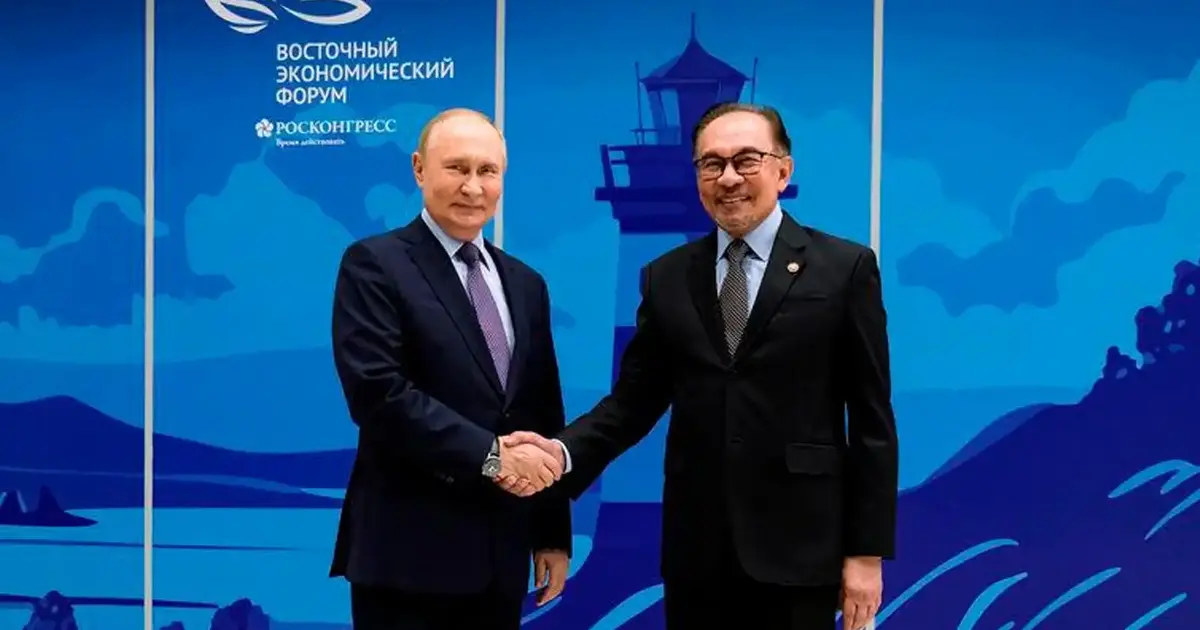
Prime Minister Anwar Ibrahim is set to embark on a working visit to Russia, where he will hold substantive discussions with Russian leadership regarding Malaysia's energy requirements and fuel supply arrangements. The journey represents a significant diplomatic engagement between Malaysia and Russia at the highest level, underscoring Kuala Lumpur's efforts to diversify its energy partnerships and secure stable fuel supplies amid global market volatility.
The prime minister's itinerary will feature a dedicated meeting with Russian President Vladimir Putin, marking an important bilateral encounter between the two nations. Beyond the bilateral dimension, the visit will also encompass a broader multilateral engagement, with Asean leaders scheduled to meet collectively with Russian counterparts. This composite approach reflects Malaysia's dual commitment to advancing its own national interests while simultaneously strengthening the association's collective diplomatic standing and economic cooperation with Moscow.
Fuel supply represents a critical component of Malaysia's energy security strategy, particularly as the nation seeks to balance rising domestic consumption with competitive procurement. Russia, as a major global energy producer, offers potential opportunities for securing reliable fuel sources and negotiating favourable long-term supply agreements. The timing of these discussions suggests Malaysia is actively pursuing energy partnerships that could stabilise costs and ensure continuity of supply chains, concerns that resonate across Southeast Asia as regional economies grapple with energy inflation and supply chain uncertainties.
The Asean component of the visit carries particular significance for Malaysia's regional leadership role. By facilitating dialogue between Asean nations and Russia, Anwar positions the association as a unified economic bloc capable of negotiating collectively on matters of mutual interest. This approach amplifies Asean's bargaining power and demonstrates the grouping's commitment to maintaining constructive relationships with major global powers, a principle that remains central to the association's non-aligned foreign policy traditions.
Energy cooperation has emerged as a priority across Southeast Asia, with many nations recognising the need to secure diversified fuel sources to insulate themselves from price shocks and geopolitical disruptions. Malaysia, as a regional energy producer itself with significant refining capacity, serves as a natural hub for discussions about regional fuel security and market stabilisation. Anwar's engagement with Russia reflects this broader imperative while simultaneously addressing domestic energy needs.
The working visit signals Malaysia's pragmatic approach to international relations, maintaining productive diplomatic channels with multiple powers while safeguarding national economic interests. In the current geopolitical climate, where energy markets remain volatile and supply chains face persistent challenges, such high-level engagement becomes essential for countries seeking to protect their economic resilience and competitiveness.
Russia's position as a major hydrocarbon exporter makes it a natural counterpart for Malaysian energy discussions. Beyond immediate supply considerations, the talks may also explore broader cooperation frameworks encompassing technology transfer, investment opportunities, and joint ventures in the energy sector. Such arrangements could yield mutual benefits, leveraging Russian expertise in extraction and processing against Malaysian strengths in refining and regional distribution.
For Malaysia, the visit underscores a commitment to great power engagement on its own terms, avoiding alignment with any single bloc while maintaining relationships necessary for economic prosperity. This balancing act becomes increasingly important as regional geopolitics evolve and nations seek to navigate between competing interests and influence. Anwar's diplomatic approach reflects Malaysia's historical positioning as a bridge-builder in Southeast Asia.
The Asean dimension adds another layer to these discussions, potentially opening pathways for coordinated regional approaches to energy security. Collective Asean engagement with Russia could lead to bloc-level agreements that benefit all member nations, from infrastructure development to preferential pricing arrangements. Such cooperation would strengthen intra-Asean cohesion while diversifying the region's energy partnerships beyond traditional Western suppliers.
As global energy markets continue shifting and demand patterns evolve, Malaysia's proactive diplomacy in securing fuel supply arrangements demonstrates forward-thinking governance. The visit to Russia represents not merely a transactional negotiation but a strategic investment in long-term energy security and economic stability for both Malaysia and the wider Southeast Asian region.

%22%2F%3E%3C%2Fpattern%3E%3C%2Fdefs%3E%3Crect%20width%3D%22100%25%22%20height%3D%22100%25%22%20fill%3D%22url(%23ph40buhg)%22%2F%3E%3Crect%20width%3D%22100%25%22%20height%3D%22100%25%22%20fill%3D%22url(%23ph40buhp)%22%2F%3E%3Ctext%20x%3D%2250%25%22%20y%3D%2250%25%22%20text-anchor%3D%22middle%22%20dominant-baseline%3D%22central%22%20fill%3D%22rgba(255%2C255%2C255%2C0.95)%22%20font-family%3D%22Georgia%2C%20'Times%20New%20Roman'%2C%20serif%22%20font-weight%3D%22700%22%20font-size%3D%22320%22%20letter-spacing%3D%22-0.02em%22%3EGRS%3C%2Ftext%3E%3C%2Fsvg%3E)