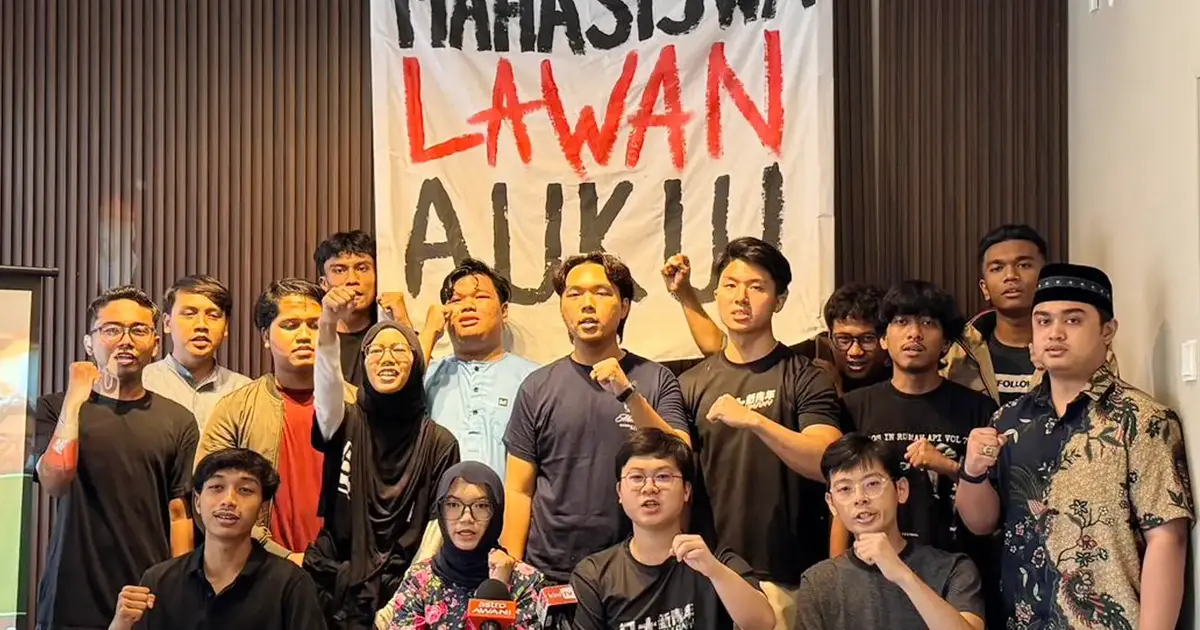
Prime Minister Anwar Ibrahim has made clear his administration will not pursue fresh legislation designed to restrict student conduct or activism, marking a significant policy position in the wake of the government's decision to repeal key provisions of the Universities and University Colleges Act. The statement underscores the government's commitment to allowing greater freedoms on university campuses while maintaining institutional stability and order.
The Auku's restrictive clauses, which had been in force for decades, faced sustained criticism from civil society organisations, student representatives, and academics who argued that such provisions stifled free expression and political engagement among young people. The legislation had effectively prohibited students from engaging in political activities, holding office-bearing positions in political organisations, and participating in demonstrations without institutional approval. By dismantling these constraints, the government has responded to long-standing calls for reform from multiple quarters of Malaysian society.
Anwar's declaration carries particular weight given Malaysia's historical reliance on sweeping legislation to regulate student conduct. The decision to refrain from introducing replacement restrictions signals a deliberate shift toward a more open approach to campus governance. This move reflects broader efforts by the current administration to recalibrate the relationship between universities, government oversight, and individual freedoms. Rather than replacing one restrictive framework with another, the government appears committed to trusting institutions and their leadership to manage student activities through existing regulatory mechanisms and institutional policies.
The implications for Malaysian higher education are substantial. Universities will now operate within a different legal landscape, one that grants students greater latitude to organise, express views, and participate in political discourse. This transition requires institutional readiness, as universities must develop robust internal governance structures capable of maintaining order without relying on governmental legislation as a backstop. Academic administrators face the challenge of balancing unfettered expression with institutional obligations to protect campus safety and academic integrity.
For Southeast Asian observers, Malaysia's decision represents a notable step within a region where restrictions on student activism remain commonplace. While some neighbouring countries maintain tight controls over campus political activity, Malaysia is moving in the opposite direction. This divergence may position Malaysian universities more favourably in attracting international scholars, fostering robust research communities, and competing for talent in a globalised education market. The enhanced freedom also aligns Malaysia with international standards emphasised by UNESCO and other bodies regarding academic autonomy and student rights.
The abolition of Auku's restrictive provisions also addresses generational concerns. Younger voters and politically conscious students have increasingly questioned the legitimacy of laws that treated them as subjects requiring special management rather than citizens entitled to political participation. Anwar's commitment against new restrictions acknowledges this changing social reality and signals responsiveness to shifting democratic expectations among educated youth.
However, the absence of new legislation does not mean the campus environment will become entirely unregulated. Universities retain powers to establish codes of conduct, disciplinary procedures, and institutional rules governing student behaviour. These mechanisms operate at the institutional rather than legislative level, providing flexibility and allowing customised approaches suited to different campuses and circumstances. What changes is the legal architecture underpinning such regulations—universities now exercise authority derived from institutional autonomy rather than government-mandated restrictions.
The decision also reflects confidence in institutional leadership. By refraining from legislating new restrictions, the government tacitly endorses the capacity of university administrators, senates, and student governance structures to manage campus affairs responsibly. This approach invests trust in institutions themselves, potentially strengthening academic leadership and encouraging more collaborative relationships between administration and students compared to systems where government legislation dominates the regulatory landscape.
Anwar's position may also serve to defuse potential tensions that could arise if the government attempted to replace Auku restrictions with alternative legislation. Any such effort would likely trigger immediate backlash from student groups, civil society, and international observers, creating political friction precisely when the government seeks to build consensus around democratic reform. By renouncing new restrictive laws altogether, the prime minister avoids these pitfalls while consolidating support from constituencies that advocated for Auku's repeal.
Looking forward, this commitment will require sustained political will. Future governments or parliaments may face pressure from various quarters to reinstate controls if campuses experience disruptive incidents. The ability to resist such pressure and maintain the commitment against new restrictions will test the sincerity of the current stance. For students and civil liberties advocates, Anwar's declaration provides a baseline expectation against which government performance can be measured.
The broader context matters here as well. Malaysia's commitment to expanding student freedoms complements other reform initiatives, including judicial reforms and freedom of information efforts. Together, these developments suggest a trajectory toward a more open political and civic space, though implementation will ultimately determine whether the promise translates into sustained reality.

