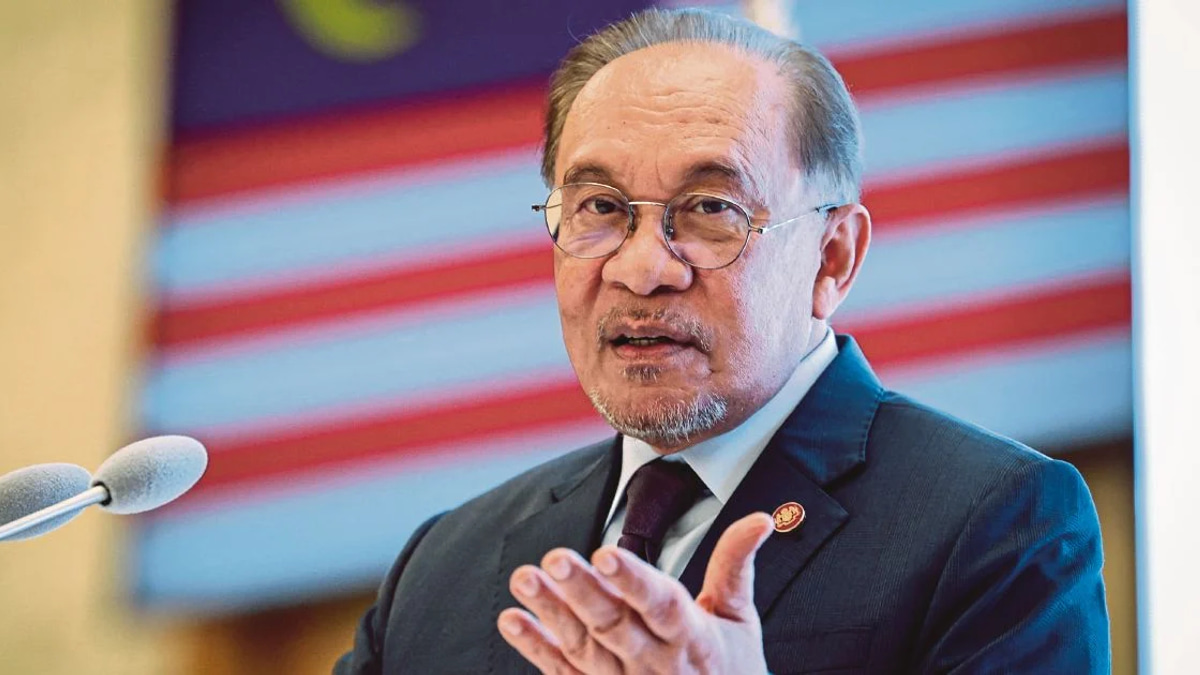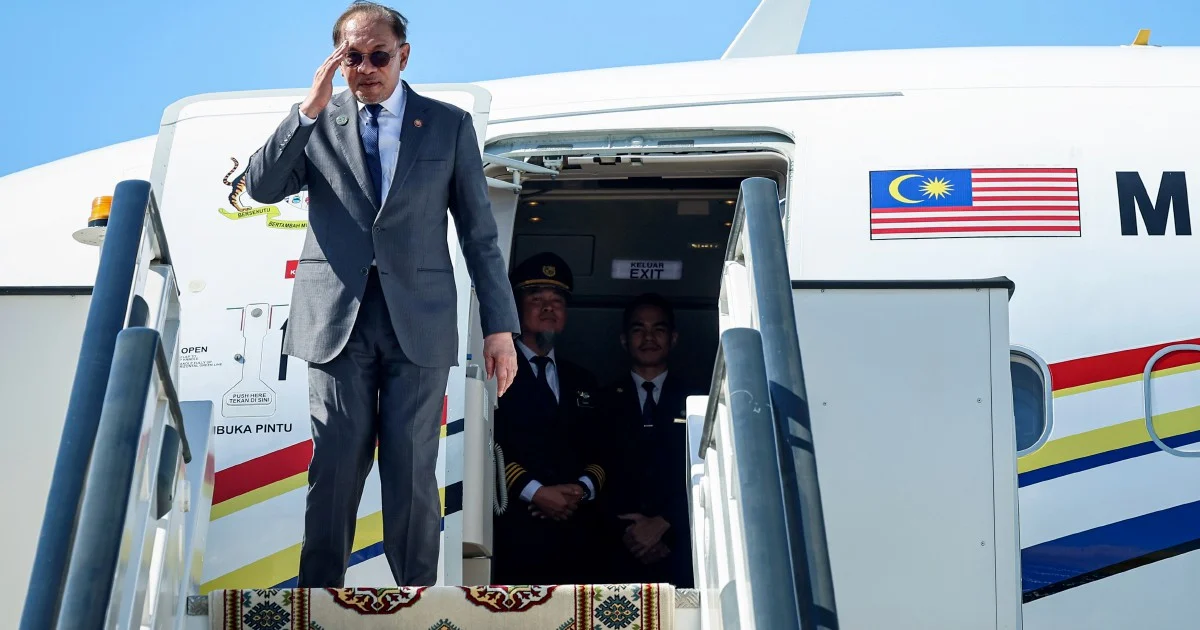
Prime Minister Datuk Seri Anwar Ibrahim touched down in Penang today, stepping directly from his concluding engagements in Turkmenistan into a packed schedule of domestic commitments. The timing reflects the government's attempt to balance international diplomatic responsibilities with domestic stakeholder engagement, a juggling act that has become characteristic of Anwar's tenure at the helm of Malaysia's administration.
The premier's arrival in Butterworth signals the beginning of his participation in the National Journalists' Day (Hawana) 2026 grand finale, an event that carries symbolic weight beyond its ceremonial dimensions. As Malaysia continues to navigate complex questions surrounding media freedom, press regulation, and journalistic independence, the prime ministerial presence at this occasion underscores the government's stated commitment to supporting the fourth estate. The event provides an opportunity to examine how the current administration intends to foster a media environment that balances public interest with journalistic autonomy—issues that remain contentious across Southeast Asia.
The back-to-back nature of Anwar's engagements illustrates a deliberate government strategy to leverage high-profile visits for maximum visibility and impact. Rather than allowing a gap between international and domestic activities, the prime minister's schedule demonstrates an integrated approach to promoting Malaysia's image abroad while simultaneously reinforcing government messaging at home. This scheduling pattern suggests careful coordination between the Prime Minister's Office and various ministry departments overseeing both foreign relations and domestic affairs.
Penang's selection as the venue for these particular events carries its own political significance. The state has long been positioned as a gateway for foreign investment into Malaysia, with its Penang Global Business Services Centre and established manufacturing base attracting both regional and international corporate attention. By conducting investment-related activities in this location, the government capitalizes on the state's existing reputation and infrastructure for facilitating economic partnerships. The concentration of these events in Penang also reflects broader patterns of political attention to states considered economically strategic or politically significant.
Turkmenistan, though geographically distant from Malaysia's traditional diplomatic and economic partners, represents a growing area of interest for Malaysian foreign policy. The Central Asian nation has positioned itself as a transit hub for regional trade and energy resources, making it relevant to Malaysia's diversification strategies. Official visits to such countries typically involve discussions spanning trade agreements, investment opportunities, and bilateral cooperation frameworks. These engagements form part of Malaysia's broader South-South cooperation agenda, which seeks to establish partnerships beyond traditional Western-aligned relationships.
The Hawana 2026 event itself deserves closer examination as a barometer of government-media relations. Such occasions typically feature keynote speeches from senior government figures addressing the state of journalism, freedom of expression, and the media's role in democracy. The content and tone of Anwar's remarks will likely signal the administration's actual stance on press freedom, a topic where rhetoric and practice have occasionally diverged in Malaysian politics. The event provides journalists and media observers an opportunity to assess whether government rhetoric around media support translates into tangible policy initiatives or regulatory forbearance.
The investment events accompanying Hawana suggest a dual-track approach to Penang's economic development. By positioning investment promotion alongside press freedom celebrations, the government appears to be framing business-friendly policies and journalistic independence as complementary rather than contradictory—a messaging strategy that appeals to both corporate investors concerned about regulatory stability and media practitioners concerned about editorial freedom. This framing deserves scrutiny, as tensions between these two interests have historically created friction in other Southeast Asian economies.
For Malaysian business observers and investors, the presence of the prime minister at investment events signals government priority and provides an occasion for direct engagement with senior decision-makers. Foreign investors monitoring Malaysia's economic direction often interpret such high-profile official participation as indicating sustained government commitment to economic liberalization and foreign direct investment promotion. The convergence of these events in Penang creates what might be termed a mini-summit of political and economic significance.
The timing of Anwar's return also intersects with broader questions about Malaysia's regional positioning and international engagement priorities. Turkmenistan, as a Central Asian nation, sits along strategic trade corridors connecting Asia with Europe and the Middle East. Malaysian engagement with such countries reflects an attempt to broaden the nation's diplomatic footprint and identify emerging markets for Malaysian goods and services. The subsequent investment push in Penang demonstrates how such international engagements often catalyze domestic economic initiatives.
Looking ahead, observers will watch how these events shape media narratives around both press freedom and economic development. The government faces a persistent challenge in balancing its desire for positive media coverage with its stated commitment to journalistic independence. The Hawana event provides a lens through which to examine this tension. Similarly, the investment activities offer insight into whether Malaysia can sustain its competitive advantage as a regional business hub amid growing competition from other Southeast Asian economies.
The concentration of these high-profile activities in a single location and timeframe reflects sophisticated political communication strategy. By anchoring press freedom celebrations and economic promotion within the same geographical space and timeline, the administration seeks to reinforce a particular narrative about Malaysia's trajectory. Whether such orchestrated messaging enhances or diminishes credibility depends largely on how observers perceive the alignment between government rhetoric and subsequent policy implementation across both media and economic domains.