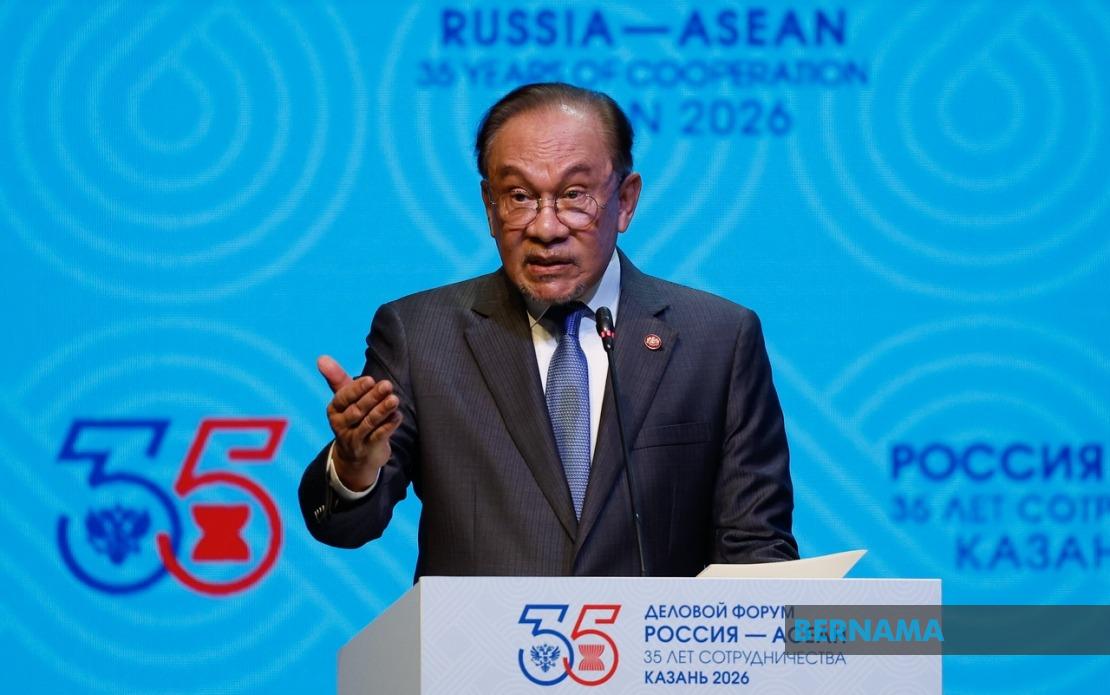
Prime Minister Datuk Seri Anwar Ibrahim has articulated a vision for substantially elevating ASEAN-Russia engagement during his participation in the ASEAN-Russia Commemorative Summit in Kazan, the capital of Tatarstan. Speaking at the ASEAN-Russia Business Forum on June 17, Anwar presented a multi-dimensional approach to bilateral cooperation that extends well beyond traditional trade frameworks, signalling Malaysia's commitment to diversifying the bloc's strategic partnerships at a time of shifting global geopolitics.
The Malaysian premier emphasized that the existing relationship between ASEAN and Russia represents a significant underutilization of mutual strengths and opportunities. While ASEAN has cultivated deep economic relationships with major powers including the United States, China, and India, the organization's engagement with Russia has remained comparatively shallow despite historical ties and shared interests. Anwar's remarks suggest an intentional effort to rebalance these dynamics and position Russia as a more consequential partner for Southeast Asian economic and security interests.
Energy security emerged as a cornerstone of the proposed partnership framework. Given ASEAN's substantial energy consumption and Russia's position as a major global energy supplier, Anwar identified this sector as offering immediate and tangible opportunities for collaboration. Beyond conventional energy considerations, he highlighted complementary strengths in cybersecurity infrastructure, agricultural technology, digital innovation, scientific advancement, and academic exchange. This comprehensive list reflects a recognition that modern state partnerships require multifaceted engagement across technological, educational, and industrial dimensions rather than transaction-focused commercial arrangements alone.
Anwar drew particular attention to Tatarstan's technological trajectory and developmental achievements in research and defence sectors. The Russian republic has positioned itself as a hub of scientific innovation and technological advancement within Russia, making it an attractive partner for knowledge transfer and collaborative research initiatives. For ASEAN nations seeking to accelerate their own technological development, such regional cooperation nodes offer more accessible entry points than engagement limited to Moscow alone.
Reflecting on his direct engagement with Russian President Vladimir Putin, Anwar characterized their discussions as substantive and forward-looking, particularly regarding economic cooperation frameworks and shared interests in energy security. This bilateral dimension complements the broader ASEAN-Russia institutional engagement, ensuring that Malaysia's diplomatic efforts align with individual nation-state objectives while advancing collective Southeast Asian interests.
Notably, the Prime Minister's remarks extended beyond conventional diplomatic and economic parameters to embrace cultural and intellectual exchange. His recognition of Russian literary traditions and poetry signals a sophisticated understanding that sustained international partnerships require human connection and cultural resonance alongside institutional mechanisms. Anwar referenced his appreciation for classical Russian literature, citing prominent figures including Leo Tolstoy, Anton Chekhov, and Boris Pasternak, emphasizing that understanding a nation's cultural heritage fosters genuine affinity between peoples. This perspective aligns with Malaysia's broader soft power strategy and reflects the Premier's personal intellectual curiosity.
The reference to Russian musical selections featured on his social media platforms—including "Matushka," "Zemlya," and "Kalinka Malinka"—demonstrates a deliberate effort to humanize diplomatic engagement and project accessibility to international audiences. Such cultural signalling, though seemingly informal, carries strategic weight in contemporary diplomacy by portraying political leadership as intellectually engaged and culturally appreciative rather than purely transactional.
Anwar's broader commentary on international affairs revealed Malaysia's concern regarding escalating tensions between Iran and the United States. His engagement with regional leaders including Iranian President Masoud Pezeshkian, Pakistani Prime Minister Shehbaz Sharif, Egyptian President Abdel Fattah El-Sisi, and Turkish President Recep Tayyip Erdogan underscores Malaysia's active diplomatic engagement in seeking peaceful resolutions to regional conflicts. This mediation positioning reflects Malaysia's traditional role as a non-aligned nation capable of engaging multiple power centers without exclusive alignment.
The humanitarian situation in Gaza featured prominently in the Prime Minister's remarks, with Anwar delivering a pointed critique of international inconsistency in applying human rights standards. His characterization of the situation as reflecting failures of the international system echoed Malaysia's longstanding advocacy for Palestinian rights and criticism of what Anwar perceived as selective application of international humanitarian norms. The statement that "you cannot have a system that allows killing, torturing children and women on a daily basis, and we sit down, saying nothing" represented both a moral position and a political statement reflecting domestic Malaysian constituencies' concerns.
This two-day working visit to Kazan represents Malaysia's strategic investment in strengthening Southeast Asian engagement with Russia at a time when global power dynamics are undergoing significant realignment. The breadth of topics addressed—from energy infrastructure to literary appreciation to Middle Eastern conflict resolution—reflects a comprehensive diplomatic approach that treats international relations as requiring intellectual depth and cultural understanding alongside institutional mechanism-building.
Anwar's emphasis on untapped cooperative potential carries implications for Malaysian business communities and technology sectors. The identification of specific collaboration areas suggests that Malaysian companies may find new export opportunities and technology partnership possibilities with Russian counterparts, particularly in sectors such as digital innovation, agricultural modernization, and higher education. The institutional platforms created through forums such as the ASEAN-Russia Business Forum provide mechanisms for translating political-level agreements into commercial and academic relationships.
The Prime Minister's diplomatic messaging also reflects Malaysia's broader positioning within ASEAN as a constructive, multilateral-minded member capable of advancing collective interests while maintaining bilateral relationships with diverse global powers. By articulating a vision for enhanced Russia engagement while continuing to acknowledge existing partnerships with Western and Asian powers, Anwar demonstrates strategic flexibility and avoidance of zero-sum diplomatic frameworks. This approach aligns with ASEAN's historical commitment to maintaining strategic autonomy and balanced regional partnerships regardless of broader geopolitical pressures.
Moving forward, the concrete realization of these expressed cooperative intentions will depend on translating high-level political declarations into institutional arrangements, regulatory frameworks, and sustained engagement across multiple governmental and commercial levels. The identification of specific sectors and the attention to cultural exchange suggest Malaysia and ASEAN are approaching Russia partnerships with nuance rather than opportunistic positioning, potentially establishing foundations for meaningful and durable cooperation extending beyond immediate geopolitical circumstances.

%22%2F%3E%3C%2Fpattern%3E%3C%2Fdefs%3E%3Crect%20width%3D%22100%25%22%20height%3D%22100%25%22%20fill%3D%22url(%23ph40buhg)%22%2F%3E%3Crect%20width%3D%22100%25%22%20height%3D%22100%25%22%20fill%3D%22url(%23ph40buhp)%22%2F%3E%3Ctext%20x%3D%2250%25%22%20y%3D%2250%25%22%20text-anchor%3D%22middle%22%20dominant-baseline%3D%22central%22%20fill%3D%22rgba(255%2C255%2C255%2C0.95)%22%20font-family%3D%22Georgia%2C%20'Times%20New%20Roman'%2C%20serif%22%20font-weight%3D%22700%22%20font-size%3D%22320%22%20letter-spacing%3D%22-0.02em%22%3EGRS%3C%2Ftext%3E%3C%2Fsvg%3E)