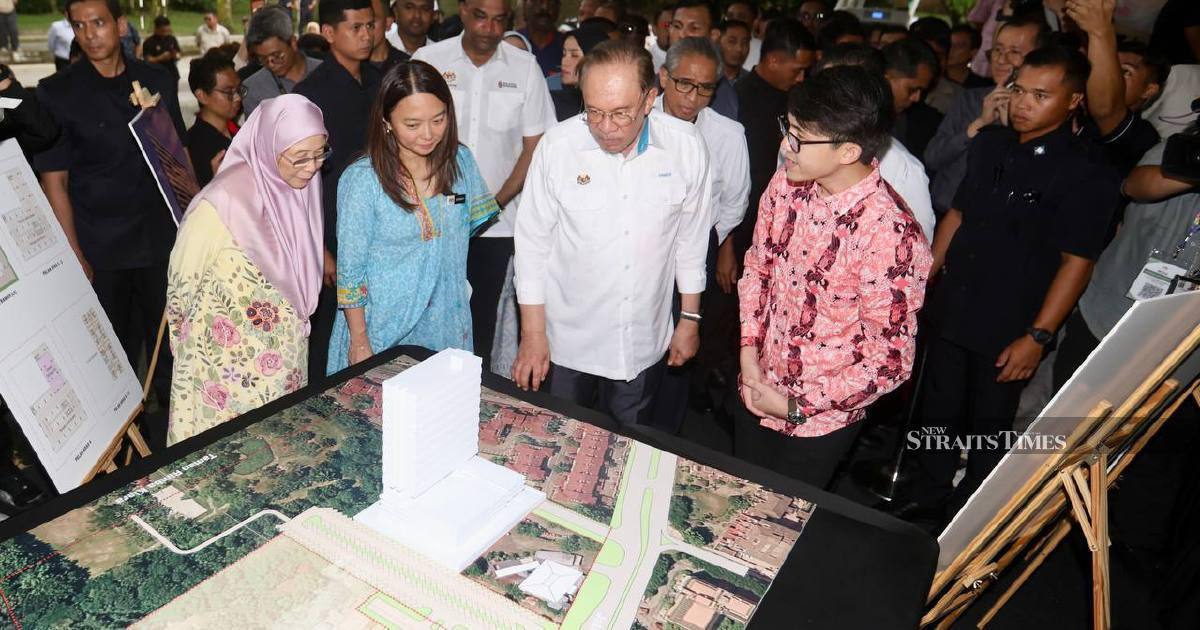
Prime Minister Datuk Seri Anwar Ibrahim has pushed back against criticism suggesting his administration has neglected the welfare of urban poor communities, asserting instead that government policy consistently prioritises their fundamental rights and dignity in the pursuit of improved living standards. Speaking in Kuala Lumpur, Anwar sought to underscore the administration's commitment to balancing economic development with social equity, a challenge that has become increasingly complex as Malaysia grapples with rising urban inequality and housing affordability crises.
The Prime Minister's comments arrive at a time when concerns about urban displacement and gentrification have grown more vocal among civil society groups and opposition politicians. Development projects across major cities have sometimes sparked tensions between authorities and residents, particularly when low-income communities face relocation or changing neighbourhood dynamics. Anwar's intervention signals an attempt to reframe the government's approach as deliberately protective of vulnerable populations rather than indifferent to their circumstances.
In making his case, Anwar specifically referenced the Bukit Kiara project as concrete evidence of the government's commitment to upholding the rights of urban dwellers in lower income brackets. This development initiative has become something of a focal point in the broader debate about how Malaysia manages urban renewal and infrastructure projects. By highlighting this particular scheme, the Prime Minister is positioning it as a model that demonstrates how growth and social protection can coexist within government planning frameworks.
The Bukit Kiara project carries particular significance in the Malaysian context because it sits at the intersection of environmental concerns, urban development pressures, and questions about who benefits from major infrastructure spending. The initiative has involved discussions with affected communities and considerations about preserving green spaces while also addressing housing and livelihood needs—a balancing act that successive Malaysian governments have struggled to navigate successfully. Anwar's invocation of the project suggests the government believes it has found an approach that respects these competing interests.
For the urban poor in Malaysia's major cities, the stakes in this conversation are substantial. Many households in greater Kuala Lumpur and other metropolitan areas spend more than half their income on housing, with limited affordable options available. When development projects reshape neighbourhoods, residents frequently lack the economic resilience to absorb sudden changes to their living costs or community structures. This reality makes government assurances about protecting rights particularly important, though also increasingly scrutinised by those with lived experience of these challenges.
The Prime Minister's statement also reflects a broader political calculation about how his government is perceived among lower-income voters. The Pakatan Harapan coalition has positioned itself as more progressive on social issues than its predecessors, but implementation of these commitments has occasionally drawn criticism from both left and right. Anwar's willingness to actively defend the government's record suggests awareness that doubts about the administration's prioritisation of ordinary Malaysians continue to simmer among key constituencies.
Contextualising this within Southeast Asia, Malaysia's approach to balancing development and social protection represents an important test case for the region. Neighbouring countries including Indonesia, Thailand, and the Philippines wrestle with similar tensions between economic growth imperatives and the needs of marginalised urban communities. How effectively Malaysia navigates these challenges—and whether its rhetoric about rights protection translates into measurable improvements—carries implications beyond its borders.
The invocation of specific projects like Bukit Kiara also highlights the government's reliance on individual case studies to demonstrate policy effectiveness. While concrete examples can be persuasive, critics argue they may obscure broader systemic challenges affecting urban poor populations. Anwar's focus on this single initiative, however carefully designed, might sidestep larger questions about wealth distribution, wage growth, and access to quality public services that shape daily realities for millions of Malaysians.
Looking ahead, the government faces pressure to translate these public commitments into sustained policy outcomes. Urban poor communities will continue scrutinising whether development projects genuinely respect their rights or whether such rhetoric masks fundamental trade-offs favouring wealthier interests. The success of initiatives like Bukit Kiara in achieving equitable outcomes while enabling legitimate development will significantly influence public perception of the administration's credibility on social protection issues.
Anwar's statements also occur against a backdrop of upcoming state elections and shifting political alignments across Malaysia. Demonstrating administrative commitment to protecting vulnerable populations remains electorally important, particularly in urban constituencies where tight competition between rival coalitions reflects voter demands for tangible improvements in living conditions. The Prime Minister's emphasis on rights protection therefore operates simultaneously as both genuine policy defence and strategic political messaging.

%22%2F%3E%3C%2Fpattern%3E%3C%2Fdefs%3E%3Crect%20width%3D%22100%25%22%20height%3D%22100%25%22%20fill%3D%22url(%23ph40buhg)%22%2F%3E%3Crect%20width%3D%22100%25%22%20height%3D%22100%25%22%20fill%3D%22url(%23ph40buhp)%22%2F%3E%3Ctext%20x%3D%2250%25%22%20y%3D%2250%25%22%20text-anchor%3D%22middle%22%20dominant-baseline%3D%22central%22%20fill%3D%22rgba(255%2C255%2C255%2C0.95)%22%20font-family%3D%22Georgia%2C%20'Times%20New%20Roman'%2C%20serif%22%20font-weight%3D%22700%22%20font-size%3D%22320%22%20letter-spacing%3D%22-0.02em%22%3EGRS%3C%2Ftext%3E%3C%2Fsvg%3E)