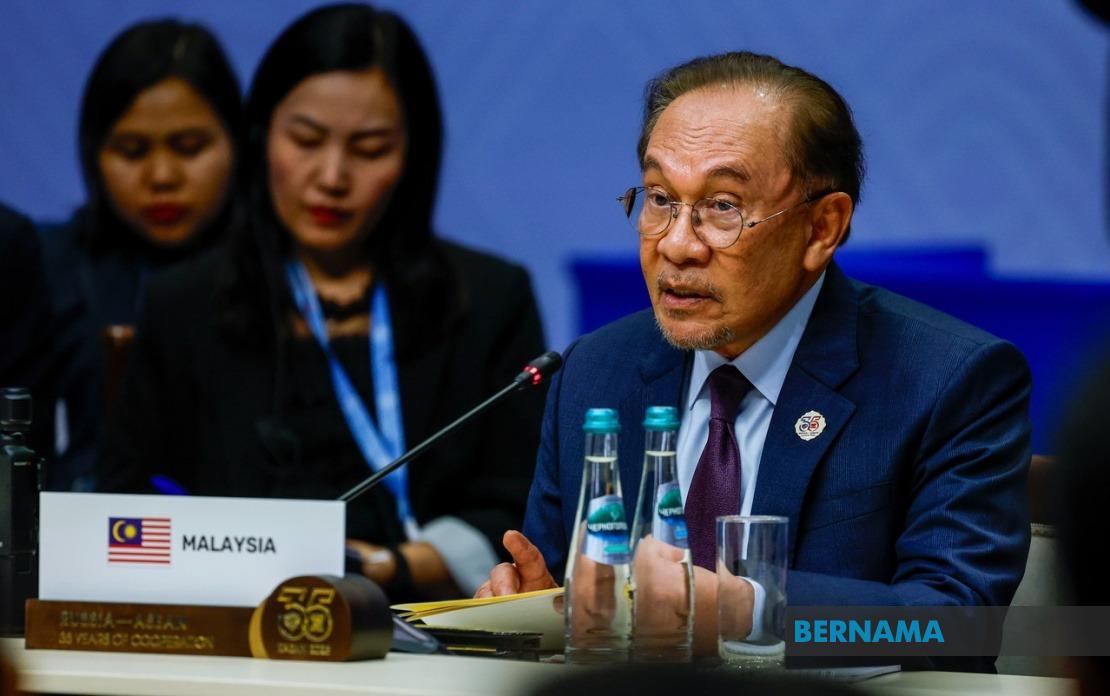
Prime Minister Datuk Seri Anwar Ibrahim has called on ASEAN and Russia to deepen their strategic cooperation across numerous sectors, emphasising that sustained dialogue and diplomatic engagement must remain central to managing geopolitical tensions and resolving international conflicts. Speaking at the ASEAN-Russia Commemorative Summit in Kazan, Anwar positioned the gathering as a critical platform for the two sides to advance mutual interests in an increasingly volatile and unpredictable global landscape.
The summit, which marks a historic milestone in relations between the regional grouping and Moscow, commemorates 35 years of engagement that began in 1991 in Kuala Lumpur. This longevity underscores the enduring nature of the partnership, yet Anwar's remarks suggest recognition that the relationship requires renewed momentum to address contemporary challenges. The gathering brought together leaders from across ASEAN, including Philippines President Ferdinand Marcos Jr, who holds this year's rotating chairmanship of the regional bloc, alongside senior representatives and officials from member states.
Anwar outlined an expansive agenda for future cooperation that extends well beyond traditional diplomatic channels. He specifically highlighted the need to strengthen ties in trade and investment frameworks, recognising that economic interdependence can serve as a stabilising force between regions. Digital infrastructure and technological advancement featured prominently in his remarks, reflecting global shifts toward digitalisation and the imperative for developing nations to harness innovation. The inclusion of artificial intelligence in his list of priority areas signals Malaysian awareness that AI will reshape economic competition and geopolitical power dynamics in coming decades.
Energy cooperation emerged as another strategic pillar in Anwar's vision, particularly significant given global energy security concerns and ASEAN's diverse energy resources and consumption patterns. Food security—a growing concern across Southeast Asia amid climate change and supply chain disruptions—also received emphasis. The mention of the halal industry reflects Malaysia's unique positioning within ASEAN as a global leader in halal certification and commerce, an area where Russian engagement could unlock commercial opportunities for both sides while diversifying halal supply chains beyond traditional Middle Eastern sources.
People-to-people exchanges were presented not merely as cultural initiatives but as foundational to building sustained partnership. This reflects understanding that geopolitical relationships, however strategically important, ultimately depend on broader societal support and mutual understanding among citizens. Educational exchanges, tourism, and cultural programmes can build constituencies within each region favourably disposed toward stronger bilateral ties.
On Middle Eastern developments, Anwar reiterated Malaysia's established position demanding an immediate halt to violence in Gaza and unimpeded humanitarian aid access. This stance reflects ASEAN consensus on protecting civilian populations and upholding humanitarian principles, matters of particular sensitivity across the Muslim-majority region. Malaysia's condemnation of Israeli military expansion into Lebanon and any attacks on UNIFIL forces represents a measured but firm position aligned with broader ASEAN and Non-Aligned Movement principles regarding respect for international law and territorial sovereignty.
The prime minister's emphasis on dialogue, understanding, and international law as foundations for lasting peace represents a philosophical anchor for Malaysian foreign policy. This framing positions ASEAN—and Malaysia within it—as a responsible stakeholder committed to rules-based international order rather than power-based competition. For readers in the region, this messaging is significant as it reaffirms ASEAN's commitment to managing great power competition through institutional mechanisms rather than military confrontation.
The summit was designed to produce four substantive outcome documents guiding the partnership forward. The Kazan Declaration marking the 35th anniversary provides symbolic continuity while joint statements on energy and cultural cooperation establish concrete frameworks. Most significantly, the comprehensive plan of action for 2026–2030 offers a forward-looking roadmap extending beyond traditional diplomatic cycles, suggesting both sides recognise the need for sustained, medium-term commitment.
The choice of Kazan as the summit location reflects Russia's effort to deepen engagement with Southeast Asia despite geopolitical isolation from Western powers. For ASEAN, hosting high-level diplomatic forums in Moscow signals the bloc's commitment to maintaining relationships with major powers across ideological divides. This balancing act remains central to ASEAN's strategic autonomy, a principle increasingly tested by regional tensions and great power competition.
Malaysia's role in these proceedings is particularly notable given its ASEAN leadership trajectory and its own economic stakes in regional stability. As a middle-power within ASEAN, Malaysia has consistently advocated for inclusive regional architectures that accommodate multiple powers rather than exclusive arrangements. Anwar's framing of cooperation as mutually beneficial rather than zero-sum reflects this approach, offering a potential model for navigating great power competition without succumbing to bloc polarisation.
The emphasis on resilience and forward-oriented partnership in the strategic vision acknowledges that ASEAN-Russia relations, like all international partnerships, must evolve to remain relevant. The four-year implementation timeline suggests ambitions beyond ceremonial engagement, with concrete deliverables expected across multiple sectors. For Malaysian stakeholders in business, research, and diplomacy, these frameworks create opportunities for deepened engagement with Russian counterparts in technology, energy, and halal sectors.
ANAWAR'S appeal ultimately reflects a broader imperative facing Southeast Asian leaders: maintaining great power relationships while preserving regional autonomy and preventing the region from becoming a theatre for external competition. By emphasising dialogue, mutual benefit, and rules-based cooperation, the Malaysian premier articulated a vision whereby stronger ASEAN-Russia ties need not compromise ASEAN's relationships with other major powers or its foundational commitment to non-interference and consensus-based decision-making.

%22%2F%3E%3C%2Fpattern%3E%3C%2Fdefs%3E%3Crect%20width%3D%22100%25%22%20height%3D%22100%25%22%20fill%3D%22url(%23ph40buhg)%22%2F%3E%3Crect%20width%3D%22100%25%22%20height%3D%22100%25%22%20fill%3D%22url(%23ph40buhp)%22%2F%3E%3Ctext%20x%3D%2250%25%22%20y%3D%2250%25%22%20text-anchor%3D%22middle%22%20dominant-baseline%3D%22central%22%20fill%3D%22rgba(255%2C255%2C255%2C0.95)%22%20font-family%3D%22Georgia%2C%20'Times%20New%20Roman'%2C%20serif%22%20font-weight%3D%22700%22%20font-size%3D%22320%22%20letter-spacing%3D%22-0.02em%22%3EGRS%3C%2Ftext%3E%3C%2Fsvg%3E)