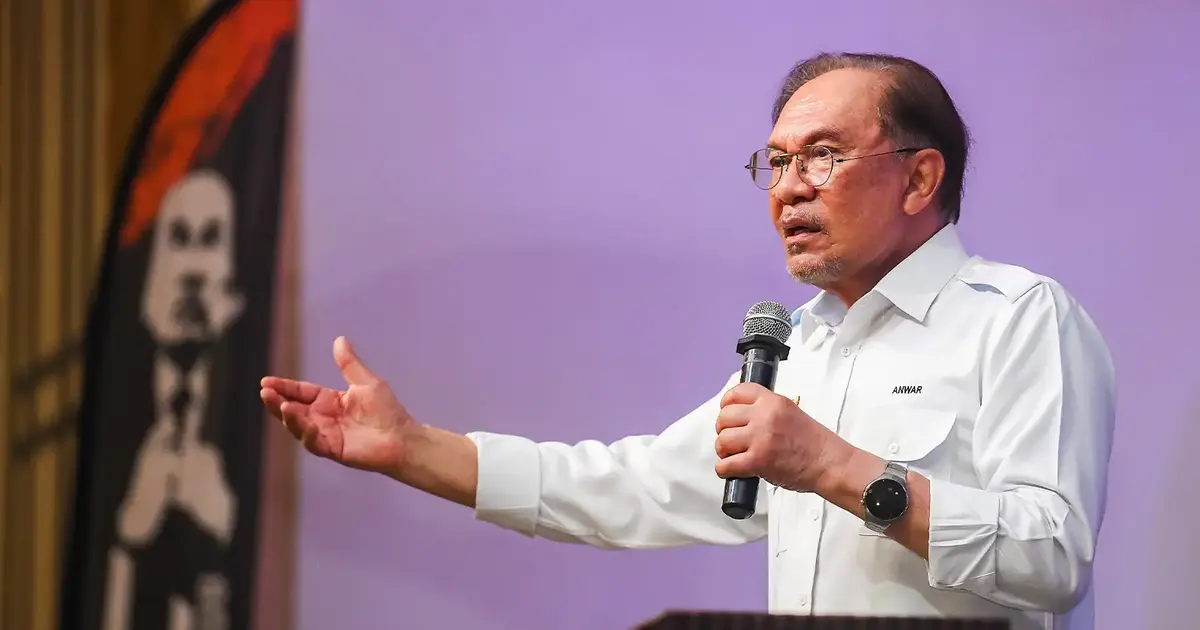
Prime Minister Anwar Ibrahim has attributed the unexpected calling of Johor's state election to pressure from a grassroots movement demanding the release of former Prime Minister Najib Razak, effectively blaming the mobilisation for forcing Pakatan Harapan into an unplanned electoral contest. Speaking as chairman of the ruling coalition, Anwar contested the necessity of holding the state polls at an accelerated timeline, implying that the coalition's hand was forced by circumstances beyond its initial planning.
The timing of Johor's dissolution and subsequent election announcement caught many political observers off guard, particularly given that the state assembly's term was not scheduled to expire imminently. The premature poll represented a significant departure from the orderly electoral calendar, with analysts noting the unusual decision to test the electorate ahead of schedule. Anwar's remarks suggest that rather than initiating the contest themselves, PH's leadership found itself responding to external political pressures that necessitated an electoral engagement sooner than desired.
The 'Free Najib' movement has been a persistent feature of Malaysian politics since the former prime minister's conviction on corruption charges related to the 1Malaysia Development Berhad (1MDB) scandal. Despite his imprisonment, Najib retains substantial support among certain constituencies, particularly within Umno's grassroots networks and among Malay-Muslim voters who view him sympathetically. The mobilisation around his potential release has periodically intensified, creating pressure on various political actors and complicating the broader political landscape.
Anwar's framing of the election as externally imposed carries significant political weight, as it allows PH to position itself as responding to unavoidable circumstances rather than seizing electoral opportunity. This narrative matters for how the coalition presents itself to voters and the extent to which it bears responsibility for the political disruption caused by the premature poll. By attributing the decision to another force, Anwar attempts to deflect potential criticism regarding PH's electoral strategy and timing.
The connection between the 'Free Najib' movement and the Johor election highlights the lingering influence of Malaysia's corruption narrative on contemporary politics. Rather than fading from public consciousness, the 1MDB affair continues to shape political dynamics, with Najib's status generating sufficient mobilisation to impact electoral calendars. This underscores how historical grievances and questions of justice remain volatile issues capable of forcing political action despite establishment preferences.
For Johor specifically, the early election carried particular significance given the state's traditionally strong Umno presence and its role as a crucial electoral battleground. The state has historically served as a bellwether for national political sentiment, making its electoral outcome consequential for coalition dynamics and government stability. An earlier-than-anticipated poll in Johor therefore disrupted preparations across multiple party structures and forced accelerated campaign positioning.
The PH chairman's comments also reflect internal coalition tensions regarding electoral timing and strategy. Different member parties within the ruling alliance maintain varying interests regarding when elections should occur, and consensus around electoral scheduling remains perpetually contested. Anwar's attribution of the decision to external forces sidesteps these internal disagreements by positing an outside catalyst that necessitated collective action regardless of individual preference.
Moreover, the 'Free Najib' movement itself represents a broader challenge to the legitimacy of PH's anti-corruption agenda, which formed a central platform during the 2018 general election that brought the coalition to power. If Najib's supporters can successfully mobilise around demands for his release, this implicitly questions whether public sentiment has shifted regarding accountability for the 1MDB scandal. The movement thus threatens the moral foundation upon which PH justified its electoral victory and subsequent governance.
Anwar's characterisation also carries implications for understanding who holds real political power in contemporary Malaysia. By suggesting that organised grassroots pressure can force state assemblies to dissolve and trigger elections, the Prime Minister acknowledges the capacity of mobilised constituencies to override institutional timelines and formal governance procedures. This points to a political system more permeable to pressure from organised interests than formal structures might suggest.
The Johor election outcome will likely prove consequential for assessing whether 'Free Najib' sentiment translates into substantial electoral support or remains largely symbolic mobilisation. Polling performance across different demographic groups may reveal the true extent of backing for Najib's rehabilitation and offer insights into whether corruption narratives retain their salience for Malaysian voters or whether other concerns have assumed greater prominence.
Looking forward, Anwar's comments suggest that PH anticipates continued pressure from the 'Free Najib' movement and faces difficult questions regarding clemency or release procedures for Najib, regardless of electoral outcomes. The movement's existence complicates PH's governance capacity and constrains its ability to present clear narratives about justice and accountability. Whether the coalition can manage this ongoing tension while maintaining electoral credibility remains a central challenge for Malaysia's political trajectory.

