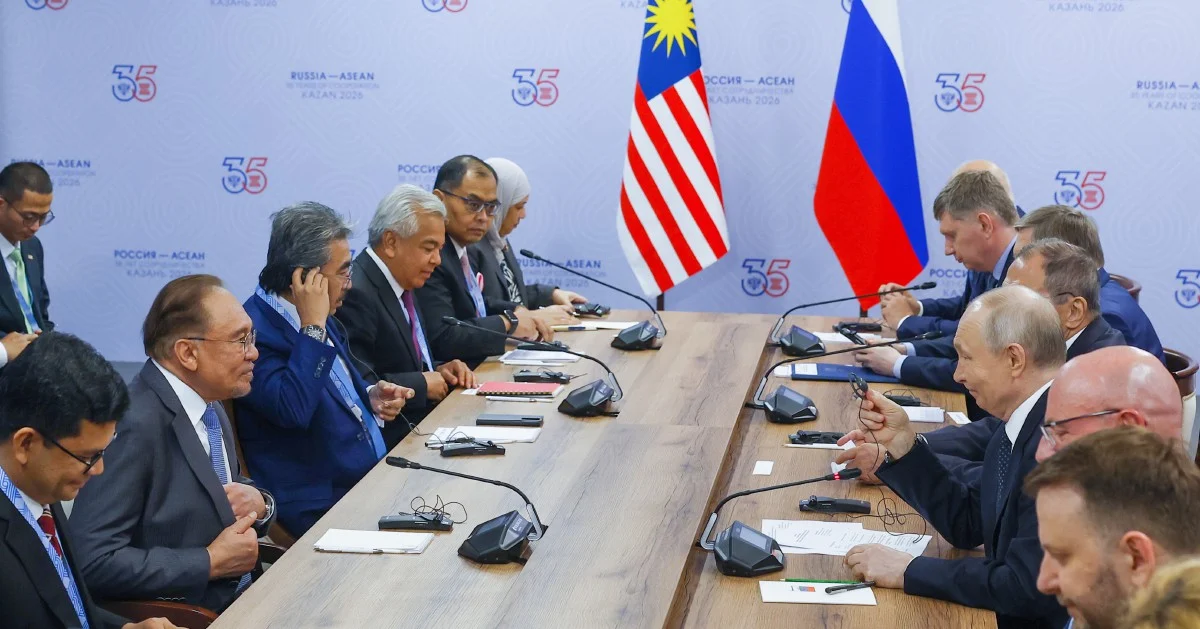
Prime Minister Datuk Seri Anwar Ibrahim has conveyed Malaysia's appreciation to Russian President Vladimir Putin for backing stronger energy collaboration involving the national oil company Petronas, marking a fresh dimension in bilateral economic engagement between the two nations. The acknowledgment, made during discussions in Kazan, underscores Malaysia's strategic focus on diversifying energy partnerships beyond traditional Western markets as global oil and gas dynamics undergo rapid transformation.
Energy cooperation between Malaysia and Russia carries particular significance given the structural shifts reshaping global hydrocarbon markets. Russia, as a major energy exporter facing geopolitical constraints from Western sanctions, has been actively seeking new commercial relationships in Asia and the Indo-Pacific region. For Malaysia, which remains a substantial petroleum producer and an important energy hub for Southeast Asia, cultivating stronger ties with Moscow offers mutual commercial benefits and broader economic resilience.
Petronas, Malaysia's integrated energy corporation, operates across exploration, production, refining, and liquefied natural gas sectors. The company generates substantial revenue for the government and employs thousands across the country. Strengthening Petronas's international partnerships aligns with Malaysia's economic strategy to position itself as a critical player in regional and global energy markets, particularly as energy transition progresses and demand patterns evolve.
The timing of Anwar's remarks reflects Malaysia's diplomatic balancing act in an increasingly multipolar world. As tensions between Western powers and Russia persist, Southeast Asian nations have maintained pragmatic approaches focused on economic self-interest rather than ideological alignment. Malaysia's emphasis on energy cooperation demonstrates how regional countries are pursuing bilateral relationships that advance their development goals while maintaining flexibility in international relations.
Russia's interest in deepening energy ties with Malaysia extends beyond simple commercial transactions. The partnership potentially includes knowledge transfer, technological cooperation, and joint ventures that could enhance Petronas's operational capabilities and expand market access. Such arrangements typically involve exploration opportunities, refining partnerships, or liquefied natural gas trading arrangements that benefit both parties and strengthen long-term economic interdependence.
For Malaysian consumers and the broader economy, expanded energy cooperation with Russia could contribute to price stability and supply security in petroleum products and natural gas. As Malaysia continues developing its economy and expanding manufacturing sectors reliant on reliable energy supplies, diversified international partnerships reduce vulnerability to supply disruptions or market monopolisation. This strategic dimension resonates particularly strongly in Southeast Asia, where energy security directly impacts industrial competitiveness and development trajectories.
The energy sector partnership also carries implications for Southeast Asian geopolitical dynamics. Malaysia's engagement with Russia, conducted through legitimate commercial channels, illustrates how regional nations navigate complex international environments. The approach contrasts with rigid bloc mentality, instead emphasising pragmatic cooperation that respects sovereignty while pursuing mutual economic advantage. This stance influences how other ASEAN members calibrate their own international relationships.
Petronas itself has demonstrated capacity to manage international partnerships across diverse geopolitical environments. The company operates in multiple countries, maintains significant foreign investments, and executes complex energy projects requiring sustained diplomatic coordination. Strengthening its relationship with Russian counterparts adds institutional depth to bilateral state-level engagement while creating commercial frameworks that survive potential political fluctuations.
The recognition of Putin's supportive stance suggests that negotiations regarding specific energy initiatives have likely progressed beyond preliminary discussions. Typically, such acknowledgments indicate that concrete proposals—potentially involving joint ventures, exploration rights, refining arrangements, or liquefied natural gas sales contracts—are under serious consideration. Malaysian officials would not publicly thank foreign leaders for support unless substantive progress had materialised.
For Malaysia's energy sector development, Russian cooperation offers technical expertise spanning decades of hydrocarbon operations in challenging environments. Russian companies possess advanced capabilities in deep-water drilling, Arctic operations, and liquefied natural gas infrastructure that could benefit Petronas's future projects. Furthermore, Russia's experience in complex international energy negotiations and contractual frameworks provides valuable insights for Malaysian decision-makers.
The energy partnership discourse also reflects Malaysia's commitment to maintaining economic relationships across diverse international players. As global energy markets realign through renewable transitions and geopolitical shifts, maintaining connections with established energy suppliers provides strategic optionality. Malaysia can simultaneously pursue renewable energy development while prudently managing traditional hydrocarbon operations and partnerships.
Looking forward, the energy cooperation framework could expand across multiple dimensions. Beyond oil and gas trading, partnerships might encompass renewable energy technologies, carbon management initiatives, and infrastructure development. Russian engineering capabilities and Malaysian market opportunities could align in complementary fashion, creating value chains that serve broader Southeast Asian energy needs.
Ultimately, Anwar's expression of gratitude to Putin reflects Malaysia's pragmatic approach to international economic engagement. By emphasising energy cooperation and technical advancement rather than political ideology, the two nations create sustainable commercial relationships benefiting both societies. For Malaysia, such partnerships strengthen economic fundamentals while preserving the strategic flexibility essential for regional stability and development progress.

%22%2F%3E%3C%2Fpattern%3E%3C%2Fdefs%3E%3Crect%20width%3D%22100%25%22%20height%3D%22100%25%22%20fill%3D%22url(%23ph40buhg)%22%2F%3E%3Crect%20width%3D%22100%25%22%20height%3D%22100%25%22%20fill%3D%22url(%23ph40buhp)%22%2F%3E%3Ctext%20x%3D%2250%25%22%20y%3D%2250%25%22%20text-anchor%3D%22middle%22%20dominant-baseline%3D%22central%22%20fill%3D%22rgba(255%2C255%2C255%2C0.95)%22%20font-family%3D%22Georgia%2C%20'Times%20New%20Roman'%2C%20serif%22%20font-weight%3D%22700%22%20font-size%3D%22320%22%20letter-spacing%3D%22-0.02em%22%3EGRS%3C%2Ftext%3E%3C%2Fsvg%3E)