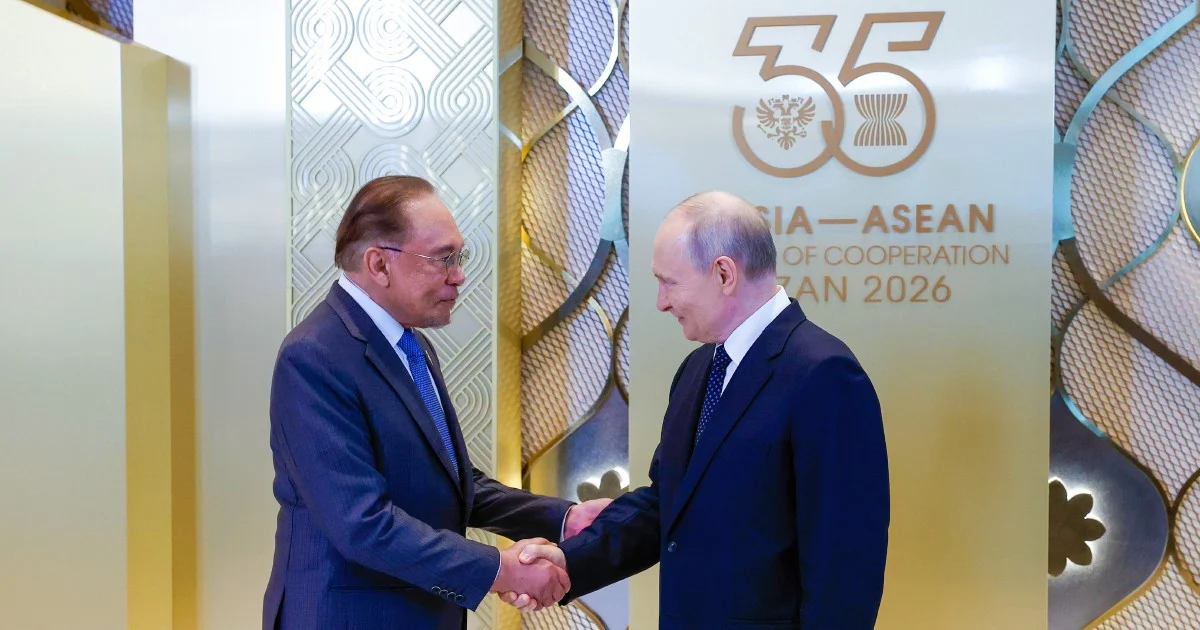
Prime Minister Datuk Seri Anwar Ibrahim and Russian President Vladimir Putin held discussions in Kazan centred on strengthening the multifaceted partnership between Malaysia and Russia, with energy security emerging as a pivotal area of potential cooperation. The meeting underscored both nations' commitment to moving beyond traditional engagement frameworks and exploring innovative mechanisms that could benefit their respective economies.
Energy cooperation represents a natural area of convergence for the two countries, given Russia's position as a global energy heavyweight and Malaysia's strategic importance as a growing energy consumer within Southeast Asia. The discussion likely examined potential avenues for Russian hydrocarbon exports to Malaysian markets, particularly liquefied natural gas partnerships that have become increasingly significant for the region's energy mix. Such arrangements would provide Malaysia with diversified supply sources while offering Russian producers alternative markets in Asia's dynamic economy.
Beyond the immediate energy agenda, the bilateral dialogue touched on mechanisms to facilitate trade outside conventional payment structures. The emphasis on conducting commerce using local currencies rather than relying exclusively on the United States dollar reflects a broader geopolitical trend gaining momentum across Asia and beyond. This approach reduces exposure to currency fluctuations and international sanctions regimes while strengthening direct economic relationships between trading partners.
Malaysia's positioning as a bridge nation between Eastern and Western markets makes such currency initiatives particularly relevant. The country has long advocated for financial innovation and regional economic integration, seeking to maximize its leverage in an increasingly multipolar world. Local currency arrangements between Kuala Lumpur and Moscow could establish precedents for similar arrangements with other partners, gradually creating an alternative payment ecosystem within Southeast Asia and beyond.
The timing of this dialogue reflects Russia's intensifying engagement with Asian markets following international sanctions. For Malaysia, the meeting presents opportunities to secure long-term energy supplies while maintaining its delicate balance between various major powers. Anwar's administration has consistently pursued pragmatic foreign policy, deepening ties with nations across the ideological spectrum while prioritizing Malaysian interests.
Energy security concerns have become increasingly acute for Malaysia and the broader region. Rising global demand, geopolitical tensions affecting traditional supply routes through the Middle East, and the transition toward renewable energy create complex challenges. Russian energy supplies could provide stability and diversification, complementing existing arrangements with Middle Eastern producers and new partnerships with renewable energy providers.
The discussion of local currency trade mechanisms also addresses longer-term concerns about financial sovereignty and reducing dependence on any single currency or payment system. As major powers compete for influence over global financial architecture, smaller nations like Malaysia benefit from having multiple options. Direct ringgit-ruble transactions could reduce transaction costs and provide additional tools for managing Malaysia's foreign exchange exposure.
Bilateral cooperation extends beyond immediate commercial considerations into broader strategic dimensions. Both nations share interests in maritime security, counter-terrorism, and regional stability. Russia's increased focus on Asian markets creates alignment opportunities with Southeast Asian nations seeking to maintain strategic autonomy and prevent any single power from dominating regional affairs.
The Kazan meeting also reflects Malaysia's continued effort to strengthen ties with non-Western powers while preserving relationships with traditional partners. This balanced approach has underpinned Malaysian foreign policy for decades, and the energy and trade discussions represent continuity of that strategy. For Malaysian businesses and consumers, diversified energy sources and alternative trade mechanisms could translate into greater economic resilience and competitive advantages.
Future cooperation frameworks emerging from these discussions could include joint energy infrastructure projects, technology transfers in specific sectors, and expanded people-to-people exchanges. Such initiatives would deepen institutional connections between the two nations while creating tangible benefits for their populations. Educational and research partnerships in energy technologies could position Malaysia as a hub for energy innovation in Southeast Asia.
The emphasis on strengthening bilateral cooperation signals that both nations view their relationship as increasingly important within their respective regional and global strategies. For Russia, engagement with Malaysia and other Asian nations counters isolation from Western markets. For Malaysia, the relationship provides leverage in negotiations with other partners while opening new commercial avenues.
Looking forward, the outcomes of such high-level discussions typically materialize through working-level negotiations and technical committees. These bodies would develop specific proposals for energy partnerships and trade mechanisms, translating political will into concrete arrangements. Success would require careful structuring to ensure compliance with international regulations while achieving the desired benefits for both parties.
The Anwar-Putin dialogue ultimately represents a pragmatic response to evolving global circumstances. Malaysia continues charting an independent course in foreign policy, engaging productively with major powers while prioritizing national interests. Energy security and financial innovation remain central concerns for the Malaysian government, and Russian cooperation could meaningfully contribute to addressing both challenges while diversifying the nation's international partnerships.

%22%2F%3E%3C%2Fpattern%3E%3C%2Fdefs%3E%3Crect%20width%3D%22100%25%22%20height%3D%22100%25%22%20fill%3D%22url(%23ph40buhg)%22%2F%3E%3Crect%20width%3D%22100%25%22%20height%3D%22100%25%22%20fill%3D%22url(%23ph40buhp)%22%2F%3E%3Ctext%20x%3D%2250%25%22%20y%3D%2250%25%22%20text-anchor%3D%22middle%22%20dominant-baseline%3D%22central%22%20fill%3D%22rgba(255%2C255%2C255%2C0.95)%22%20font-family%3D%22Georgia%2C%20'Times%20New%20Roman'%2C%20serif%22%20font-weight%3D%22700%22%20font-size%3D%22320%22%20letter-spacing%3D%22-0.02em%22%3EGRS%3C%2Ftext%3E%3C%2Fsvg%3E)