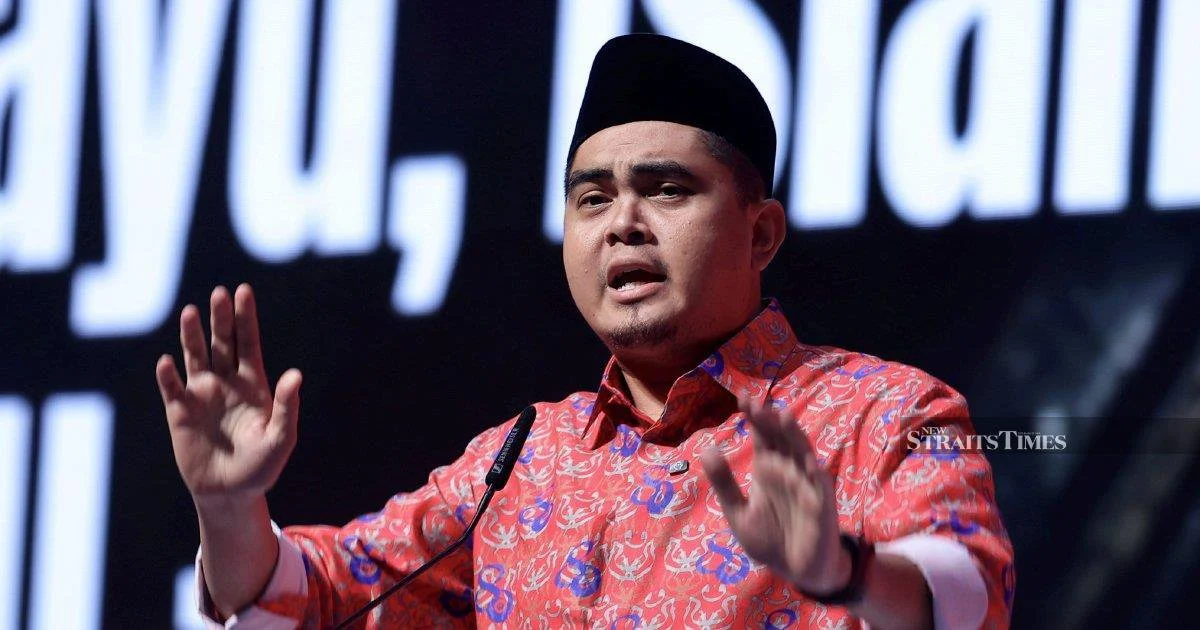
Umno Youth chief Datuk Dr Akmal Saleh has stepped up pressure on DAP deputy chairman Nga Kor Ming to make good on an earlier pledge to resign, citing Barisan Nasional's dominant performance in the recent Johor state election as the trigger moment. Speaking in Johor Baru, Akmal suggested he was even prepared to assist Nga Kor Ming in drafting the necessary resignation documentation, a thinly veiled jab at what he characterised as unfulfilled political commitments.
The exchange represents an intensifying rhetorical battle between the coalition partners and opposition figures in the aftermath of BN's emphatic electoral showing in Johor. Akmal's remarks underscore the heightened political temperature in Malaysian politics, where leaders from different camps are trading barbs over credibility and honour in fulfilling public statements. The Umno Youth leader's offer to help draft the resignation letter carries a sardonic edge, implying that Nga Kor Ming may lack the courage or conviction to follow through on his earlier declaration.
This confrontation must be understood within the broader context of Malaysian coalition politics, where Barisan Nasional has been reasserting its political dominance after a period of electoral vulnerability. The Johor result, viewed as a significant endorsement of BN's leadership, has emboldened party figures like Akmal to take a more aggressive stance toward opposition figures. For DAP, which has been a key component of the Pakatan Harapan coalition, the Johor outcome represents a setback that has invited fresh criticism from their political adversaries.
Nga Kor Ming's earlier pledge regarding resignation likely emerged from discussions about electoral accountability or party performance, though the specific circumstances and conditions surrounding the statement remain contested between the two camps. In Malaysian politics, such pledges are sometimes made during heated moments or as expressions of political conviction that leaders may later reinterpret or seek to distance themselves from, depending on changing circumstances and party calculations.
The public nature of Akmal's challenge reflects a broader pattern in contemporary Malaysian politics where leaders increasingly resort to social media and media statements to exert political pressure on opponents. Rather than relying solely on formal parliamentary procedures or internal party mechanisms, political figures now routinely use the court of public opinion to shame rivals into action or to demonstrate their own political strength and confidence.
For Umno Youth, particularly under Akmal's leadership, this type of confrontation serves multiple purposes. It energises the party's grassroots supporters by projecting an image of aggressive, confident leadership willing to challenge the opposition. It also helps consolidate Umno's position within the broader BN coalition by demonstrating that the party is capitalising on electoral momentum to strengthen its political standing and reshape the narrative around governance and accountability.
The timing of Akmal's remarks is strategically significant, coming when Barisan Nasional is attempting to translate electoral success in Johor into sustained political momentum. By calling out specific opposition figures for what he characterises as broken commitments, Akmal is attempting to undermine the credibility of the DAP and, by extension, Pakatan Harapan's broader political project. This tactic seeks to reinforce narratives about opposition untrustworthiness that BN has been promoting throughout its recent campaigns.
For DAP and its supporters, such attacks must be weighed against the party's overall electoral performance and political strategy. The party faces a delicate balancing act between defending itself against criticism while focusing on policy priorities and maintaining coalition cohesion with other Pakatan Harapan partners. How the party leadership chooses to respond—whether through a formal rebuttal, public clarification of the original statement, or strategic silence—will carry implications for both its internal unity and external political standing.
The broader significance of this exchange extends beyond personal political rivalries between Akmal and Nga Kor Ming. It reflects the consolidation of power by Barisan Nasional following electoral gains and the corresponding pressure facing opposition coalitions to regroup and rebuild after setbacks. The tone and nature of post-election political discourse often determines how quickly political narratives crystallise and how the winning coalition manages its mandate in the months ahead.
Malaysian voters observing these exchanges between political leaders may draw their own conclusions about standards of political conduct, accountability, and whether public figures prioritise principle or political expediency. The incident also illustrates how modern Malaysian politics increasingly operates through media provocations and public challenges rather than behind-the-scenes negotiations, a shift that has considerable implications for how political parties communicate with their supporters and construct their public identities.
Looking forward, the intensity of these inter-party exchanges may serve as an indicator of deeper structural tensions within Malaysian politics. Whether Nga Kor Ming addresses Akmal's challenge directly or allows it to fade from immediate attention will influence perceptions of DAP's political confidence and internal resolve. Meanwhile, Akmal's continued pressure reflects Umno Youth's apparent confidence in BN's current political position and willingness to pursue an aggressive opposition engagement strategy in the post-election period.

