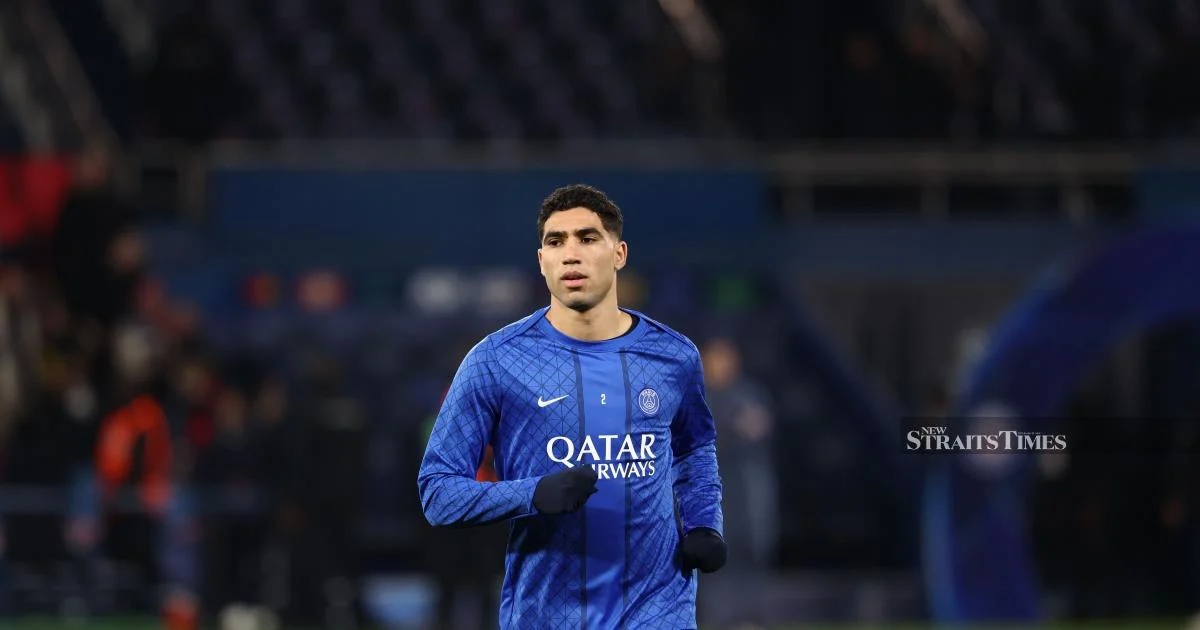
The Versailles appeals court in France has confirmed that Moroccan international Achraf Hakimi will proceed to trial on rape charges following allegations involving a young woman. The decision, delivered on Friday, maintains an earlier court ruling that found sufficient grounds for the player to face trial in the criminal justice system.
Hakimi, who plays as a defender for Paris Saint-Germain and has represented Morocco's national team at the highest level, now faces a formal trial process in France. The confirmation by the appeals court represents a significant moment in the case, as it indicates that judicial authorities have determined there is adequate evidence to proceed beyond the preliminary investigation phase. The allegations have drawn considerable international attention given Hakimi's prominence in professional football.
For Malaysian and Southeast Asian sports enthusiasts, this development highlights the broader issue of accountability within elite football. The case underscores how even the most celebrated athletes at the world's richest clubs are subject to the same legal processes as ordinary citizens when serious allegations emerge. This stands in contrast to historical patterns where some elite athletes managed to escape prosecution or face significantly reduced consequences.
The trial confirmation also carries implications for Paris Saint-Germain's administrative and sporting position. As one of Europe's most wealthy and visible football clubs, PSG faces potential scrutiny regarding player conduct and the club's response to allegations involving its roster. The situation raises questions about how major clubs balance their commercial interests with broader social responsibility when players face serious criminal charges.
Morocco's football community and national team setup must now navigate the situation carefully. Hakimi's international availability could be affected depending on how the trial progresses and any potential suspension imposed by either French authorities or the football authorities. This could have ramifications for Morocco's participation in upcoming international competitions, from World Cup qualification matches to continental tournaments.
The legal process ahead will be closely monitored by football observers across Europe and the Middle East, where French legal proceedings involving high-profile athletes often attract significant media coverage. The case reflects broader conversations within professional sport about player conduct, club responsibility, and the intersection between athletic fame and legal accountability.
Regional football fans and analysts will be watching to see how French courts handle a case involving an internationally recognized athlete. The outcome could set precedents regarding how serious allegations against prominent footballers are prosecuted and what consequences, if any, are imposed on clubs employing such players during active legal proceedings.
The appeals court's confirmation means that Hakimi's case will not be dismissed at this preliminary stage and will instead advance to formal trial proceedings. This process typically involves detailed examination of evidence, witness testimony, and legal arguments presented by both the prosecution and defence teams before a judge or jury delivers a verdict.
For the global football community, particularly clubs operating in France and throughout Europe, the case serves as a reminder that legal proceedings involving players are independent of sporting considerations. Regardless of athletic ability or commercial value to clubs, criminal allegations are treated as serious matters within France's legal system.
The timeline for the actual trial remains to be determined, and the court process could extend over months or longer depending on judicial schedules and the complexity of evidence involved. Until that point, Hakimi remains in a legal limbo where allegations remain unproven while the court system works to establish facts through the trial process.
This confirmation reinforces the principle that no athlete, regardless of fame or financial resources, exists outside the reach of law enforcement and judicial systems. The case demonstrates how professional football's glamorous public image can coexist with serious legal challenges that demand resolution through established criminal justice procedures.