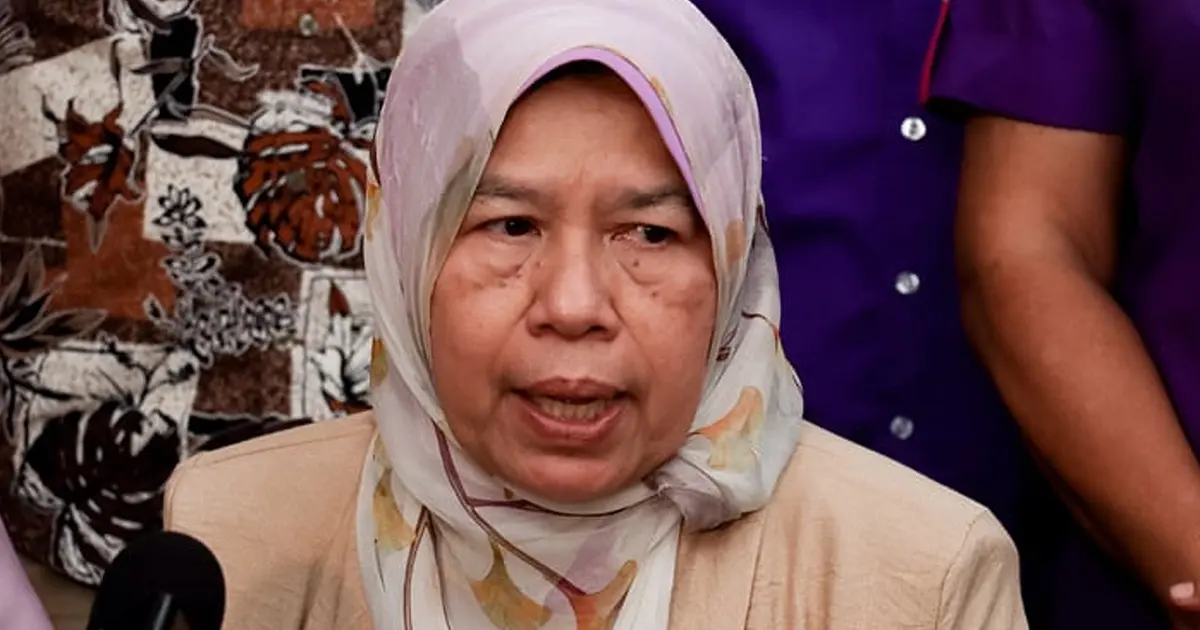
Zuraida Makan, who once held the position of vice-president in Parti Keadilan Rakyat, has made clear her intention to remain outside the party despite Anwar Ibrahim's recent overtures to former members. The former politician's statement represents a notable rebuff to the Prime Minister's efforts to reunite the party around its leadership, signalling that some longstanding figures within PKR's ecosystem may not be easily won back through appeals for reconciliation.
Anwar Ibrahim has been actively reaching out to veterans who have departed from the party in recent years, seeking to bolster PKR's ranks and consolidate support ahead of potential political developments. The party has experienced various departures as individuals pursued different political paths or took issue with internal developments. Anwar's initiative reflects a broader strategy to strengthen PKR's organisational foundation and restore relationships that may have frayed over time.
Zuraida's categorical dismissal of any prospect of returning to PKR underscores the complex dynamics that continue to shape Malaysian politics at the interpersonal level. Her departure from the party was not merely a routine political shuffle but represented a significant moment that reflected deeper fault lines within the party's leadership structure and broader ideological direction. The circumstances surrounding her exit remain a defining feature of her political identity outside PKR.
The significance of Zuraida's position extends beyond her individual choice. Her refusal to countenance rejoining signals to other departed figures that maintaining distance from PKR remains a viable and defensible political stance. This could complicate Anwar's consolidation efforts, as other veterans may interpret her firmness as validating their own decisions to pursue alternative alignments or remain independent from party structures.
For Malaysian observers, the episode illustrates a persistent tension within PKR between the leadership's desire to project unity and the reality of personal grievances and political differences that accumulate over time. Veteran members who depart do so for reasons that are rarely simple; they often involve disagreements over strategy, personality conflicts, or differing visions for the party's future. Winning them back requires more than rhetorical appeals; it demands addressing the underlying concerns that prompted their departure.
Zuraida's political trajectory since leaving PKR has involved exploring different organisational platforms and maintaining a presence in electoral politics through alternative arrangements. Her continued activity outside the party demonstrates that former members need not disappear from the political landscape when they exit PKR. This sustains a parallel ecosystem of ex-PKR figures who remain engaged in Malaysian politics while pursuing independent paths.
The timing of Anwar's outreach initiative matters considerably. As Malaysia navigates through various political cycles and coalition arrangements, the stability and cohesion of PKR as a party directly affects the broader stability of the government formation. A stronger PKR can better insulate Anwar's position and provide a more durable foundation for policy implementation. Conversely, ongoing departures or refusals to return suggest underlying organisational challenges that could have implications for long-term political stability.
From a Southeast Asian perspective, PKR's internal dynamics are noteworthy because the party has positioned itself as a vehicle for reform-oriented politics and democratic renewal in Malaysia. When figures who champion such ideals maintain distance from the party, it raises questions about whether the organisation has successfully embodied its founding principles or whether transformation is needed at institutional levels to restore confidence among its veteran cadre.
Zuraida's straightforward rejection also reflects a broader pattern in Malaysian politics where personality and institutional loyalty often diverge. Politicians frequently maintain cordial public relationships even as they operate within separate organisational structures. Her refusal to rejoin does not necessarily imply antagonism toward Anwar personally, but rather a pragmatic calculation that her political interests and principles are better served through her current positioning.
For PKR's future, such rejections from former senior figures create an ongoing narrative of incompleteness. The party cannot claim full reconciliation with its past while prominent veterans publicly decline overtures to return. This dynamic may actually serve a useful function, preventing the leadership from becoming complacent about the need for internal reforms that could genuinely address the grievances that prompted departures in the first place.
Looking forward, whether other PKR veterans follow Zuraida's example or respond differently to Anwar's calls will largely depend on their individual circumstances and assessments of the party's direction. Zuraida's prominence means her decision carries symbolic weight, but organisational rebuilding typically requires tailored approaches that acknowledge the specific concerns of different groups rather than broad appeals for return.

