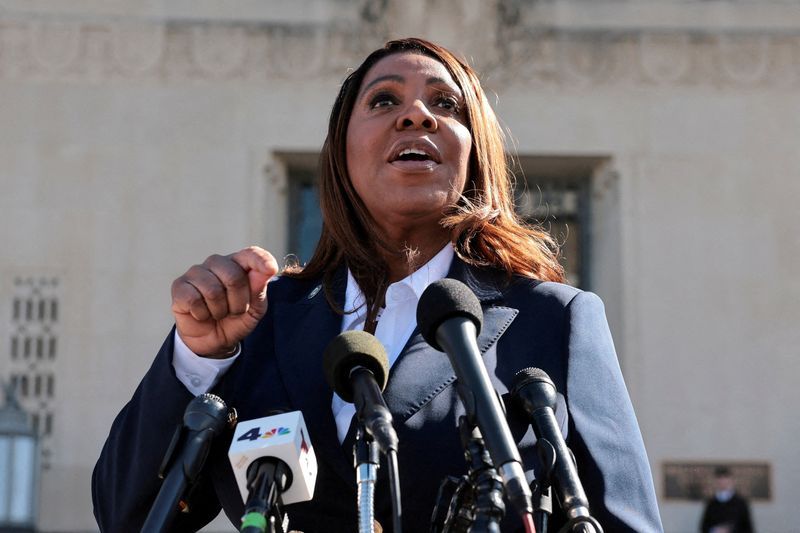
A New York state judge has dealt a significant blow to Zelle's legal strategy by refusing to dismiss a consumer protection lawsuit brought by New York Attorney General Letitia James. Justice Phaedra Perry-Bond of Manhattan's state court determined that James had presented sufficient evidence to proceed with her case, which centers on allegations that the digital payment platform knowingly sacrificed consumer safeguards in pursuit of rapid market expansion and competitive advantage.
At the heart of the dispute is James's contention that Zelle's ownership structure—controlled by seven major American financial institutions including Bank of America, JPMorgan Chase, Wells Fargo, Capital One, PNC, US Bank, and Truist—enabled executives to make calculated decisions to rush the platform to market despite explicit warnings from partner banks about security vulnerabilities. The judge found that James had adequately documented how Zelle prioritised accessibility, convenience, and user acquisition metrics at the direct expense of implementing protective mechanisms that might have prevented fraud.
The court's analysis identified a particularly troubling aspect of Zelle's operations: the company continues to collect and retain transaction fees even from exchanges later identified as fraudulent. This practice raised uncomfortable questions about whether Zelle had implicitly or explicitly condoned the illegal activities occurring on its platform, creating financial incentives that might have discouraged swift intervention when fraud patterns emerged. Such revenue collection from compromised transactions is likely to feature prominently in the substantive litigation ahead.
James has documented a pattern of deceptive marketing that marketed Zelle to consumers as offering "peace of mind" and being "backed by the banks, so you know it's secure." These assurances now appear particularly questionable given that the platform reportedly failed to implement basic protective features for years despite identifying them as necessary. The contradiction between Zelle's reassuring messaging and its actual security posture forms a crucial element of the consumer protection claim.
The attorney general's investigation identified several common fraud schemes exploiting Zelle's vulnerabilities. Criminals hacked into legitimate user accounts and executed unauthorised transfers, manipulated victims into sending money for phantom goods and services, and successfully impersonated financial institutions, government agencies, and utility companies. These tactics succeeded repeatedly because Zelle lacked mechanisms to identify suspicious patterns or alert users before transactions completed.
Zelle launched in 2017 as a direct challenge to rival payment applications including PayPal's Venmo and Block's Cash App. The platform has grown substantially, but its rapid expansion appears to have come at the cost of security infrastructure that competitors implemented earlier. The timing of Zelle's eventual adoption of "basic" safeguards is particularly damaging to the company's defence—the platform did not deploy protective measures it had itself proposed four years earlier, waiting until 2023 only after external pressure from the U.S. Consumer Financial Protection Bureau and congressional investigators intensified.
Zelle's legal defence had rested partly on the argument that marketing the platform as safe was not inherently misleading, and that the company bore no responsibility for what it characterised as "passive nonfeasance"—essentially arguing that failing to prevent fraud was not the same as actively facilitating it. The judge's rejection of this reasoning suggests courts may be moving toward holding payment platforms to higher standards of care, particularly when those platforms have internal knowledge of specific security gaps.
Company spokesman Eric Blankenbaker issued a strong statement asserting that fraud reports on Zelle had "always been exceptionally low" and that James was pursuing the case for political objectives by reviving claims that other courts had previously rejected. This defence rings increasingly hollow given the confirmed scale of losses and the paper trail showing years of internal awareness of security shortcomings. The company's insistence that its reputation remains intact contradicts the substantial financial and reputational damage already evident from the broader investigation.
The timing of James's lawsuit carries significant implications for regulatory enforcement more broadly. The federal CFPB had pursued a similar case but dropped its investigation in March 2025, shortly after President Donald Trump began his second term and the agency curtailed most enforcement activities. James's decision to proceed independently suggests state-level regulators may increasingly become the primary advocates for consumer protection when federal agencies retreat from enforcement priorities.
For Malaysian financial technology companies and regulators monitoring developments in international digital payments, this case illustrates how payment platforms face mounting legal liability for security decisions made during rapid growth phases. The judgment suggests that courts increasingly expect platforms to implement available protective technologies rather than accept fraud as a cost of doing business. This shift has direct relevance to Southeast Asian fintech expansion, where regulatory frameworks are still evolving and the balance between innovation speed and consumer protection remains contested.
The refusal to dismiss the case ensures that James will proceed to discovery and trial, where the extent of Zelle's internal communications about known security vulnerabilities will likely become public. Documents revealing how executives weighed fraud prevention against growth targets could fundamentally reshape how financial regulators assess platform liability. For investors in payment technology companies throughout the region, this precedent signals that inadequate security implementation may become a source of significant long-term legal exposure and reputational damage regardless of market leadership position.

