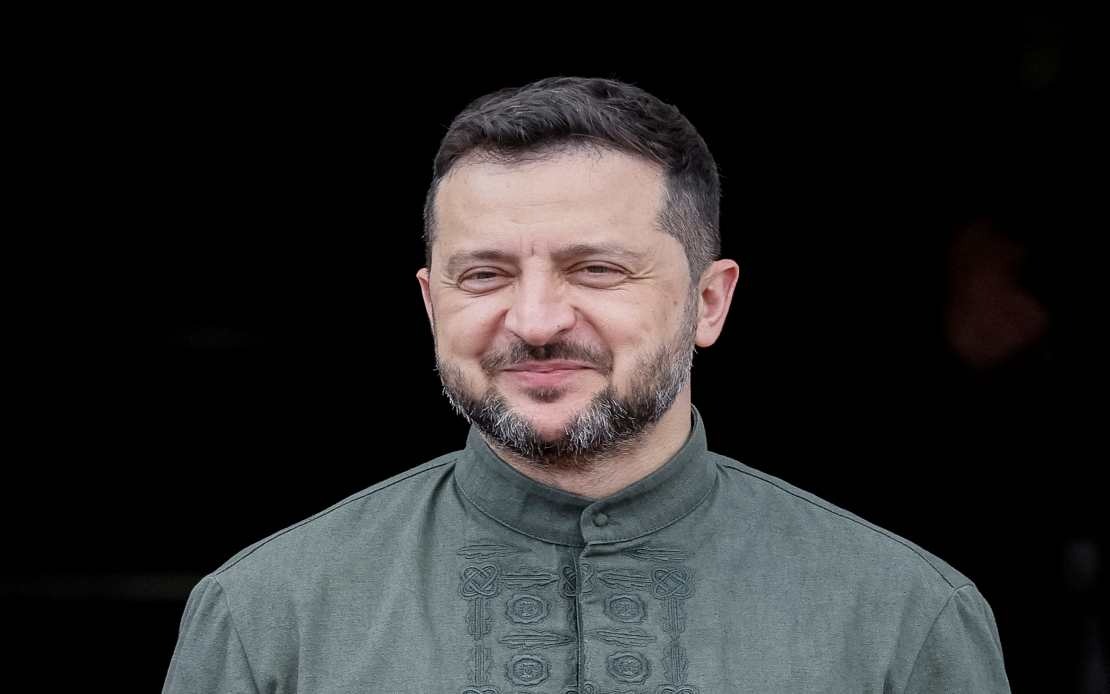
President Volodymyr Zelensky has formally enacted legislation creating a state pantheon dedicated to honouring Ukrainian national heroes, a move that has triggered sharp diplomatic friction with Poland and underscores the complex historical grievances dividing the two neighbouring nations. The decision, announced through the Ukrainian parliament and confirmed by the Ukrinform news agency, represents a significant assertion of Ukraine's right to define its own historical narrative—even as it risks straining relations with a crucial Western ally providing military and diplomatic support during the ongoing conflict with Russia.
The pantheon legislation carries profound historical dimensions that resonate far beyond ceremonial considerations. At its core lies the contentious legacy of the Ukrainian Insurgent Army (UPA), an underground nationalist movement that operated during Germany's occupation of Ukraine in World War II. Historical records document that UPA units perpetrated mass killings targeting Polish and Jewish populations, particularly in the Volyn region of what is now western Ukraine, resulting in tens of thousands of deaths. For Poland, the proposed elevation of figures associated with these organisations constitutes a painful reopening of wartime wounds and a troubling validation of those responsible for genocide on Polish soil.
Zelensky has defended the law with characteristic firmness, declaring before war veterans that Ukraine possesses the sovereign right to determine its own heroic pantheon without external pressure. This rhetorical stance reflects a broader Ukrainian position that distinguishes between nationalist fighters for independence and perpetrators of specific atrocities—a distinction that Poland categorically rejects. The presidential statement emphasises Ukrainian self-determination, signalling that Kyiv will not permit historical disputes to dictate its memorial and commemorative policies, even if doing so alienates important partners.
The memorial structure itself extends beyond the controversial UPA figures, encompassing historical personalities spanning Ukraine's medieval period through to modern times. The pantheon will be physically located in Kyiv and is designed to function both as a monument to national historical figures and as a burial site for deceased Ukrainian presidents, thereby assuming profound symbolic importance in Ukraine's political and cultural landscape. This dual commemorative purpose—honouring both historical fighters and contemporary statespeople—underscores the memorial's centrality to Ukrainian national identity construction.
The diplomatic implications of this legislation have already manifested tangibly in Polish responses. Warsaw's office under President Karol Nawrocki issued a statement indicating that from Poland's perspective, commemorating individuals accused of genocide contradicts the values and historical memory that should unite Western democracies. This formulation positions the dispute not merely as disagreement over history but as a fundamental question about whether Ukraine can remain a credible member of the Western alliance whilst honouring those responsible for atrocities against fellow Europeans. The framing reveals Poland's anxiety that Ukrainian nation-building may proceed along paths incompatible with European integration.
Tensions between Kyiv and Warsaw have escalated dramatically over the preceding months, predating the pantheon law's passage. In June, Zelensky's decision to award the honorary title "Heroes of the UPA" to a military unit provoked Polish retaliation through the withdrawal of the Order of the White Eagle previously bestowed upon the Ukrainian president. This tit-for-tat dynamic continued as several politicians from both nations returned honours and decorations received from their counterpart countries, transforming diplomatic recognition into a casualty of the historical dispute.
The Polish government's measured initial response to the pantheon law's passage in July represents diplomatic restraint even as underlying grievances persist. Rather than immediate condemnation, Warsaw has signalled concern that such measures move Ukraine further from alignment with Western historical consciousness and values. This approach suggests Polish policymakers are attempting to balance legitimate historical grievances against the strategic imperative of maintaining Ukrainian partnership in confronting Russian aggression—a difficult equilibrium that may prove increasingly untenable if commemorative measures continue escalating.
For Malaysia and Southeast Asian observers, this episode illuminates broader tensions between national identity construction and regional integration. Like many developing nations, Ukraine grapples with defining historical narratives that reflect local experiences of struggle whilst remaining internationally acceptable. The pantheon controversy demonstrates how memorial decisions carry weight beyond cultural significance, potentially reshaping geopolitical alignments and complicating diplomatic relationships with former adversaries now positioned as allies. The dispute also highlights how historical grievances—even those emanating from the 1940s—retain capacity to destabilise contemporary political relationships.
The timing of this legislation merits consideration within Ukraine's broader wartime context. Domestically, emphasising Ukrainian nationalist narratives and honouring independence fighters serves to rally national cohesion during existential struggle against Russian invasion. Zelensky's political position rests partly on projecting Ukrainian resolve and cultural assertion, making commemoration of nationalist figures symbolically valuable regardless of historical complications. Yet this domestic imperative collides with international diplomatic requirements, particularly regarding Poland, whose geographic proximity and military cooperation remain strategically vital.
The pantheon dispute also reflects deeper questions about historical reconciliation in Eastern Europe. Unlike Western European nations, which have largely achieved consensus regarding World War II historical narratives, Eastern European countries continue negotiating fundamentally different interpretations of the same historical events. Poland views UPA members as perpetrators of genocide; Ukraine views them as independence fighters operating under occupation. These incommensurable framings resist conventional diplomatic resolution through compromise or negotiation.
Looking forward, the pantheon law threatens to create enduring complications in Ukraine-Poland relations during a period when both nations should ideally be coordinating responses to Russian regional ambitions. Additional commemorative measures or statements could precipitate further Polish retaliation, potentially affecting practical cooperation on defence matters or European integration processes. The dispute illustrates how historical memory policies, whilst ostensibly cultural concerns, carry direct implications for contemporary alliance structures and geopolitical stability in Europe.

