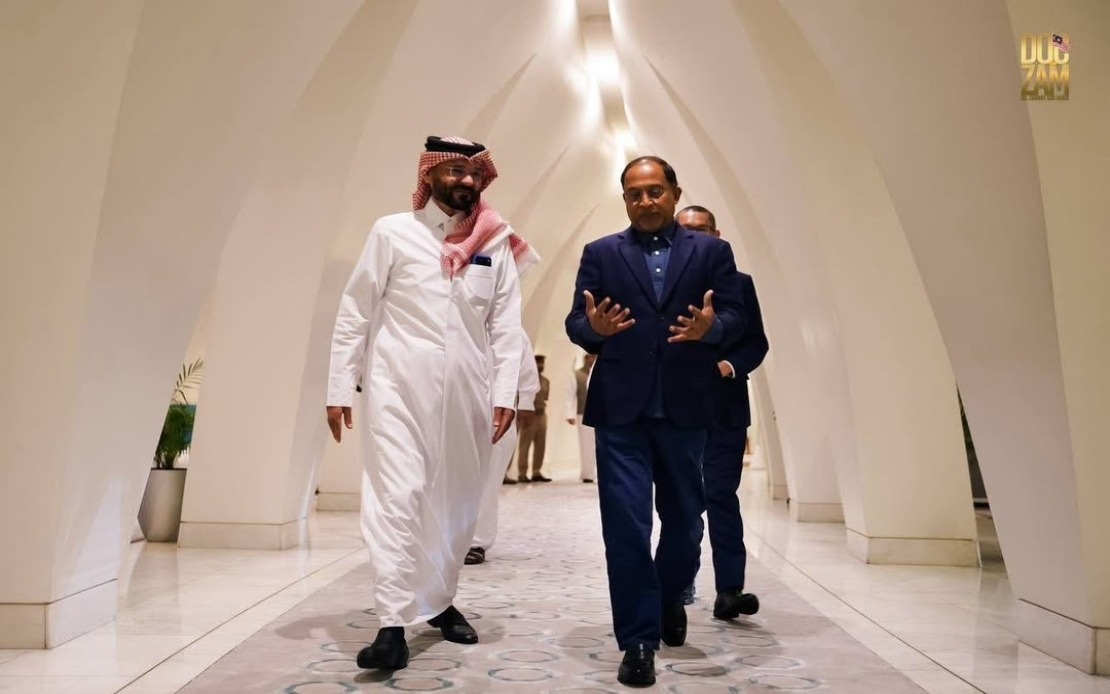
Malaysia's Higher Education Minister Datuk Seri Dr Zambry Abd Kadir touched down in Doha early on Tuesday morning to represent the Malaysian government in honouring the late Father Amir of Qatar, Sheikh Hamad bin Khalifa Al Thani, who passed away on Sunday at the age of 74. The minister's presence underscores Malaysia's respect for a significant regional figure and reflects the diplomatic importance both nations place on their bilateral relationship during this period of mourning.
Zambry announced his intention to visit the current Amir of Qatar, Sheikh Tamim bin Hamad Al Thani, at Lusail Palace to convey the government's condolences. In remarks posted on Facebook, the minister emphasised Malaysia's solidarity with the Qatari leadership and people, saying the nation "extends its deepest condolences to the leadership and the people of Qatar for the passing of the Father Amir, Sheikh Hamad bin Khalifa Al Thani." The formal nature of this delegation demonstrates Malaysia's commitment to maintaining strong ties with Qatar, one of the Gulf Cooperation Council's most influential members.
Sheikh Hamad's death marks the end of a transformative era in Qatari politics. The late Father Amir steered Qatar through a remarkable period of development and international prominence from 1995 until 2013, when he voluntarily relinquished power to his son. This transfer of authority was relatively unusual in the Gulf region, signalling a managed succession that set the stage for the current amir's continued modernisation agenda. During Sheikh Hamad's tenure, Qatar evolved from a modest oil-producing state into a global economic and political powerhouse, establishing itself as a major player in international affairs through strategic investments and diplomatic initiatives.
The succession to Sheikh Tamim has proven stable and productive, with the current amir maintaining and expanding upon many of his father's foundational policies while introducing his own vision for Qatar's future. Sheikh Hamad's passing thus represents not merely the loss of a historical figure but also a moment of reflection on how the father's legacy continues to shape Qatar's trajectory under the son's leadership. For observers across Southeast Asia, including Malaysia, the peaceful and orderly nature of this succession model offers insights into institutional continuity within Gulf states.
Qatar's government has declared four days of official national mourning beginning on Sunday, July 12. During this period, all ministries, government entities, and public institutions throughout the country will remain closed, reflecting the nation's respect for the departed leader. This comprehensive cessation of normal government operations underscores Sheikh Hamad's historical significance within Qatari society and the depth of mourning observed across state institutions. The formal observance provides Qatari citizens and international delegations alike with time to pay their respects and participate in commemorative ceremonies.
Malaysia's dispatch of a cabinet-level minister to attend the funeral ceremonies demonstrates the weight the government places on its relationship with Qatar. As a Muslim-majority nation and an active member of the Organisation of Islamic Cooperation, Malaysia views its connections with Gulf states as strategically and culturally vital. Qatar, in turn, has maintained strong ties with Southeast Asian nations through economic partnerships, educational exchanges, and diplomatic cooperation. The Higher Education Minister's presence at this solemn occasion reinforces these bonds at a critical moment.
Sheikh Hamad's reign witnessed Qatar's transformation into a regional financial hub and diplomatic centre. His decision to establish Al Jazeera in 1996 fundamentally altered media landscapes across the Arab world and beyond, giving Qatar a prominent voice in global communications. Additionally, his government pursued massive infrastructure projects, diversified the economy beyond hydrocarbon exports, and positioned Qatar as a mediator in regional conflicts. These achievements established Sheikh Hamad as a visionary leader whose influence extended far beyond Qatar's borders, earning respect from governments across the Middle East, Asia, and beyond.
The peaceful transition of power in 2013 demonstrated Sheikh Hamad's commitment to institutional stability and constitutional governance. Rather than clinging to authority, he chose to step aside at a time of his choosing, allowing the next generation to lead. This calculated succession prevented potential conflicts and ensured that Qatar's institutions remained robust and functional. For Malaysian observers, particularly those interested in good governance and institutional development, Sheikh Hamad's willingness to voluntarily relinquish power stands as a notable example of leadership transition in the modern Gulf context.
For Malaysia specifically, Qatar represents both a strategic partner and a significant investor. Qatari sovereign wealth funds have stakes in Malaysian real estate, financial institutions, and various commercial ventures. Beyond economics, both nations share Islamic heritage and values, facilitating cooperation in education, healthcare, and cultural exchanges. The presence of Malaysian diplomatic representation at Sheikh Hamad's funeral, therefore, carries practical significance in maintaining and potentially deepening these multifaceted relationships under the current amir's administration.
Sheikh Hamad's legacy also encompasses his role in elevating Qatar's soft power globally. The nation's hosting of the FIFA World Cup in 2022, achieved under his foundational vision and his son's execution, represented a crowning achievement of his development strategy. His emphasis on education, exemplified through institutions like the Education City complex, has shaped generations of Qatari leaders and professionals. These contributions to nation-building and international standing will likely influence how future historians assess his eighteen-year reign and its lasting impact on the Gulf region.
The minister's diplomatic visit also carries symbolic weight for Malaysia's broader foreign policy positioning. By promptly dispatching a senior cabinet member to pay respects, Malaysia signals its alignment with regional powers and its commitment to maintaining strong Gulf relationships. At a time when Southeast Asian nations are carefully balancing relationships with various global powers, such gestures of respect and solidarity with key regional players reinforce Malaysia's role as a serious diplomatic actor in international affairs. The funeral attendance thus transcends mere ceremony, serving as a platform for reaffirming shared values and mutual respect between two significant Asian nations.

