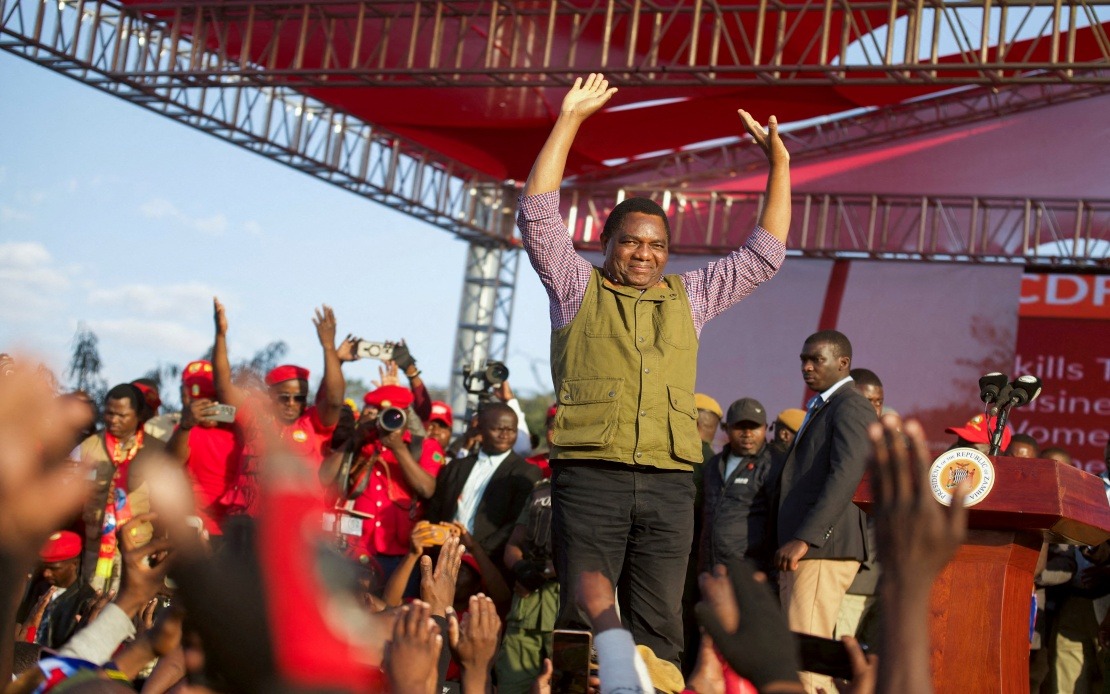
Zambian President Hakainde Hichilema has decisively won re-election, claiming a second term in the Southern African nation after the Electoral Commission of Zambia announced his victory early Tuesday morning. The 64-year-old incumbent accumulated more than 2.9 million votes, substantially exceeding the constitutionally mandated threshold of 50 per cent plus one vote needed to secure the presidency. The announcement capped a significant political moment for the country and vindicated Hichilema's governance record since taking office in 2021.
Hichilema's victory margin proved commanding enough that electoral officials determined the outcome was mathematically certain despite some outstanding tallies from scattered polling stations. Electoral Commission of Zambia chairperson Mwanagala Zaloumis formally declared Hichilema president-elect at the national election centre in Lusaka, noting that remaining results from select constituencies would prove immaterial to the final outcome. This assessment underscored the scale of Hichilema's triumph at the ballot box across the country's 226 constituencies.
The primary opposition challenge came from Brian Mundubile, representing the National Restoration Party for Unity and Progress (NRPUP), who garnered 1.8 million votes. The substantial gap between the top two candidates—exceeding one million votes—reflected a decisive public endorsement of the incumbent administration's direction. Mundubile's performance, whilst respectable, proved insufficient to mount a meaningful challenge to Hichilema's consolidating support base across Zambia's diverse regions.
Upon learning of his victory, Hichilema addressed supporters through social media, expressing gratitude for the electorate's confidence and reaffirming his commitment to public service. His message struck a tone of humility and responsibility, acknowledging the trust voters had extended in granting him another five-year mandate. The address reflected the measured political style that has characterised his presidency since assuming office three years earlier, following his own historic election victory after multiple previous unsuccessful campaigns.
The celebration that erupted in Lusaka demonstrated the enthusiasm with which many citizens received the election result. Crowds converged on city streets throughout the night and early morning hours, defying the Southern African winter chill to express their support for the returning administration. The scenes of jubilation across the capital suggested broad-based satisfaction with the political direction endorsed by the electoral process, cutting across various demographic and social segments within the urban population.
Collins Maoma, national chairperson of Hichilema's ruling United Party for National Development (UPND), characterised the election as a powerful reaffirmation of public confidence in the president's stewardship. His comments to journalists underscored the party's interpretation of the decisive victory as a mandate to continue existing policy frameworks and leadership approaches. The UPND's substantial parliamentary support, which typically accompanies such presidential margins, positioned the party to maintain legislative coherence behind its executive programme throughout the coming term.
Hichilema's return to office represents continuity in Zambian governance at a critical juncture for the Southern African nation. The country has grappled with substantial economic challenges, including elevated debt levels and currency pressures, which formed the backdrop to the electoral contest. His previous term witnessed efforts to stabilise the economy and restructure Zambia's relationship with international creditors, initiatives that voters apparently wished to see extended and developed further.
The election itself followed last Thursday's polling day without significant reports of major disruptions or security incidents, suggesting a relatively peaceful democratic exercise. The orderly completion of the electoral process and rapid certification of results reflected institutional capacity within Zambia's electoral commission and broader commitment to constitutional governance among major political actors. Such procedural stability carries importance for regional perceptions of Zambian democratic maturity, particularly given volatility experienced in certain neighbouring countries.
For Southeast Asian readers, Zambia's election cycle offers relevant perspective on African democratic patterns and regional governance trends. The decisive nature of Hichilema's re-election, coupled with the acceptance of results by opposition forces, demonstrates the consolidation of democratic norms in parts of Africa. Zambia's experience contrasts instructively with countries experiencing electoral contestation or democratic backsliding, relevant considerations for regional observers monitoring governance trajectories across the developing world.
The victory positions Hichilema to pursue medium-term policy objectives without the immediate pressure of electoral competition. His administration's approach to economic reform, infrastructure development, and social provision will likely shape Zambian trajectories throughout his second term. The clarity of his mandate potentially enables more decisive policymaking on contentious issues where public consensus emerged through the election process, though substantial challenges in revenue generation and service delivery remain formidable constraints on governmental capacity.

