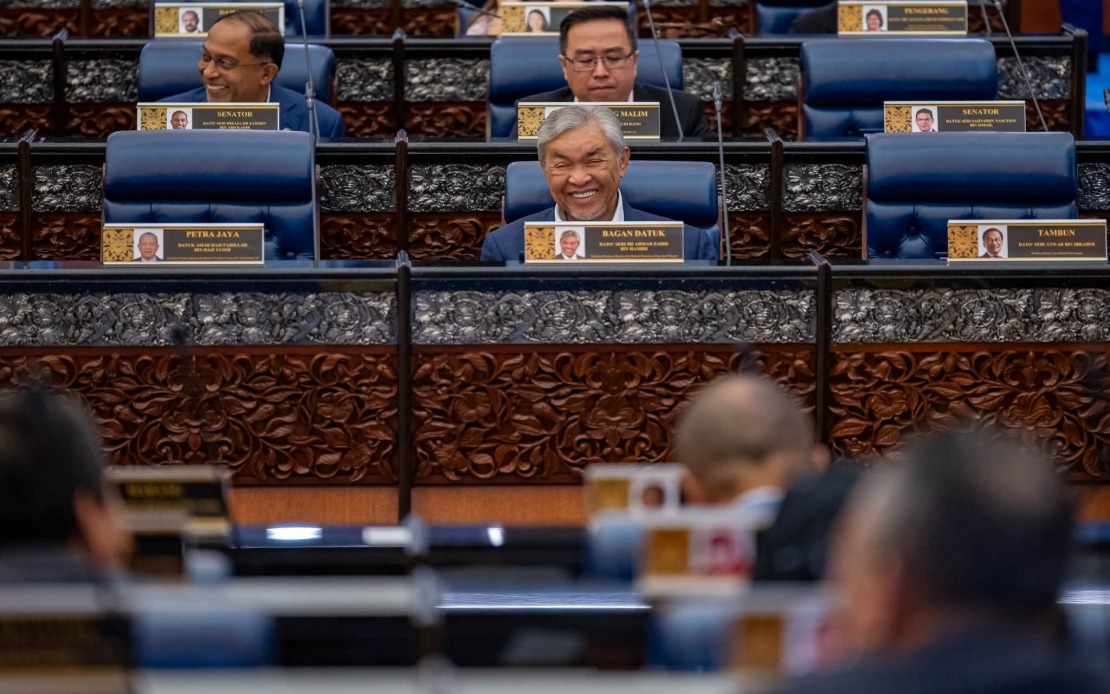
Deputy Prime Minister Datuk Seri Dr Ahmad Zahid Hamidi has warned against unfounded allegations regarding Tabung Haji, emphasizing that any criticism of the institution should be paired with measurable remedial steps. Speaking in the wake of a special parliamentary session examining the Royal Commission of Inquiry report on the Islamic pilgrimage fund, Zahid stressed the importance of maintaining public confidence in one of Malaysia's most significant Islamic organisations through evidence-based discourse rather than speculation or conjecture.
Zahid, who also holds the Rural and Regional Development portfolio, framed his remarks within the broader context of institutional accountability. He acknowledged the value of parliamentary scrutiny, particularly given the high-profile nature of Tabung Haji's operations and its responsibility as custodian of funds belonging to millions of Malaysian Muslims preparing for the hajj pilgrimage. The special sitting provided an opportunity for elected representatives to thoroughly examine the RCI's findings and engage in substantive debate on governance improvements, he noted.
The Royal Commission of Inquiry had been tasked with investigating Tabung Haji's operations and management practices spanning the 2014 to 2020 period, a timeframe that encompassed significant market volatility and evolving regulatory environments. The resulting report identified multiple operational and administrative shortcomings within the institution, presenting 25 specific recommendations designed to strengthen governance, transparency, and financial stewardship. By July 30, Tabung Haji had already begun implementing three-quarters of these recommendations, demonstrating a responsive approach to the inquiry's findings.
The public disclosure of the RCI report on July 29 represented a significant moment in the management of the controversy surrounding Tabung Haji. The government's decision to allow full parliamentary examination of the document reflected a commitment to transparency and accountability, while simultaneously creating space for informed discussion among elected representatives. This approach contrasts with earlier periods when the inquiry's status remained under wraps, prompting speculation about the scope and severity of any identified problems.
Zahid's emphasis on the need for "responsible action" following criticism carries particular weight in Malaysia's political context. The deputy premier was signalling that mere talking points or rhetorical salvos lack substantive value; instead, concrete steps to address identified weaknesses must follow any public commentary. This framework implicitly rejects sensationalism or point-scoring that might prioritise short-term political gain over the long-term stability and credibility of a major financial institution serving the Muslim community.
The parliamentary session itself underscored the political salience of Tabung Haji governance. Opposition and government-aligned MPs alike demonstrated keen interest in the RCI findings, understanding that the institution's performance directly affects millions of Malaysians who entrust their savings to the fund. Questions about investment decisions, risk management, operational efficiency, and internal controls all came under the microscope, reflecting legitimate public interest in how religious institutions handle financial assets.
For Malaysian Muslims and aspiring pilgrims, the state of Tabung Haji carries particular significance beyond ordinary institutional performance metrics. The fund represents not simply a financial vehicle but a culturally and religiously important mechanism enabling ordinary Malaysians to fulfil one of Islam's five pillars. Any erosion of confidence in Tabung Haji's integrity therefore has implications extending beyond balance sheets and operating margins into questions of community trust and religious observance.
The identification of 25 distinct areas requiring improvement suggests systemic rather than isolated problems within Tabung Haji's operations during the period under review. These ranged from governance structures to investment protocols, compliance frameworks to stakeholder communication mechanisms. The relative speed with which 75 percent of recommendations were adopted indicates either that implementation was already underway or that leadership recognised the urgency of demonstrating responsiveness to public and parliamentary concern.
Zahid's invocation of wisdom and sincerity in addressing the matter reflects a broader challenge facing Malaysian governance: how to balance accountability and reform with institutional stability. Tabung Haji, like other statutory bodies, requires both rigorous oversight and sufficient public confidence to function effectively. The parliamentary discussion provided a platform for this balance, allowing detailed examination of problems without descending into accusations that might undermine the institution itself.
The broader implications for Southeast Asian religious institutions merit consideration. Tabung Haji's experience demonstrates the importance of strong governance frameworks within Islamic financial institutions, particularly those managing assets on behalf of large communities. The RCI report and subsequent reforms may offer valuable lessons for counterpart institutions across the region navigating similar challenges around transparency, accountability, and investment stewardship.
Moving forward, the implementation trajectory of the remaining 25 percent of recommendations will be closely monitored. Parliamentary members and public observers will assess whether Tabung Haji's leadership translates recommendations into substantive operational changes or whether implementation stalls, suggesting that the criticisms outlined in the RCI report have not been fully absorbed. Zahid's message essentially places the burden on institutional leadership to demonstrate that parliamentary debate translates into tangible improvements benefiting the millions of Malaysians whose retirement savings and religious aspirations depend on Tabung Haji's continued strength and integrity.

