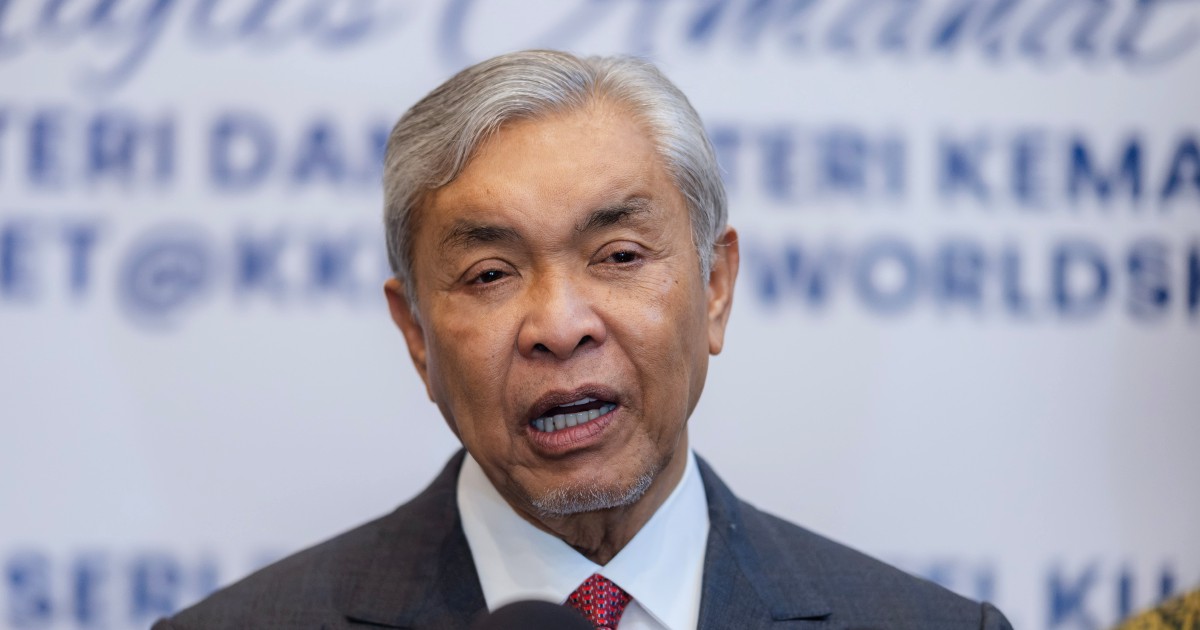
Deputy Prime Minister Datuk Seri Dr Ahmad Zahid Hamidi has thrown his weight behind calls to reassess the service framework governing Immigration Department personnel, signalling that the prolonged petition from officers merits urgent attention from the federal administration. Speaking in Cyberjaya, the senior minister acknowledged the legitimacy of concerns raised by departmental staff regarding their existing terms of service.
The Immigration Department has long grappled with structural challenges affecting its workforce, with officers repeatedly voicing grievances about their employment conditions relative to counterparts in other enforcement agencies. The service scheme has remained largely unchanged for an extended period, creating frustration among staff who contend that modernisation is overdue. This stagnation has sparked periodic calls from officers' representatives for comprehensive reform of the system that governs their recruitment, progression, and benefits.
Zahid's endorsement represents a significant shift in momentum, placing the matter squarely within the government's reform agenda. As Deputy Prime Minister, his backing lends political capital to what has previously been a bureaucratic concern confined largely to departmental channels and workers' associations. The statement suggests that the Cabinet may prioritise this review among its pending administrative initiatives, potentially expediting a process that has languished for years despite repeated requests.
The Immigration Department operates at the frontline of Malaysia's border security and migration management, tasking officers with processing visas, managing deportations, and maintaining border integrity. These responsibilities place significant pressure on personnel, who argue that their service conditions have not evolved to reflect the complexity and demands of their roles. Unlike officers in customs or other enforcement branches who have benefited from revised schemes in recent years, immigration staff have watched their relative standing gradually diminish in terms of career prospects and remuneration.
The broader context involves workforce challenges across multiple Malaysian government agencies. Agencies frequently struggle with retention, recruitment, and morale when employment terms lag behind private sector alternatives or when comparable civil service departments offer superior packages. A comprehensive review of the Immigration service scheme would address not only salary structures but potentially career progression pathways, training opportunities, and welfare provisions that directly influence operational effectiveness and staff satisfaction.
Zahid's support also reflects growing recognition among policymakers that effective governance depends on adequately resourced and motivated public servants. The Immigration Department's capacity to manage Malaysia's complex migration landscape—including issues surrounding undocumented workers, human trafficking, and legitimate travel facilitation—requires a stable, competent workforce. When officers feel undervalued, departmental performance inevitably suffers, creating downstream consequences for national security and economic activity.
The review process itself will likely involve multiple stakeholders: Immigration Department leadership, the Public Service Commission, the Ministry of Home Affairs, trade union representatives, and Treasury officials. Consensus-building among these parties has historically slowed reform efforts, though ministerial backing from Zahid may facilitate faster progress. The government will need to balance legitimate employee demands against fiscal constraints and the need to maintain comparable standards across the broader civil service.
For Malaysian readers, the implications extend beyond civil service administration. The Immigration Department directly affects millions of Malaysians and foreigners annually through visa processing, passport issuance, and travel-related services. A better-resourced, more satisfied workforce translates into improved service delivery at immigration counters and borders. Equally, strengthened immigration capacity supports Malaysia's interests in managing labour migration, tourist flows, and security threats associated with transnational crime.
The timing of Zahid's statement reflects broader government efforts to modernise the civil service following the Covid-19 pandemic, during which operational pressures on immigration officers intensified substantially. The pandemic exposed significant workforce constraints, pushing existing personnel beyond sustainable limits. A service scheme review addresses not merely historical grievances but acknowledges lessons learned during the crisis period when immigration functions remained critical despite lockdowns and resource constraints.
Regionally, Malaysia's experiences with civil service reform carry relevance for Southeast Asian neighbours managing similar challenges. Countries across the region employ enforcement agencies operating under service schemes that have become outdated relative to contemporary demands. Malaysia's approach to reviewing and upgrading its Immigration Department framework could establish a model for peer nations considering analogous reforms.
The path forward requires translating ministerial backing into concrete policy action. A genuine review must move beyond consultation to produce binding recommendations with implementation timelines and budgetary commitments. Officers and their representatives will expect tangible improvements rather than symbolic gestures. Whether Zahid's endorsement catalyses swift reform or becomes another stalled initiative will substantially influence departmental morale and, ultimately, Malaysia's capacity to manage immigration challenges effectively in coming years.

