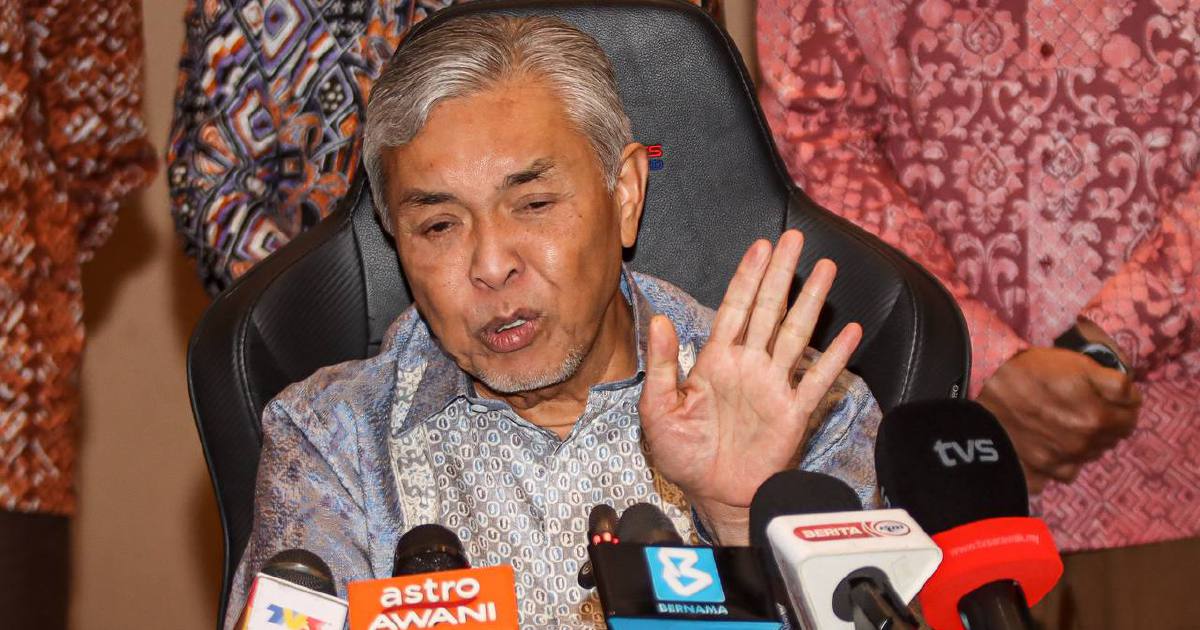
Datuk Seri Dr Ahmad Zahid Hamidi has firmly rejected suggestions that Barisan Nasional harbours intentions to challenge Prime Minister Datuk Seri Anwar Ibrahim's position, using comments made in George Town to underscore the coalition's dedication to maintaining the unity government for the remainder of the 15th Parliament's term.
The pronouncement arrives amid persistent political speculation that frequently surfaces in Malaysian governance circles. Since the formation of the unity coalition following the 2022 general election, observers have periodically questioned the durability of the partnership between Barisan Nasional and the government. Zahid's statement represents an explicit effort to quash such rumours and project stability at a time when coalition politics remain fragile across the region.
The stability of Malaysia's unity government has substantial implications beyond parliamentary corridors. International investors monitor political continuity as a key indicator of governance reliability, while neighbouring Southeast Asian nations watch Malaysia's coalition management as a model for their own multiparty arrangements. Disruption to the existing arrangement would create significant uncertainty in economic policymaking and regional diplomatic positioning.
Barisan Nasional's sustained backing remains operationally critical to Anwar's administration. The coalition commands substantial parliamentary numbers that enable the government to pass legislation and maintain executive functions without constant negotiations. Should this support falter, the government would face extraordinary difficulty advancing its policy agenda, and the threat of early elections would loom considerably larger.
Zahid's emphatic reaffirmation serves multiple strategic purposes for Barisan Nasional itself. The coalition has worked to rehabilitate its political standing following its decisive 2022 election defeat, and maintaining alliance credibility strengthens its negotiating position within the unity government framework. Consistency in messaging about coalition commitment also protects component parties from internal schisms and potential defections to rival groupings.
The Malaysian political landscape remains shaped by complex dynamics between Pakatan Harapan, Barisan Nasional, and other parliamentary constituencies. Any genuine fracture within the unity government would force complex recalculations across these relationships. Zahid's declaration thus functions as both a clarification of current intentions and a stabilising signal to diverse political actors who depend on predictability in coalition arrangements.
Such reassurances have become routine components of Malaysian political communication, reflecting the precarious balance inherent in coalition governance. Zahid's comments follow a pattern whereby coalition leaders periodically reaffirm commitment to existing arrangements, particularly when press speculation or political rumours intensify. These statements typically aim to prevent confidence erosion among coalition members and reassure stakeholders dependent on current political arrangements.
The unity government framework itself represents a significant departure from Malaysia's traditional two-coalition political structure. This arrangement emerged from the specific circumstances of the 2022 election outcome, where neither major coalition secured sufficient parliamentary dominance to govern independently. The subsequent unity coalition incorporated diverse political interests, making it inherently susceptible to periodic tensions and requiring deliberate management to sustain.
From a Malaysian perspective, political stability during economically challenging periods carries particular weight. The government continues addressing inflation concerns, managing fiscal pressures, and attempting to sustain investor confidence while navigating geopolitical complexities. Coalition instability would complicate these efforts considerably and potentially trigger economic reverberations affecting ordinary Malaysians through employment and currency impacts.
Barisan Nasional's explicit commitment through Zahid carries credibility weight because the coalition retains substantial alternative options. Should its leaders determine that supporting Anwar no longer served their interests, they possessed sufficient parliamentary numbers to reshape Malaysia's government. Their continued backing therefore reflects calculated political judgment rather than constrained acceptance of circumstances beyond their control.
The statement also addresses internal party management within Barisan Nasional itself. Component parties and individual politicians occasionally question coalition strategy, and Zahid's clarity helps prevent these internal discussions from evolving into public challenges to unity government arrangements. Such internal discipline becomes increasingly important as Malaysian elections approach and political jockeying intensifies across multiple parties.
Looking forward, Zahid's pronouncement establishes a baseline position from which Barisan Nasional will likely operate through the remainder of the 15th Parliament. However, Malaysian politics remains fluid, and unforeseen developments—electoral calculations, leadership changes, policy disputes, or external pressures—could alter these trajectories. For now, his explicit reaffirmation provides the coherence and predictability that coalition governance requires to function effectively.

