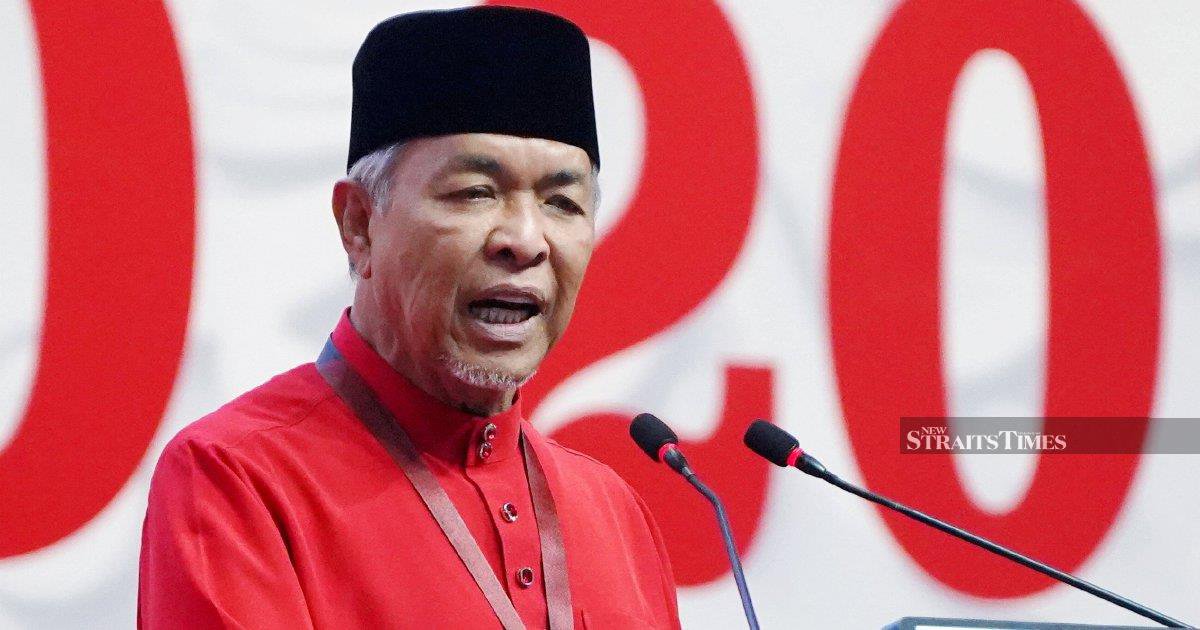
Barisan Nasional and Umno have committed to taking decisive action should the Royal Commission of Inquiry into Tabung Haji uncover evidence of wrongdoing, breach of fiduciary duty, or governance failures, according to BN chairman and Umno president Datuk Seri Dr Ahmad Zahid Hamidi. His statement, delivered in Putrajaya, underscores the ruling coalition's public stance on accountability as the high-profile probe into the pilgrimage fund progresses.
The RCI into Tabung Haji represents a significant intervention into one of Malaysia's most sensitive institutions. The fund manages billions in savings accumulated by millions of Malaysian Muslims over decades, making it a matter of considerable public concern. The establishment of the commission itself reflected widespread anxiety about the fund's financial health and governance standards, particularly following mounting public scrutiny over management decisions and operational transparency.
Ahmad Zahid's pronouncement carries particular weight given his dual role as leader of both BN and Umno, the dominant coalition partner. His willingness to commit publicly to accepting whatever the RCI determines suggests confidence in the inquiry process and potentially signals internal party consensus on allowing the investigation to proceed without political interference. For a ruling coalition that has faced persistent questions about accountability, such declarations carry symbolic importance.
The scope of potential findings the RCI might uncover is broad, encompassing individual misconduct, organised wrongdoing, criminal violations of trust, and systemic governance shortcomings. By explicitly stating that Umno and BN will not shield any party implicated by the commission, Ahmad Zahid has set a clear expectation that the investigation will not become mired in political considerations or intra-party protection networks. This framing positions accountability as non-negotiable, at least rhetorically.
Tableung Haji's financial difficulties have been documented across multiple years, with the fund reporting significant losses and requiring government bailouts. These challenges prompted questions about investment decisions, risk management, and administrative oversight. The establishment of the RCI represents an attempt to move beyond periodic financial reports and conduct a comprehensive examination of the institution's trajectory, the decisions that shaped it, and the individuals responsible for those choices.
For Malaysian Muslims who rely on Tabung Haji as a savings vehicle for pilgrimage expenses and retirement planning, the inquiry holds direct practical significance. Restoring confidence in the fund's management and ensuring that any identified problems are genuinely addressed rather than concealed requires demonstrable commitment from political leadership. Ahmad Zahid's statement addresses this concern by publicly binding his coalition to accepting the commission's findings.
The inquiry's timing is noteworthy within Malaysia's broader political context. The ruling coalition has invested substantial political capital in messaging around integrity and clean governance, particularly following the change of government in 2022. An RCI that finds significant problems and leads to tangible consequences would reinforce that messaging; conversely, a process that appears to shield powerful figures would undermine such claims. Ahmad Zahid's commitment, therefore, serves both accountability and political positioning functions.
Historically, Malaysian inquiries into institutional failures have produced mixed results in terms of implementation and consequences. Some recommendations have been acted upon while others languished. By making an advance commitment to accept and act upon findings, Ahmad Zahid has created a benchmark against which future actions will be measured. Subsequent events will determine whether this represents genuine commitment or political theatre.
The RCI's methodology and composition will influence the credibility of its eventual findings. Public confidence in the inquiry depends not only on the quality of investigation but also on perception that the process itself remains insulated from political pressure. Ahmad Zahid's statement potentially affects that perception in multiple ways—it could reassure observers that findings will not be suppressed, but it could also invite scrutiny about whether advance commitment to act on findings implies predetermined outcomes or suggests the leadership already knows what the commission will find.
Beyond the immediate case of Tabung Haji, this inquiry serves as a test of Malaysia's institutional accountability mechanisms at a critical moment. Southeast Asian governments increasingly face pressure to demonstrate effective internal checks on institutional failure and corruption. How Malaysia handles the RCI's findings and whether political leadership follows through on commitments to act will have implications for investor confidence, public trust, and the nation's standing on governance issues.
For regional observers watching Malaysian institutional development, the Tabung Haji RCI represents a concrete case study in whether stated commitments to accountability can withstand the political costs of implementation. Ahmad Zahid's declaration that BN and Umno will not compromise if wrongdoing is found has created a public commitment that extends beyond the technical findings of the commission to questions about political will and the capacity of Malaysia's institutions to deliver genuine consequences.

