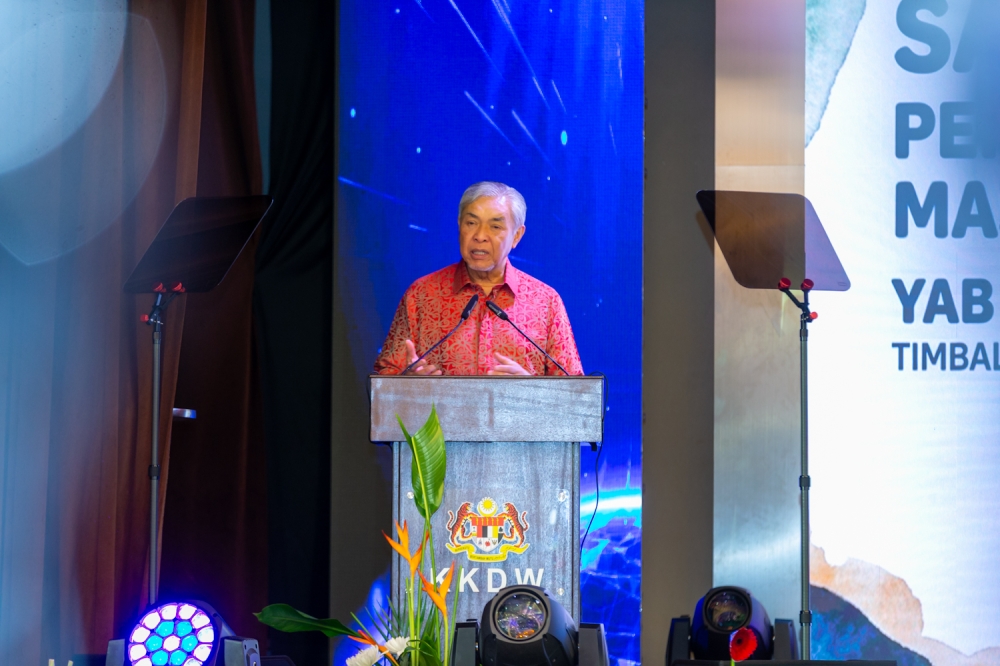
Deputy Prime Minister Datuk Seri Ahmad Zahid Hamidi moved swiftly on July 21 to counter claims circulating on social media suggesting that senior figures from Barisan Nasional, Perikatan Nasional, GPS, and GRS had convened for a political meeting. Speaking from Putrajaya, Zahid categorically rejected the speculation, characterising the reports as unfounded rumours that have no factual basis. His intervention came at a moment when coalition dynamics remain sensitive, with various factions constantly scrutinised for signs of strategic realignment or fracture.
The Deputy Prime Minister's statement underscores the fragility surrounding Malaysia's current political architecture, which depends on maintaining delicate equilibrium among multiple party groupings. The unity government, which came into being following the 2022 general election, has periodically faced questions about its stability and the extent to which its constituent members genuinely align on policy and governance matters. Zahid's emphatic denial appears designed to foreclose speculation that might destabilise the working relationships that enable the government to function effectively in parliament.
In his reaffirmation, Zahid emphasised that the unity government framework continues to command his full backing and that of Barisan Nasional. This commitment is particularly significant given that BN, as the largest coalition partner, carries substantial responsibility for maintaining the government's parliamentary majority. Any erosion in BN's resolve or coordinated action with other major political blocs could theoretically jeopardise the administration's ability to pass legislation and execute its governance agenda, lending urgency to Zahid's clarification.
The Deputy Prime Minister's intervention reflects broader patterns in contemporary Malaysian politics, where rumours and unverified claims regarding coalition manoeuvres frequently circulate through social media platforms and WhatsApp channels before reaching mainstream attention. These narratives, whether accurate or speculative, can rapidly shape public perception and investor confidence, making it essential for senior political figures to respond promptly and decisively. Zahid's swift denial demonstrates awareness of how misinformation can acquire political momentum if left unchallenged.
Malaysian political observers have long noted the inherent tensions within multi-party coalitions, particularly when ideological differences separate constituent members. Barisan Nasional, Perikatan Nasional, GPS, and GRS represent distinct political constituencies with varying geographical bases and policy priorities. GPS and GRS, rooted primarily in Sarawak and Sabah respectively, maintain specific regional interests that do not always align seamlessly with the broader national political calculations of peninsular-based parties. This structural reality means that hypothetical coalition reshuffles remain perpetually possible, even if current formal arrangements appear stable.
The unity government arrangement itself emerged from complex negotiations following the 2022 election, when no single coalition achieved a clear majority. This context established a precedent whereby major political blocs engage in strategic discussions to maximise their collective influence and ministerial representation. Against this background, speculation about inter-coalition meetings is perhaps inevitable, as participants assess their leverage and explore potential alternative arrangements that might enhance their respective positions or policy influence.
Zahid's statement also carries implications for Perikatan Nasional's positioning within the broader political landscape. PN, led by Tan Sri Muhyiddin Yassin, has maintained an increasingly complex relationship with the government, voting with the administration on confidence matters while maintaining relative autonomy on policy issues. For PN leaders to engage in meetings with other major political groupings could be interpreted as positioning for future scenarios or asserting their continued relevance within coalition calculations. Zahid's denial therefore potentially serves to reassure PN that no bloc-to-bloc discussions are occurring without their full participation and awareness.
From a Southeast Asian perspective, Malaysia's experience with complex, multi-party coalition governance offers instructive lessons about political stability in diverse societies. The region has witnessed numerous instances where coalition arrangements fracture or reconfigure, sometimes creating periods of governmental uncertainty. Malaysia's approach of maintaining formal unity government frameworks, despite inherent tensions, represents an attempt to institutionalise stability even when underlying political incentives push toward realignment. Zahid's insistence on the unity government's durability reflects this commitment to stability as a strategic priority.
Looking forward, the Deputy Prime Minister's statement effectively signals that for now, the existing coalition architecture will persist as the governing framework. This does not preclude ongoing negotiations about ministerial roles, policy priorities, or resource allocation among coalition partners—standard features of multi-party governments. However, it does communicate that no fundamental restructuring of the political coalition is imminent, and that Barisan Nasional leadership remains focused on managing the unity government responsibly through its scheduled tenure.
For Malaysian citizens and investors, Zahid's clarification provides reassurance about governmental continuity, even as the underlying political dynamics continue to evolve. Coalition governments inherently involve compromise and negotiation; what matters for governance and economic policy is that constitutional arrangements remain in place and legislative machinery continues to function. By publicly reinforcing the unity government's coherence, Zahid effectively demonstrates commitment to the institutional continuity that Malaysian stakeholders require for planning and policy implementation.

