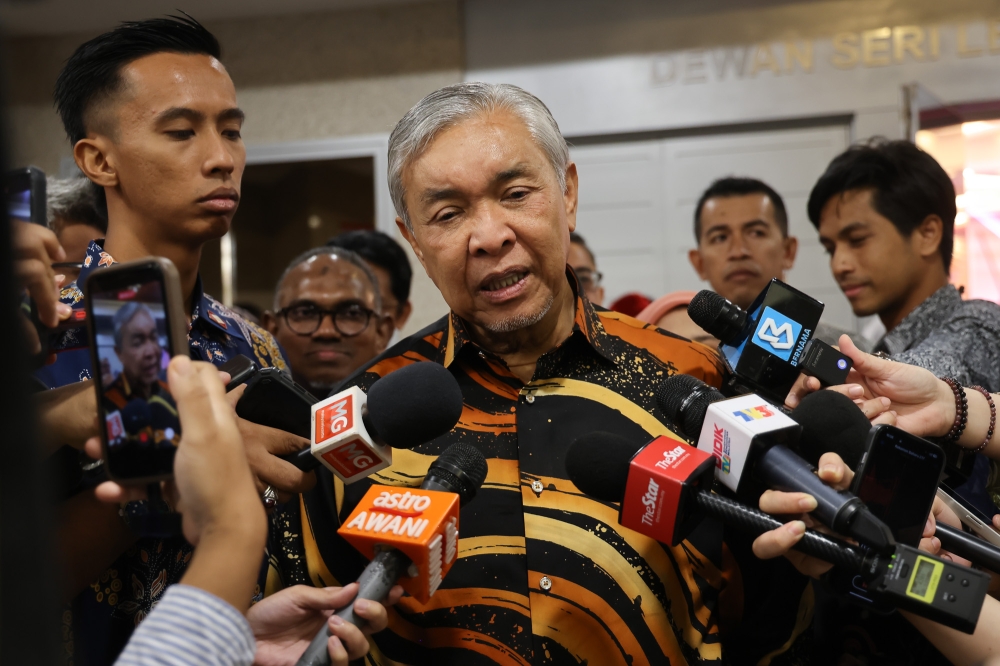
Umno President Zahid Hamidi has made clear that Barisan Nasional and the party will adopt an uncompromising stance towards anyone implicated in mismanagement of Tabung Haji, the pilgrims' fund that has faced significant governance challenges in recent years. Speaking in Putrajaya on August 6, Zahid emphasised that both the coalition and Umno maintain a zero-tolerance approach to any violation of public trust or financial irregularities affecting the sacred institution.
The forceful statement reflects mounting pressure within Malaysia's political establishment to address longstanding concerns about Tabung Haji's operational integrity. The fund, which serves as a savings and investment vehicle for Malaysian Muslims preparing for the Hajj pilgrimage, has encountered repeated scrutiny over its management practices, investment decisions, and administrative oversight. Zahid's declaration suggests that party leadership is prepared to pursue accountability measures, potentially including disciplinary action, regardless of the seniority or prominence of those found culpable.
Tabung Haji's troubles have extended across multiple administrations and years, with previous investigations and audits revealing systemic weaknesses in governance frameworks. The fund's investments in diverse sectors, from property to equities, have occasionally generated controversy when returns failed to meet expectations or when management decisions lacked transparency. For a fund entrusted with the savings of hundreds of thousands of Malaysian Muslim families, such lapses carry profound reputational and financial consequences.
Zahid's intervention carries particular weight given his position as Umno President and his influence within the coalition government. His public commitment to consequences for wrongdoing may signal internal pressure from party members concerned about public perception and the integrity of institutions under Barisan Nasional's stewardship. The statement also reflects broader recognition that governance failures in major public funds can undermine public confidence in government and state-linked institutions.
The emphasis on accountability also addresses Malaysian voters' growing expectations regarding institutional transparency and anti-corruption measures. In an era when financial misconduct in major corporations and public entities frequently dominates headlines regionally, Malaysian political leaders face heightened scrutiny regarding their commitment to genuine reform. Zahid's unambiguous language appears designed to demonstrate that Barisan Nasional takes such matters seriously and will not shield individuals based on political affiliation or rank.
For Tabung Haji stakeholders—primarily Malaysian Muslim pilgrims and their families—such assurances carry immediate relevance. The fund's performance directly affects the savings of contributors who depend on returns to subsidise their Hajj expenses. Governance failures translate into real financial losses for these individuals, making accountability mechanisms essential for protecting the fund's long-term viability and public trust in its management.
The timing of Zahid's statement may also reflect recent developments in investigations or inquiries related to Tabung Haji's operations. If particular cases have progressed to stages requiring senior political acknowledgement, the Umno President's intervention could serve to pre-empt criticism that leadership was indifferent to misconduct or prioritised political convenience over institutional integrity.
Implementing accountability, however, presents practical challenges. Establishing clear responsibility for decisions made across years and multiple management teams requires thorough investigation, meticulous documentation, and legal determination of culpability. Zahid's commitment to consequences must therefore be tested through concrete follow-up actions, including support for independent inquiries, transparent disciplinary processes, and potential criminal or civil proceedings where evidence warrants such measures.
The broader context involves Tabung Haji's reformation and recovery efforts. Beyond pursuing accountability for past failures, the fund requires structural reforms to prevent recurrence of governance problems and to restore investor confidence. Zahid's stance suggests that Barisan Nasional intends to link accountability with institutional renewal, presenting a package approach to addressing the fund's difficulties.
For Southeast Asia's Islamic finance sector, Malaysia's handling of Tabung Haji matters carries wider significance. As a predominantly Muslim nation with sophisticated Islamic finance institutions, Malaysia's approach to governance failures in pilgrimage-related funds influences regional perceptions of Islamic financial standards and practices. Rigorous accountability sends positive signals about institutional seriousness and fiduciary responsibility.
The statement also positions Umno and Barisan Nasional ahead of potential political opposition critiques regarding governance failures. By proactively declaring commitment to consequences, leadership attempts to frame the coalition as reform-oriented and intolerant of misconduct rather than as protectors of privileged individuals. This preemptive messaging strategy reflects sophisticated political awareness that governance failures can become significant electoral liabilities.
Going forward, Zahid's declaration requires substantiation through visible accountability mechanisms. Whether investigations proceed expeditiously, whether findings result in meaningful consequences, and whether reforms effectively prevent future problems will ultimately determine whether the statement represents genuine commitment or political rhetoric. Malaysian stakeholders and the broader public will scrutinise implementation carefully, making follow-through essential for maintaining both institutional credibility and political credibility.

