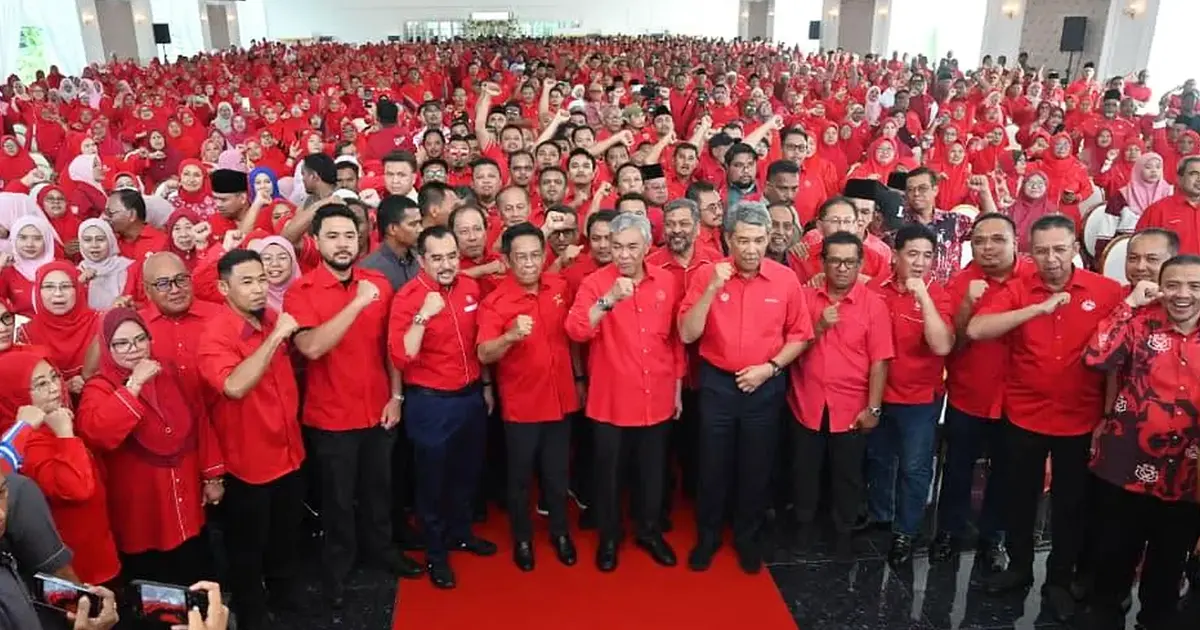
Barisan Nasional's leadership structure has clarified its approach to the upcoming Negeri Sembilan state election by delegating critical pre-election negotiations to regional party figures. Ahmad Zahid Hamidi, the coalition's national chairman, announced that he has transferred responsibility for both candidate selection and seat distribution talks to Tok Mat, who heads the BN machinery in Negeri Sembilan. This decentralisation strategy reflects how Malaysia's major political alliances increasingly rely on state-level leadership to navigate the complexities of seat negotiations with component parties and grassroots factions.
The decision to empower Tok Mat underscores a broader shift in BN's operational philosophy following its return to federal government in 2023. Rather than centralising all negotiations at the party headquarters in Kuala Lumpur, Zahid's approach recognises that state elections require intimate knowledge of local dynamics, intra-party sensitivities, and the specific demands of district-level politicians. Negeri Sembilan, a Malay-majority state on Malaysia's western corridor, has always been strategically important to BN's electoral fortunes, and the confidence placed in its chief suggests the coalition views him as capable of balancing these competing pressures.
Candidate selection in Malaysian state elections invariably generates tension within coalitions. Multiple parties within BN—including UMNO, MCA, MIC, and other component organisations—compete for the most winnable seats, and state-level leaders must arbitrate these disputes while maintaining party unity. Tok Mat's appointment to this role implies that senior party managers in Kuala Lumpur believe he possesses the political capital and negotiating skills necessary to broker compromises that satisfy competing factions without triggering public rifts. His ability to navigate these conversations will substantially influence whether BN enters the Negeri Sembilan polls in cohesion or with lingering internal resentment.
The timing of this announcement is significant. Malaysian state elections are often called with only weeks of notice, meaning that formal candidate selections must be completed rapidly once a state government dissolves its assembly. By signalling Tok Mat's leadership role in advance, Zahid is signalling that BN is preparing contingency plans should Negeri Sembilan move to the polls. This preparation prevents the chaotic last-minute wrangling that characterised BN's performance in some previous state elections and demonstrates a more professional approach to electoral logistics.
Zahid's willingness to step back from detailed seat negotiations reflects confidence in his state chiefs but may also be pragmatic. As BN chairman, Zahid faces competing demands from multiple state branches, federal government coordination, and international diplomacy. By delegating Negeri Sembilan matters to a trusted lieutenant, he can concentrate on larger strategic concerns while ensuring that state-specific issues receive appropriate attention. This division of labour is more efficient than having the national chairman micromanage every state's pre-election arrangements.
For Malaysian observers, the delegation also hints at the internal power dynamics within BN's UMNO-dominated structure. Zahid's confidence in Tok Mat's judgment suggests that the latter has maintained good standing within the party hierarchy despite the intense factional rivalries that characterise UMNO. The choice to grant him substantive authority over candidate selection and seat talks is a signal to other state chiefs and party members about who holds sway in current deliberations.
Negeri Sembilan's political landscape remains fluid. The state has seen significant shifts in recent years, with previous state elections revealing changing voter preferences and emerging demographic pressures. BN's success in the state will depend partly on whether it can field candidates who appeal to both traditional rural constituencies and increasingly urban, middle-class voters. Tok Mat's role will therefore extend beyond mere administrative coordination to encompassing strategic decisions about which candidates can best compete in diverse electoral environments.
The coalition's approach to this state election will also be watched by smaller component parties within BN, particularly MCA and MIC. How many seats these parties receive—and whether they are competitive ones—will signal whether Zahid's government truly values the continued participation of non-Malay partners. Tok Mat's management of these delicate negotiations will test whether BN can maintain the inclusive facade that has historically been central to its appeal across Malaysia's multiethnic society.
From a broader Southeast Asian perspective, Malaysia's coalition politics remain instructive. Unlike some neighbouring nations, BN has survived multiple electoral defeats and continues to function as a legitimate vehicle for political competition. Zahid's devolution of authority to state leaders demonstrates that even large, hierarchical organisations must adapt their structures to the realities of federalism and local politics. How successfully BN navigates the Negeri Sembilan election under Tok Mat's stewardship may well influence whether the coalition can recover ground in other critical state battlegrounds in coming years.

