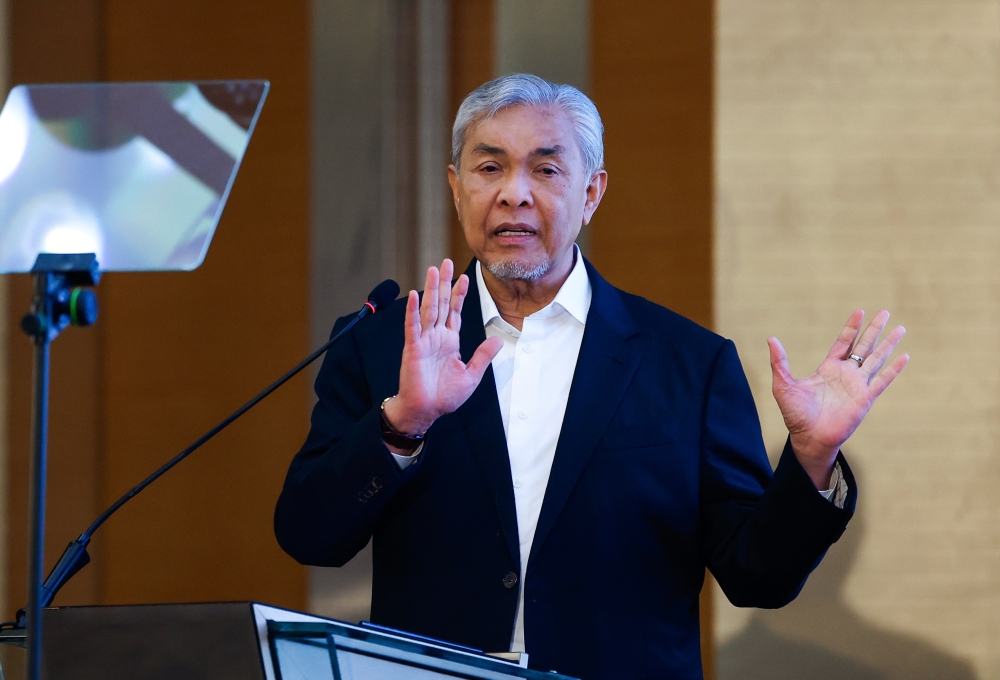
Deputy Prime Minister Zahid Hamzah has advocated for a broadened mandate for the Royal Commission of Inquiry investigating Tabung Haji, arguing that the review period should encompass not only the period during which financial irregularities occurred but also the subsequent recovery and stabilisation phase. His remarks, delivered in Seremban on July 30, signal a shift towards a more comprehensive examination of how the Islamic pilgrimage fund has managed its rehabilitation following years of financial challenges.
The Cabinet's proposal to expand the RCI's investigative scope reflects growing recognition that Tabung Haji's troubles cannot be adequately understood through examining wrongdoing in isolation. Zahid's position suggests that Malaysian policymakers are increasingly concerned with understanding both the origins of the fund's difficulties and the effectiveness of remedial measures implemented to restore its financial health. This dual approach recognises that accountability must extend beyond identifying culprits to assessing institutional recovery and governance improvements.
Tabung Haji, which manages hajj savings for over 10 million Malaysian Muslims, has faced significant reputational and financial damage following revelations of mismanagement and investment losses. The fund's accumulated challenges prompted the government to establish the RCI to investigate the root causes of its decline and identify those responsible for poor stewardship. However, Zahid's intervention suggests that stakeholders and leadership now view the investigation as an opportunity to evaluate broader institutional reforms and the effectiveness of corrective actions undertaken since difficulties first emerged.
Extending the RCI's review timeline to capture the recovery period would allow investigators to assess whether new management teams have successfully implemented governance changes and whether previously identified weaknesses have been adequately addressed. This expanded approach could examine the fund's restructuring efforts, investment strategy modifications, and enhanced oversight mechanisms introduced in response to earlier crises. For Malaysia's Muslim community, which depends on Tabung Haji's integrity for their religious obligations and financial security, such comprehensive examination carries particular weight.
The proposal also addresses a critical gap in typical corruption investigations, which often conclude once wrongdoers are identified without thoroughly evaluating institutional responses and systemic repairs. By extending the review period, the RCI could determine whether the fund has genuinely transformed its operational culture and risk management frameworks or merely applied superficial reforms. This matters substantially for public confidence in Islamic financial institutions across Southeast Asia, where Tabung Haji serves as a flagship example of Shariah-compliant fund management.
Zahid's advocacy reflects the government's apparent determination to demonstrate thorough accountability to the Muslim community and international observers monitoring Malaysia's governance standards. The Deputy Prime Minister's intervention suggests cabinet-level commitment to ensuring that the investigation yields actionable insights for strengthening not just Tabung Haji but the broader ecosystem of Islamic financial institutions operating within Malaysia. His statement indicates that senior leadership recognises the investigation's significance extends beyond mere forensic accounting to encompass institutional legitimacy and public trust restoration.
The expanded investigative scope would necessarily require additional resources and extended timelines for the RCI to conduct detailed examinations of recovery initiatives. Investigators would need to review board decisions, management reports, internal audits, and implementation records spanning the rehabilitation period. This comprehensive approach demands substantial coordination among multiple stakeholders, including the fund's management, regulators, and relevant government agencies, to ensure investigators obtain complete documentation and transparent cooperation.
From a Malaysian governance perspective, this initiative demonstrates an evolving understanding of how Royal Commissions of Inquiry can contribute to institutional strengthening beyond traditional investigation frameworks. Rather than functioning solely as fact-finding bodies documenting past misconduct, the expanded RCI model positions the inquiry as a mechanism for evaluating institutional reform, assessing whether corrective measures have achieved intended outcomes, and identifying persistent vulnerabilities requiring further attention. This approach resonates with international best practices in corporate governance investigations and crisis response evaluation.
The Cabinet's receptiveness to Zahid's proposal suggests broader consensus within government that Tabung Haji's rehabilitation requires sustained scrutiny and evidence-based assessment. By examining the recovery period alongside the crisis phase, Malaysian authorities can develop a comprehensive narrative of institutional failure, response, and improvement that provides valuable lessons for other government-linked companies and religious endowments managing public resources. Such transparency could help restore confidence among millions of Malaysian pilgrims who have entrusted their hajj savings to the fund.

