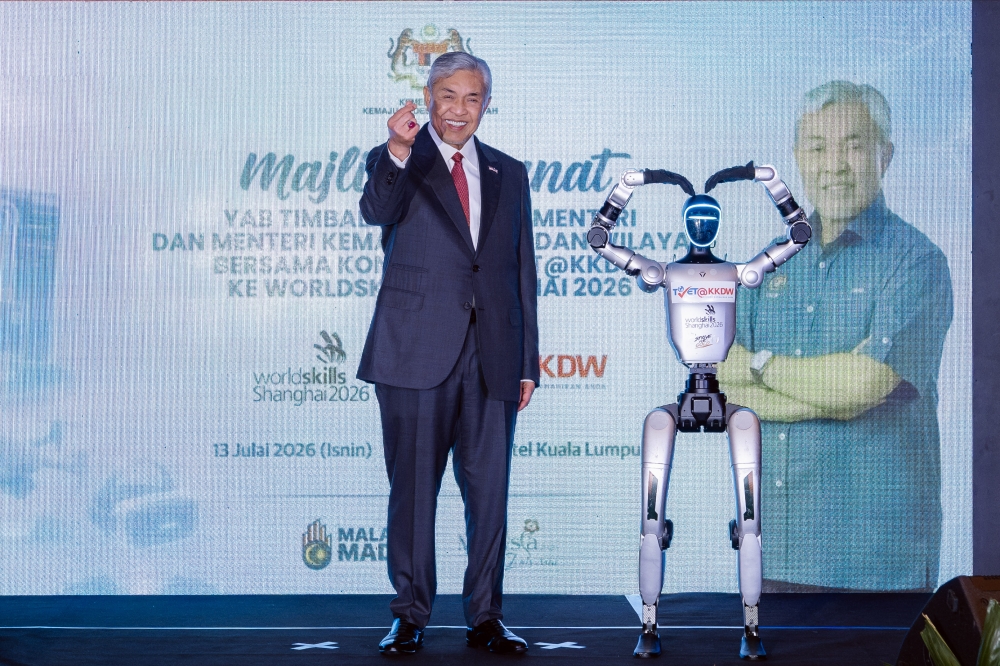
Deputy Prime Minister Datuk Seri Dr Ahmad Zahid Hamidi moved to defuse coalition tensions on July 13 by dismissing public remarks from Democratic Action Party secretary-general Ng Kor Ming about a potential resignation, characterising the situation as a minor friction within a fundamentally robust governing alliance. Zahid's comments came as the multiparty coalition continued to grapple with internal disagreements that have intermittently tested its cohesion since taking office.
The Umno politician's intervention reflected a broader concern among senior government figures about maintaining public confidence in the stability of the Unity Government, which comprises parties from different ideological backgrounds and electoral bases. By framing Nga's position as negotiable and reassuring audiences that personal relationships between coalition leaders remain strong, Zahid attempted to project an image of a functional partnership capable of weathering temporary disputes.
Zahid's characterisation of Nga as a personal friend underscored the importance of informal networks and interpersonal relationships in sustaining Malaysia's often fragile political coalitions. Such personal bonds frequently serve as informal conflict-resolution mechanisms when institutional frameworks prove inadequate, particularly in coalition governments where partners lack deep historical or ideological alignment. The emphasis on friendship also reflected an implicit acknowledgment that coalition politics in Malaysia often hinges on trust between key personalities rather than formal agreements or shared policy platforms.
The backdrop to this exchange involved disagreements within the Unity Government over various policy matters and resource allocation between coalition partners. These tensions periodically surface in public statements and media reports, creating uncertainty among investors, international observers, and ordinary Malaysians about the government's longevity and capacity to implement its agenda. Each instance of high-profile criticism requires careful management by senior officials to prevent perceptions of instability from hardening into political reality.
Ga's public expressions of discontent, whether representing genuine frustration or tactical positioning within coalition negotiations, highlighted the precarious balance that multiparty governments must maintain. When coalition members air grievances publicly, they risk emboldening rival factions or creating pressure for more dramatic political moves. Conversely, complete silence on concerns can allow resentments to accumulate below the surface until they erupt in more destructive ways. The challenge for leaders like Zahid involves acknowledging legitimate frustrations while simultaneously reassuring stakeholders that mechanisms exist to resolve them.
The Unity Government's composition—bringing together Umno, DAP, PKR, MCA, and other parties—reflects Malaysia's post-2018 political realignment, where the collapse of the Barisan Nasional dominance forced new partnership models. Unlike more homogeneous single-party administrations, coalition governments must constantly negotiate between partners with different constituencies, different policy preferences, and different visions for Malaysia's direction. These structural realities make occasional friction inevitable, though the frequency and intensity of disputes can vary significantly.
Zahid's intervention also signalled confidence that the coalition's institutional structures and personal relationships could absorb the shock of Nga's public statements without triggering cascading defections or government collapse. However, each such incident marginally erodes public trust in the government's stability, potentially affecting implementation of key programmes and deterring long-term economic planning by private sector actors. International credit rating agencies and foreign investors monitor such signals closely when assessing Malaysia's political and economic risks.
The timing of these tensions matters considerably for the government's legislative agenda and administrative effectiveness. If coalition partners are preoccupied with managing internal disputes, their attention diverts from pressing economic challenges, educational reform, healthcare improvement, and other substantive policy issues. Moreover, whenever coalition stability becomes a focal point of media and public discourse, it tends to embolden opposition parties to accelerate their own political strategies, potentially forcing the government into defensive positions.
Malaysian coalition politics increasingly operates within a context of weakened party discipline and stronger individual politician influence. Unlike earlier decades when party leaders could enforce unity through hierarchical command, contemporary politics sees more assertive backbenchers and senior figures using public statements to negotiate leverage within coalitions. This evolution reflects broader democratisation trends but creates governance complexity that requires sophisticated management skills from leaders like Zahid.
For Southeast Asian observers, Malaysia's experience with coalition governance offers instructive lessons about the challenges of building stable, multi-ethnic political alliances in diverse democracies. Thailand, Indonesia, and other regional countries have grappled with similar issues, though with varying degrees of success. Zahid's approach—emphasising personal relationships and coalition durability while downplaying specific grievances—represents a familiar strategy in Southeast Asian coalition management, though effectiveness ultimately depends on whether underlying structural problems can be genuinely addressed.
The broader question raised by these recurring tensions involves whether the Unity Government represents a durable realignment of Malaysian politics or a temporary tactical alliance that will eventually fragment. If coalition partners genuinely seek to reshape Malaysia's political economy and develop new institutional frameworks for inter-ethnic cooperation, such temporary disagreements might be productive. If the coalition primarily reflects opportunistic positioning, these tensions may foreshadow more fundamental ruptures.

