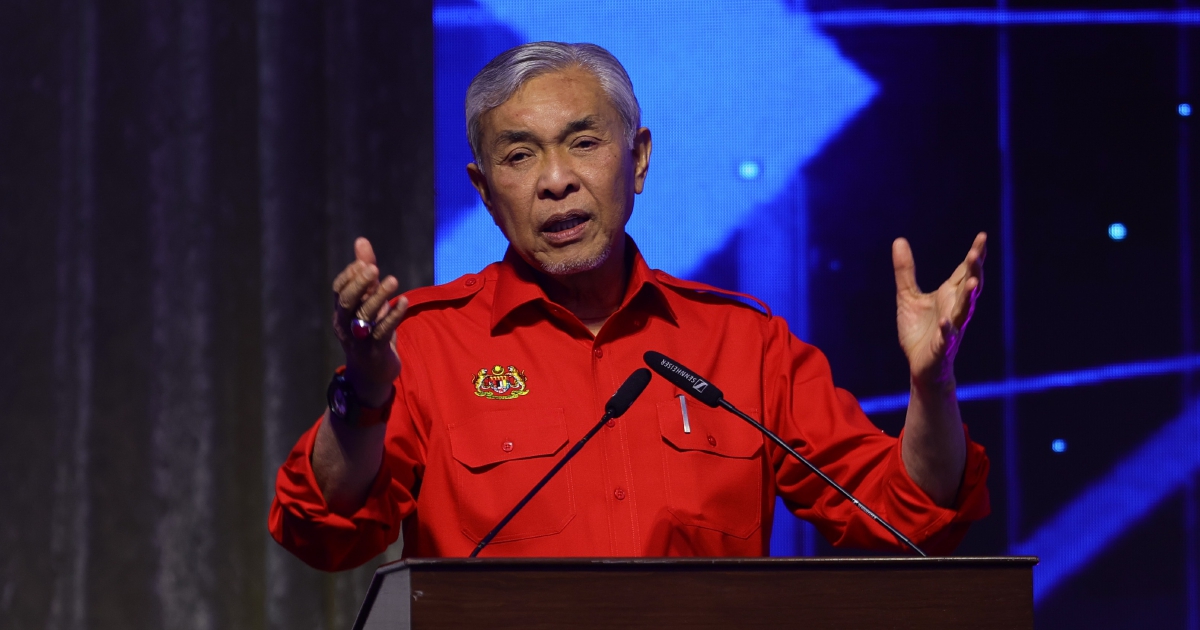
Barisan Nasional chairman Datuk Seri Dr Ahmad Zahid Hamidi has reaffirmed that Prime Minister Datuk Seri Anwar Ibrahim retains full authority to dismiss ministers from the ruling coalition should their performance fall short of expectations. The statement, made in Seremban, reflects the party leadership's acknowledgement of the premier's executive powers and suggests a unified approach to ministerial accountability within the coalition framework.
Zahid's remarks come at a significant moment for the Pakatan Harapan-led government, which has relied on BN support to maintain its parliamentary majority since the 2023 general election. The coalition's 40 parliamentary seats remain crucial to ensuring government stability, making the relationship between the administration and BN leadership fundamentally important to Malaysia's political equilibrium. By publicly endorsing the PM's authority over ministerial appointments, Zahid signals that BN is committed to supporting the governance agenda despite potential disagreements over individual minister performance.
The timing of Zahid's statement carries particular weight given the ongoing political dynamics in Malaysia's complex coalition government. Since taking office, Anwar Ibrahim has sought to strengthen institutional checks and enhance ministerial performance standards across all coalition partners. Zahid's endorsement suggests that BN is willing to subordinate specific grievances about individual ministers to the broader imperative of maintaining governmental stability and pursuing shared policy objectives.
This public affirmation of the PM's dismissal powers also reflects broader governance principles that both political actors appear to share. Ministerial accountability and performance-based assessment are internationally recognised standards of public administration. By accepting that underperforming ministers can be removed regardless of their coalition affiliation, Zahid tacitly acknowledges that merit and effectiveness must supersede narrow political considerations when managing government portfolios.
For the broader Malaysian electorate and international observers, Zahid's position demonstrates a degree of political maturity within the coalition framework. Rather than adopting a defensive posture that might protect underperforming BN-affiliated ministers simply on grounds of party loyalty, the BN chairman has chosen to prioritise governmental effectiveness and public accountability. This approach potentially strengthens public confidence in the administration's willingness to address performance deficiencies wherever they occur.
However, the statement also carries implicit tensions that deserve closer examination. While Zahid publicly endorses the PM's authority, BN ministers themselves may interpret such dismissals as threats to their political standing and career prospects. The balance between maintaining coalition unity and allowing the PM operational flexibility in reshuffling ministries represents an ongoing challenge. Zahid's remarks suggest an understanding that this balance must tilt toward supporting strong executive governance, at least in principle.
The declaration also signals confidence—or perhaps pragmatic acceptance—that BN's core interests will not be fundamentally threatened by potential ministerial changes. As the second-largest coalition partner after Pakatan Harapan, BN controls significant parliamentary numbers and cabinet representation. Zahid may be calculating that even if individual BN ministers face dismissal, the party's overall political position and influence within government structures will remain substantially intact.
For other coalition partners and political observers monitoring the PH-BN relationship, this statement provides clarity on the power dynamics within Malaysia's governing arrangement. The PM's authority over ministerial removals appears to be unchallenged by major coalition partners, suggesting that the administration possesses meaningful tools to enforce performance standards and reshape the cabinet composition when necessary. This institutional clarity could reduce speculative uncertainty about potential ministerial crises or coalition instability.
Zahid's position also reflects the practical realities of minority government dynamics in Malaysia's current political landscape. With coalition unity essential for maintaining the administration's parliamentary majority, contentious dismissals of coalition ministers could theoretically jeopardise government stability if handled poorly. By publicly endorsing the PM's authority while presumably expecting consultations on BN-related changes, Zahid may be attempting to establish a framework where dismissals occur through dialogue rather than unilateral action.
Looking forward, this statement establishes an important precedent for how the PH-BN coalition will address ministerial performance issues. Should the PM exercise dismissal authority against BN-affiliated ministers, Zahid's remarks provide political cover suggesting that such actions reflect governance principles rather than factional maneuvering. Conversely, if the PM refrains from dismissing underperforming ministers, the statement creates expectations that might generate future political pressure on the administration to act decisively.
The broader implications extend to how Malaysia's coalition government evolves institutionally. Accepting that ministerial removals should be based on performance rather than political affiliation represents progress toward more merit-based governance, though tensions between political loyalty and administrative effectiveness will inevitably persist. Zahid's endorsement suggests that BN leadership understands this dynamic and is willing to prioritise governmental competence over narrow partisan interests, at least rhetorically.

