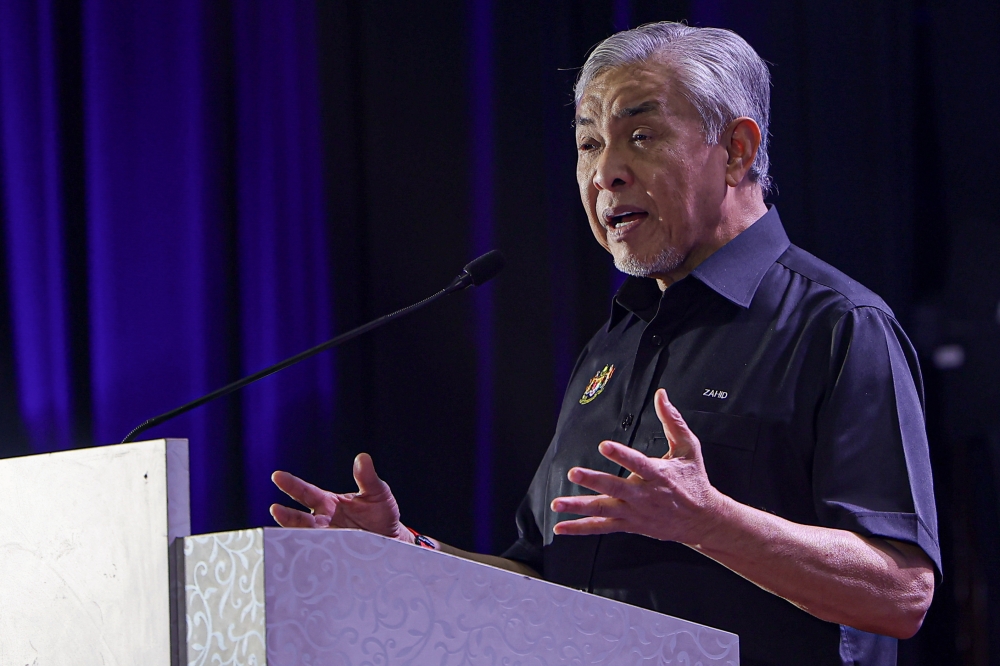
Deputy Prime Minister Datuk Seri Ahmad Zahid Hamidi has raised concerns about potential political pressure on government officials, alleging that some ministry personnel were coerced into attending events organised by or aligned with Barisan Nasional during recent state election campaigns. Speaking in Putrajaya on August 6, Zahid characterised the reported incidents as problematic conduct that undermines the neutrality expected of the civil service during electoral periods.
The allegations form part of broader scrutiny regarding the behaviour of government machinery during state election campaigns. Malaysia's electoral laws and administrative guidelines explicitly require civil servants to maintain political impartiality during election periods, a principle designed to ensure fair competition and protect the independence of the bureaucracy. When ministry staff are pressured to participate in partisan activities, it potentially creates an environment where government resources become entangled with party political interests, a boundary that democratic institutions depend upon maintaining.
Zahid's comments carry particular weight given his position as Deputy Prime Minister and his role overseeing various government portfolios. His willingness to publicly air these concerns suggests the issue extends beyond isolated incidents and reflects a systemic pattern worthy of official investigation. The Deputy Prime Minister did not specify which ministries were involved or provide details about the nature and extent of the alleged coercion, leaving room for further scrutiny and clarification from relevant authorities.
For Malaysian readers, the significance of these allegations extends beyond procedural technicalities. The integrity of electoral processes depends fundamentally on preventing government machinery from being mobilised for partisan advantage. When civil servants face pressure to participate in campaign activities, it distorts the competitive landscape and potentially influences policy outcomes. This particular concern became especially relevant during the state election period, when electoral momentum could swing based on the appearance of government endorsement or resource allocation favouring one political coalition over another.
The timing of Zahid's allegations coincides with heightened political sensitivity around election administration and fair play. Opposition parties have consistently raised concerns about the use of government resources and personnel during election campaigns, arguing that ruling coalitions enjoy structural advantages. Whether the alleged pressure constituted actual breaches of electoral law or represented a grey area of administrative practice remains unclear, but such incidents warrant examination by the Election Commission and relevant oversight bodies.
Bureau officials across different agencies operate within a complex environment where political pressures and career considerations sometimes conflict with the requirements of administrative neutrality. While some senior officials may feel obligated to support their political masters, junior and middle-ranking staff often face genuine dilemmas when asked to participate in partisan events. The burden of maintaining political neutrality should not rest disproportionately on lower-ranking personnel without clear guidance from leadership and institutional protection.
The implications for Malaysia's civil service reputation are not insignificant. International observers and domestic stakeholders increasingly evaluate governance quality partly through the lens of bureaucratic independence. When government officials become visibly intertwined with partisan political activities, it signals a erosion of the traditional boundaries between political and administrative spheres. For a country seeking to strengthen democratic institutions and institutional credibility, such incidents merit serious attention rather than dismissal.
Zahid's public statement also reflects intra-coalition dynamics within Barisan Nasional and the broader government. His willingness to criticise the conduct suggests either genuine concern about administrative standards or tactical positioning within coalition politics. Either interpretation underscores that the issue resonates across different segments of the ruling establishment, indicating it cannot be easily dismissed as opposition rhetoric or external criticism.
Moving forward, clarifying what constitutes impermissible coercion versus legitimate organisational participation becomes essential for establishing clearer standards. The Public Service Department and the Election Commission should collaborate to develop and disseminate unambiguous guidelines that protect civil servants while respecting legitimate government communication needs. Officials also require institutional backing when they resist pressure to participate in partisan activities, ensuring that administrative neutrality does not become a career liability.
The broader context for these allegations involves Malaysia's ongoing democratic consolidation and the maturation of its electoral institutions. As the country moves beyond previous patterns where government and party machinery operated with minimal separation, establishing clearer norms around official conduct during elections strengthens democratic health. Zahid's decision to publicly address these concerns, whether primarily motivated by principle or political calculation, creates space for institutional corrections that benefit democratic practice overall.

