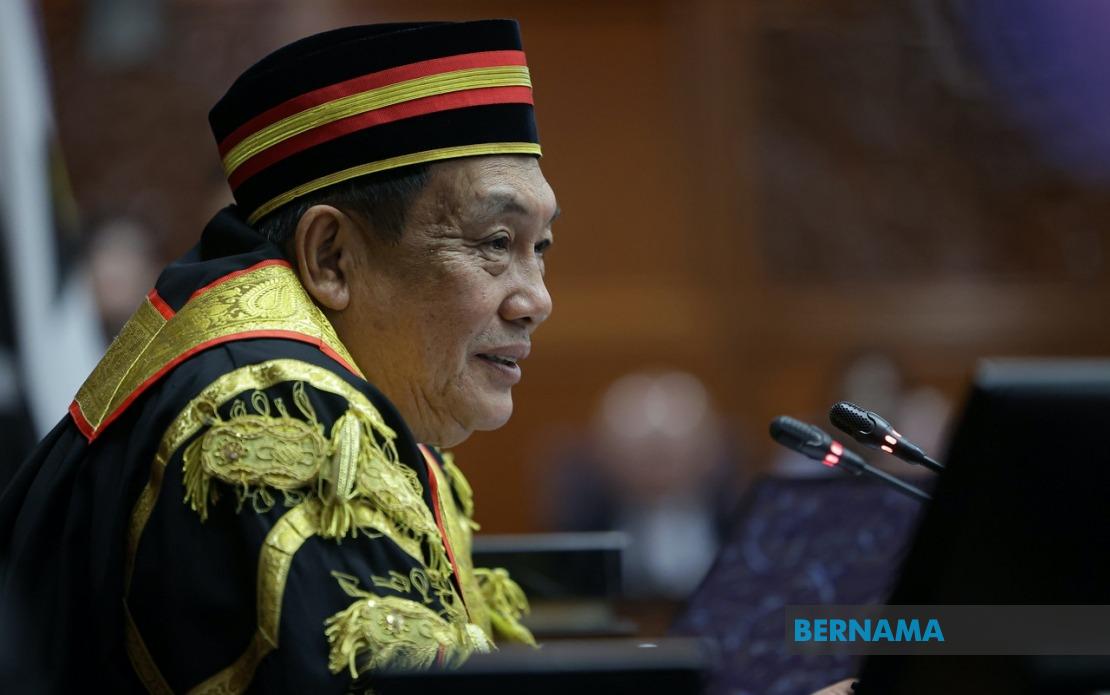
Dewan Negara President Datuk Awang Bemee Awang Ali Basah has underscored the significance of Malaysia's Youth Parliament (PBMy) as a transformative platform that cultivates young citizens capable of engaging thoughtfully with democratic principles and articulating informed perspectives. Speaking at Universiti Malaysia Terengganu during a parliamentary outreach programme, Awang Bemee characterised the initiative as a foundational institution for nurturing the democratic consciousness and civic maturity that shape tomorrow's leaders and policymakers.
The Senate president framed youth political engagement as extending far beyond mere participation in parliamentary procedures. Rather, he positioned the Youth Parliament as a practical training ground where young people encounter the fundamental mechanics of democratic governance—from presenting arguments and engaging in structured debate to accepting differing viewpoints and reconciling themselves with collective decisions. These experiences, he argued, form the bedrock of responsible leadership by instilling an understanding that holding any position of influence demands corresponding accountability and ethical conduct.
Awang Bemee's conception of leadership deliberately moved beyond conventional notions of authority and public speaking. He articulated a multidimensional view encompassing active listening, problem-solving acumen, and a genuine commitment to serving constituents rather than pursuing personal advancement. This framework reflects growing concerns across Southeast Asian democracies about the quality of political engagement among younger generations and the need to rebuild faith in institutional processes during an era of polarisation and misinformation.
Central to Awang Bemee's address were three interconnected pillars designed to empower Malaysian youth effectively. The first—openness and inclusive democracy—emphasises creating institutional and social spaces where young voices are not merely tolerated but actively solicited and valued. He highlighted Malaysia's ethnic, religious, and cultural plurality as a potential strategic asset, provided that substantive mutual understanding and respect underpins intercommunal dialogue. This positioning is particularly relevant for Malaysia, where youth engagement across communal lines remains uneven and where demographic shifts are reshaping electoral and social dynamics.
The second pillar redirects educational focus beyond examination performance toward cultivating competencies increasingly vital in a rapidly evolving global economy. Critical thinking, digital proficiency, artificial intelligence literacy, creative problem-solving, and entrepreneurial mindset represent the skill set Awang Bemee identified as essential. Notably, he emphasised that technological advancement must be accompanied by robust ethical frameworks, ensuring young people leverage digital tools constructively rather than perpetuating harm. This concern resonates deeply in Malaysia, where social media has become a flashpoint for political mobilisation, misinformation campaigns, and communal tensions.
Integrated into this educational vision is exposure to emerging economic frontiers, particularly the Blue Economy. By highlighting fisheries, aquaculture, marine tourism, renewable ocean energy, and maritime commerce, Awang Bemee connected youth political development to tangible economic opportunities. For Malaysia and neighbouring Southeast Asian states heavily dependent on marine resources, this integration signals an attempt to frame youth engagement not as abstract civic duty but as investment in their own prospective livelihoods and the region's sustainable development.
The third pillar addresses the paradox of democratic freedom in the digital age. While affirming the right to free expression, Awang Bemee explicitly cautioned against weaponising speech through falsehood, calumny, and irresponsible online conduct. His formulation—verify before sharing, scrutinise before believing, understand before judging, and deliberate before acting—articulates a framework for responsible digital citizenship amid widespread concern about polarisation, viral misinformation, and the erosion of shared factual foundations. For Malaysian youth navigating contentious political and social terrain online, such guidance addresses pressing contemporary challenges.
The Youth Parliament roadshow itself constitutes part of Parliament Malaysia's broader institutional strategy to bridge the widening distance between legislative bodies and younger citizens. By bringing parliamentary officials and forums directly to university campuses, the initiative recognises that passive awareness of parliamentary function proves insufficient for fostering genuine democratic participation. The inclusion of a structured dialogue session featuring Parliament's chief administrator, Datuk Dr Ahmad Husaini Abdul Rahman, created a direct conduit for student concerns and questions to reach senior parliamentary leadership, potentially shifting youth perceptions of legislators as remote elites to accessible public servants.
Awang Bemee's framing of Malaysian youth as potential bridge-builders positioned them as agents capable of transcending divisive political and communal fractures. This characterisation responds to growing anxiety across the region about political polarisation, generational disaffection with institutions, and the fragmentation of shared national projects. By vesting responsibility for national cohesion in young people themselves, the Senate president both empowered youth and implied that their active, deliberate engagement represents a prerequisite for Malaysia's democratic resilience and social stability.
The underlying impetus for the Youth Parliament and its accompanying roadshow reflects systemic recognition that democratic health depends on continuous renewal and on younger generations developing organic attachment to institutional processes rather than viewing them as externally imposed or obsolete. In Malaysia's context, where rapid demographic change, technological disruption, and evolving social values reshape the political landscape, cultivating young people versed in democratic norms and equipped with critical capacities represents both a stabilising force and a necessary adaptation. The initiative signals that Malaysian parliamentary institutions are investing deliberatively in youth political formation, seeking to construct a generation capable of sustaining democratic practice amid contemporary pressures.
Looking forward, the effectiveness of such efforts will depend on whether Parliament Malaysia translates the ideals articulated by Awang Bemee into substantive institutional reforms that genuinely amplify youth voices in policy deliberation. The challenge extends beyond creating forums for young people to speak—it requires mechanisms through which their contributions demonstrably influence decisions, reshape priority-setting, and shape Malaysia's legislative agenda. Absent such substantive integration, youth parliament initiatives risk becoming performative exercises that generate disillusionment rather than the civic engagement and institutional legitimacy they ostensibly aim to foster.

