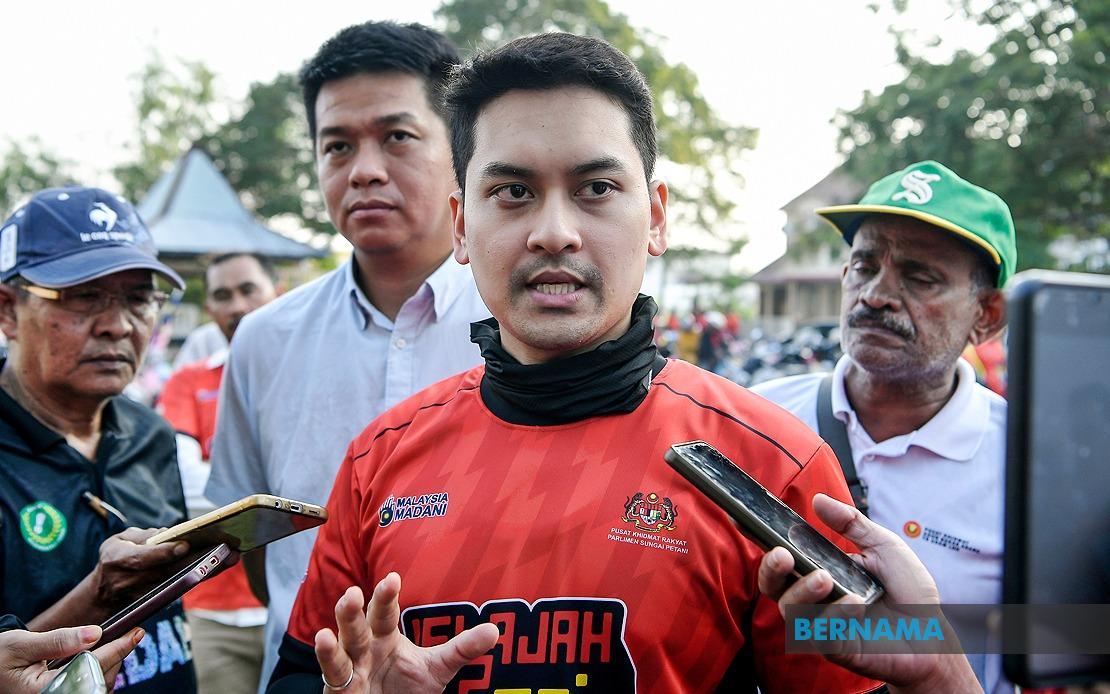
Malaysia's Ministry of Youth and Sports has embarked on an ambitious nationwide consultation drive designed to capture the voice of younger citizens in shaping the country's upcoming fiscal blueprint. The MADANI Youth Budget Tour, which kicked off in the northern zone covering Kedah, Penang, and Perlis, represents a structured attempt to integrate youth priorities into Budget 2027 before its parliamentary tabling in October. This initiative, spanning six geographical zones across the nation over the coming weeks, signals a deliberate policy shift toward bottom-up budget formulation rather than traditional top-down approaches that have historically dominated Malaysian fiscal planning.
Youth and Sports Minister Dr Mohammed Taufiq Johari unveiled the tour's framework during the Sahabat MADANI Merdeka Eve event at Universiti Teknologi MARA Penang, attended by Prime Minister Datuk Seri Anwar Ibrahim and Penang Chief Minister Chow Kon Yeow. The minister outlined how the six-zone structure would methodically traverse Malaysian states, creating opportunities for direct dialogue between government officials and young constituents. The northern launch at the Kedah Youth and Sports Complex established the template for subsequent regional engagements, emphasizing accessibility and localized discourse. This geographical dispersal strategy recognizes that youth aspirations vary significantly across Malaysia's diverse states, from urban centers to rural communities, and that meaningful engagement requires physical presence beyond capital cities.
The underlying philosophy of the tour centres on youth participation as essential to effective governance. Dr Mohammed Taufiq articulated that engagement sessions serve as critical conduits for young Malaysians to articulate their needs, concerns, and visions without institutional mediation. He emphasized that contemporary youth demonstrate willingness to contribute substantively to public discourse when given structured platforms, observing that town hall format sessions reveal a generation that neither passively receives information nor hesitates to challenge existing paradigms. This characterization positions youth not as a demographic to be managed but as active stakeholders whose input should fundamentally shape policy outcomes.
The tour's timing, occurring just two months before Budget 2027's presentation, indicates an institutional commitment to incorporating gathered feedback within a compressed timeframe. This proximity to the actual budgeting process raises important questions about implementation mechanisms—specifically, how voluminous qualitative input from multiple zones will be synthesized, prioritized, and translated into concrete budgetary allocations. The commitment to present youth aspirations to Prime Minister Anwar Ibrahim suggests that collected insights will receive high-level consideration, though the conversion of public input into actionable budget items remains a complex institutional challenge that many democracies struggle to execute effectively.
Beyond budgetary mechanics, the tour reflects broader governmental thinking about youth's role as social cohesion agents. Dr Mohammed Taufiq articulated an expanded conception of youth responsibility that transcends conventional fiscal or employment concerns, positioning young Malaysians as custodians of national unity across religious and ethnic lines. This framing suggests that budget discussions will likely encompass cultural, educational, and social programming priorities alongside traditional economic concerns. The minister's emphasis on youth serving as bridges across communal divides indicates that the MADANI Youth Budget Tour operates simultaneously as an economic consultation mechanism and a nation-building exercise aimed at deepening youth investment in the Malaysian social contract.
The broader Sahabat MADANI initiative, which Prime Minister Anwar launched at the same event, provides institutional infrastructure supporting the youth budget consultation. With 11,060 registered volunteers nationwide, this grassroots mobilization effort creates a distributed network capable of facilitating conversations between government and citizens at community level. The volunteer base represents potential multipliers for the youth budget tour, extending its reach beyond formal town halls to organic neighborhood discussions. This coupling of centralized youth budget consultation with decentralized volunteer engagement reflects sophisticated understanding that effective public participation requires both institutional channels and community-embedded facilitators.
For Malaysian youth specifically, the tour represents both opportunity and challenge. The explicit invitation to voice aspirations creates space for articulating concerns about employment, education accessibility, housing affordability, and mental health support—issues that consistently emerge in youth surveys across Southeast Asia. However, meaningful participation requires that young people possess information about budget processes, fiscal constraints, and competing policy priorities. The ministry faces an pedagogical challenge of ensuring that youth input reflects informed preferences rather than uninformed demands, particularly given Malaysian educational systems' historically limited curriculum coverage of public finance and fiscal policy.
From a regional perspective, Malaysia's structured approach to youth budget consultation offers comparative lessons for neighboring Southeast Asian democracies grappling with youth disengagement from political processes. Countries across the region face similar challenges of declining youth voter turnout and declining trust in governmental institutions. Thailand, Philippines, and Indonesia have experimented with various youth consultation mechanisms, yet Malaysia's integration of youth input into actual budget formulation represents a relatively advanced institutional adaptation. Should the MADANI Youth Budget Tour successfully translate youth feedback into visible budget items, it could establish a replicable model for age-inclusive governance in Southeast Asia.
The success of this initiative will ultimately be measured by tangible outcomes observable in Budget 2027's specific provisions. Youth in Kedah, Penang, and Perlis—and subsequently participants in other zones—will scrutinize October's budget announcement to assess whether their articulated priorities received meaningful budgetary recognition. If youth-identified concerns like skills training accessibility, mental health services, or youth entrepreneurship support receive enhanced allocations, the tour establishes credibility as genuine consultation rather than performative engagement. Conversely, if Budget 2027 reflects little apparent influence from collected youth feedback, the initiative risks reinforcing cynicism about governmental receptiveness to public input, a dynamic that would ultimately undermine rather than strengthen institutional legitimacy among younger Malaysians.
Moving forward, the Ministry of Youth and Sports must balance the consultation tour's immediate objective of gathering feedback with longer-term institutional adjustments ensuring youth voices achieve sustained influence on policy beyond Budget 2027. Creating permanent mechanisms for youth participation in annual budget cycles, establishing youth advisory councils with genuine decision-making authority, and publishing transparent documentation of how gathered input influenced specific budgetary decisions would transform the MADANI Youth Budget Tour from a discrete consultation exercise into an enduring commitment to age-inclusive democratic governance. Such institutional evolution would position Malaysia as a regional pioneer in recognizing youth not merely as beneficiaries of government programs but as essential partners in the collective project of building a prosperous, inclusive, and united nation.

