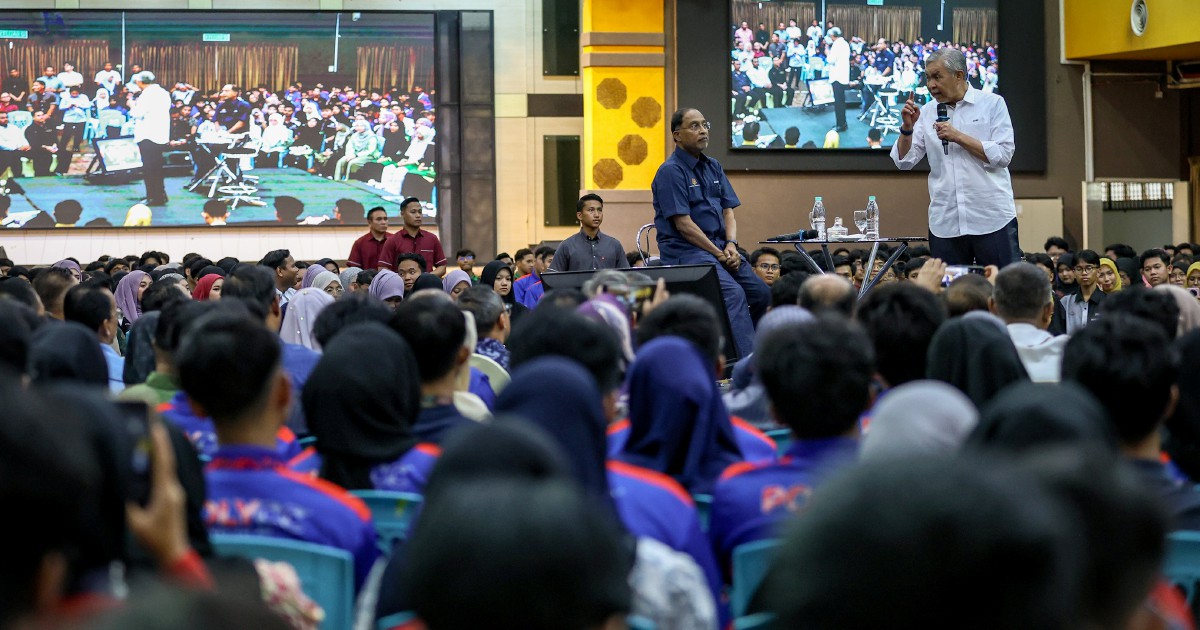
The demographic composition of Johor's electorate underscores a seismic shift in the state's political landscape, with voters under 40 representing the numerical majority needed to determine the direction of governance. Datuk Seri Dr Ahmad Zahid Hamidi, speaking in Pasir Gudang, stressed that this youthful constituency holds unprecedented leverage in shaping Johor's future, implicitly cautioning younger Malaysians to exercise their franchise with careful consideration.
This observation carries significant weight in Malaysian politics. Johor, the nation's second-largest state by population, has historically served as a bellwether for broader political trends affecting the peninsula. The concentration of electoral power among voters under 40 reflects demographic patterns across Southeast Asia, where younger generations are becoming the dominant force in determining electoral outcomes. In Malaysia specifically, this trend challenges traditional political structures that have long relied on older voting blocs to sustain power bases.
The implications for established political parties are profound. Youth voters, particularly those coming of age after 2008, have demonstrated different priorities and sensibilities compared to their predecessors. Issues such as economic opportunity, educational access, climate considerations, and digital connectivity rank prominently in their decision-making calculus. Traditional appeals based on communal identity or historical grievances carry diminished weight with this constituency, forcing parties to recalibrate their messaging and policy platforms.
Johor's specific context amplifies these considerations. As a state with significant economic dynamism, particularly in port operations, manufacturing, and services sectors, younger voters are acutely attuned to employment prospects and income potential. The state's proximity to Singapore and its role in regional commerce mean that young Johoreans often benchmark opportunities against international standards, making them less tolerant of perceived inefficiency or corruption.
Zahid's intervention in this discussion is noteworthy given his own political journey and current standing. As a senior figure within the United Malays National Organisation (UMNO), he recognises that sustaining electoral viability requires acknowledging demographic realities that earlier political calculations could ignore. His emphasis on young voters making wise choices suggests an understanding that complacency or taking any segment for granted could prove costly.
The broader Southeast Asian context lends additional significance to this moment. Indonesia, Thailand, and the Philippines have all witnessed substantial youth-driven political movements in recent years, sometimes with destabilising consequences. Malaysia's ability to channel youthful energy constructively through established democratic institutions remains an open question, and Johor's electoral performance will offer crucial insights into how this plays out.
Political parties across the Malaysian spectrum have intensified youth-focused initiatives, recognising that effective organisation among this demographic can determine outcomes. However, engagement strategies that rely on superficial appeals or token representation tend to backfire with voters possessing higher educational attainment and greater access to information than previous generations. Young Johoreans, in particular, have demonstrated capacity for independent political judgment and willingness to punish parties perceived as inauthentic.
Economic considerations loom especially large in this equation. Youth unemployment and underemployment remain persistent challenges in Malaysia, with young people often competing for positions that offer limited advancement or remuneration. Parties offering credible economic visions, rather than merely rhetorical appeals, stand to gain traction with this constituency. Conversely, those perceived as protecting elite interests at the expense of economic opportunity for younger generations face potential electoral punishment.
The technological dimension further reshapes how young voters engage with politics. Social media, instant messaging applications, and digital platforms now constitute primary channels through which political information flows and political movements organise. Traditional media strategies, while still relevant, no longer dominate the informational landscape that shapes youth political consciousness. Parties that fail to master digital communication risk appearing antiquated and out of touch.
Zahid's invocation of voters choosing wisely carries implicit assumptions about deliberative democracy and informed decision-making. Yet the reality of electoral politics often involves competing claims about authenticity, prosperity, and governance that resist easy adjudication. Young voters must navigate conflicting narratives while weighing promises against historical performance, a challenging task complicated by the increasing sophistication of political messaging.
The stakes extend beyond Johor itself. How Malaysia's largest cohort of young voters exercises political agency in coming years will reverberate across the federation. Success in mobilising and maintaining youth support could reshape coalition mathematics and policy priorities nationally. Conversely, disengagement or alienation of younger voters might force painful recalibration across the political establishment.
Ultimately, Zahid's remarks acknowledge a fundamental truth about contemporary Malaysian politics: the electorate has changed, and established political actors must adapt accordingly. Whether they do so authentically and substantively, rather than performatively, will largely determine their electoral prospects in this new demographic era.

