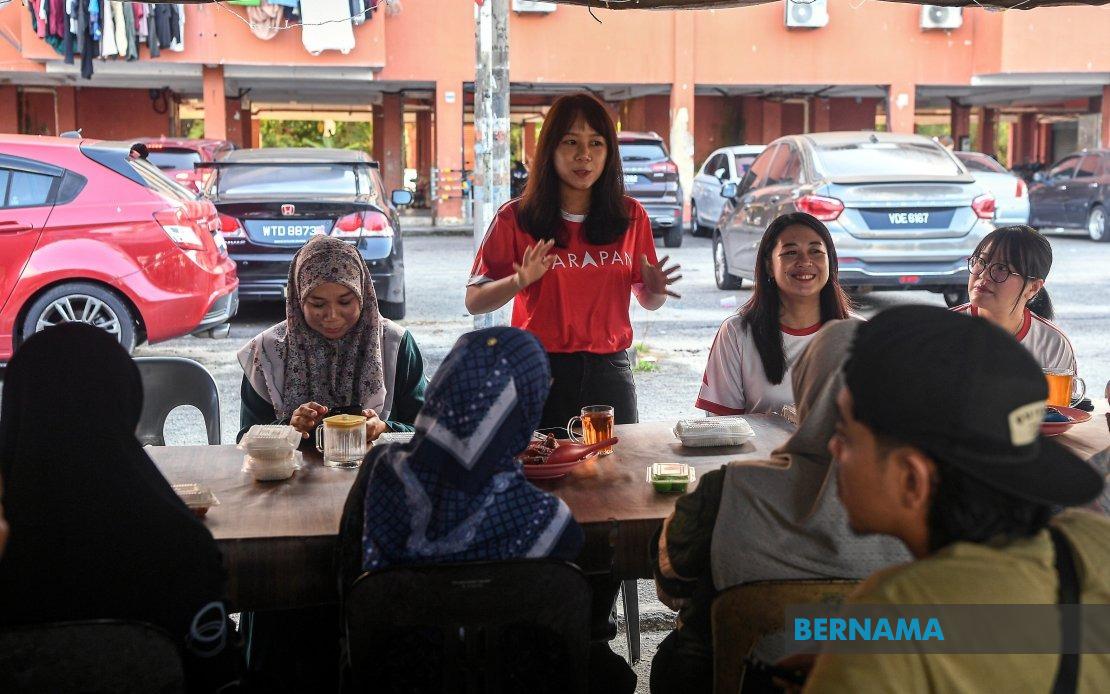
Two competing visions for Johor Jaya's future emerged as the marginal state seat heads toward polling day on July 11, with candidates from Pakatan Harapan and Barisan Nasional staking their claims through distinctly different development models. The four-cornered contest underscores how both major coalitions view the constituency as pivotal in shaping the direction of Johor's next chapter, with economic opportunity and demographic considerations taking centre stage in their respective campaigns.
Lee Wern Yiing, the 30-year-old Pakatan Harapan candidate for Johor Jaya, represents a particular brand of political newcomer—one who consciously rejected lucrative opportunities in Singapore to pursue nation-building at home. Her trajectory illustrates a deliberate choice to return after completing her studies in 2018, motivated by confidence in Malaysia's reform trajectory and a desire to contribute to the country's development. This personal narrative carries significance beyond mere biographical detail; it speaks to a strategy of appealing to young, educated Malaysians who may feel pulled toward overseas opportunities yet remain convinced that meaningful change is possible domestically.
The PH candidate's entry into politics came through practical engagement rather than family political pedigree. She initially worked as a special officer for former Johor Jaya assemblyman Liow Cai Tung, gaining ground-level experience in constituency management before stepping up to defend the seat herself. Now serving as Johor DAP Socialist Youth chief, Lee has cultivated a profile centred on youth mobilisation and digital-first outreach. She explicitly rejects the common assumption that young voters lack political engagement, instead arguing that this demographic conducts independent analysis and makes informed decisions when provided with accurate policy information.
Lee's campaign strategy reflects this philosophy through targeted initiatives. Events like the 'Johor Jaya Run' combine social media engagement with physical community activities, bridging the gap between digital natives and ground-level activism. Her policy priorities address concerns that resonate most acutely with younger voters: employment prospects, affordable housing, and cost of living pressures. These are not abstract economic indicators for this constituency but lived experiences shaping whether young families can afford to remain in Johor or must seek opportunities elsewhere.
Central to the PH pitch is the Johor-Singapore Special Economic Zone project, which Lee positions as an employment generator with untapped potential. Her vision extends beyond raw job creation to framing Johor Jaya as an attractive destination for young people to build their futures, marry, and raise families. This framing suggests that economic development divorced from quality-of-life considerations represents incomplete governance. The implicit challenge to Barisan Nasional is whether their traditional focus on infrastructure and development without explicitly targeting youth retention remains competitive in a context where demographic outflow has real political consequences.
Barisan Nasional's Johor Jaya candidate Chan San San brings a fundamentally different profile and campaign emphasis. Described as a Plentong native with more than a decade of community engagement, Chan's political capital derives from demonstrated service rather than reform symbolism. Her credentials include membership in the Johor Bahru City Council, a position as Johor MCA deputy secretary, and participation in the MCA Crisis Relief Squad volunteer operation. This portfolio emphasises institutional experience and hands-on problem-solving, positioning her as someone who understands community needs through prolonged engagement rather than youthful idealism.
Chan's four-point development agenda prioritises economic strengthening alongside concrete infrastructure improvements. Notably, she identifies Johor Jaya as a potential transportation hub in eastern Johor Bahru, with explicit reference to the Rapid Transit System project connection and traffic congestion mitigation. This approach emphasises connectivity between the constituency and broader Johor Bahru metropolitan systems, suggesting that localism need not mean insularity. The emphasis on addressing traffic congestion directly counters perceptions of Johor Bahru as increasingly congested; tackling this through improved transportation infrastructure appeals to commuters and those considering whether to remain in the area.
The distinction between these candidates reflects broader coalition strategy differences. PH's emphasis on young voter mobilisation and explicit promise of economic policies tailored to this demographic suggests confidence that generational change favours their positioning as reform-minded. Their focus on the JS-SEZ represents a bet that special economic zones will generate quality employment and anchor young people to Johor. BN's focus on community experience and infrastructure investment suggests a different theory of electoral appeal: that voters value proven competence, institutional relationships, and tangible development over reform symbolism.
The four-cornered contest also includes Parti Bersama Malaysia's Lau Yi Leong and Independent candidate Lim Hun Peaw, indicating that neither major coalition holds overwhelming support in the constituency. This fragmentation typical of marginal seats heightens the importance of turnout dynamics and vote efficiency. Within this context, whether younger voters respond more to Lee's explicit youth-focused messaging or whether Chan's community credentials and infrastructure focus prove sufficient becomes a meaningful predictor of Johor politics post-election.
The Johor Jaya contest occurs within the broader 16th Johor state election, featuring 172 candidates contesting 56 seats across the state. The concentration on this single constituency reflects its marginal status and strategic importance to both PH and BN. Early voting commenced on July 7, with main polling scheduled for July 11. The turnout pattern—particularly among younger voters—will signal whether appeals to demographic renewal overcome established community networks and institutional experience in determining electoral outcomes.
Beyond the immediate electoral stakes, the Johor Jaya campaign illustrates a broader tension in Malaysian politics between generational change and institutional continuity. Lee represents a particular vision of nation-building centred on youth engagement and forward-looking economic policy. Chan embodies a competing model where demonstrated community service and infrastructural competence matter more than demographic positioning. The constituency's choice will reveal which approach resonates more powerfully with voters deciding their state's direction, with potential implications for how both coalitions calibrate their messaging heading into future contests.

