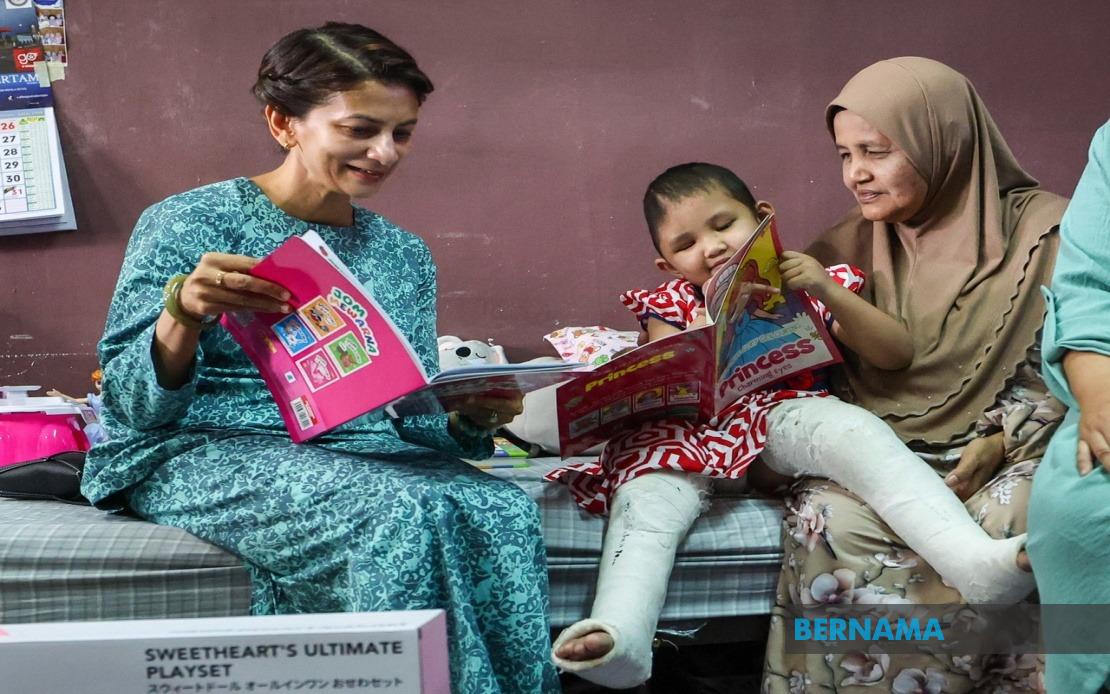
Aulia Sofia Ahmad Shafiq, a three-year-old girl who was the lone survivor of a catastrophic road accident that claimed six family members, is making steady progress in her recovery despite facing significant physical and emotional challenges ahead. The child, now in the care of her paternal aunt Siti Nor Atikah Ahmad Syukri in Bertam, was discharged from Sultanah Bahiyah Hospital in Alor Setar on July 2 after spending nearly a month receiving intensive medical treatment for severe injuries sustained in the collision.
The tragic incident occurred on June 7 when a newly purchased Proton X50 sport utility vehicle carrying Aulia Sofia and her family collided with a lorry near Sungai Petani whilst en route from Penang to Merbok. The accident claimed the lives of her parents Ahmad Shafiq Ahmad Shukri, aged 27, and Jamaliah Sannusi, aged 29, her two-month-old brother Ahmad Mikail, her grandmother Nora Mhd Husin, aged 55, her uncle Ahmad Fahim Ahmad Shukri, aged 27, and her seven-year-old cousin Iskandar Affan Ibrahim. The child's survival against such devastating odds has been viewed by her family as nothing short of miraculous, particularly given the severity of her injuries and the grim prognosis initially offered by medical professionals.
According to Siti Nor Atikah, Aulia Sofia has demonstrated encouraging signs of physical recovery since her hospital discharge, becoming increasingly active and responsive as each day passes. However, her rehabilitation journey remains complex, as both her legs sustained fractures in the collision and she is currently unable to walk independently. The recovery process will be gradual and demanding, with an orthopaedic specialist consultation scheduled for July 26 to assess the healing progress and determine the appropriate treatment trajectory for her lower limbs.
Beyond the visible orthopedic injuries, Aulia Sofia sustained severe head trauma and particularly serious damage to her left eye, which suffered a ruptured eyeball in the crash. Medical teams performed emergency surgical intervention to preserve the eye itself, yet the outcome regarding her vision remains uncertain. Specialists have indicated that whilst she may eventually recover some degree of sight, her vision could be severely compromised or she may experience complete loss of sight in that eye. Further comprehensive examinations will be necessary before the true extent of any visual impairment can be determined, leaving the family in a period of anxious uncertainty about this critical aspect of her long-term quality of life.
The psychological dimensions of Aulia Sofia's trauma deserve equal attention to her physical injuries. Approximately two weeks after the accident, the child regained consciousness in hospital, marking the beginning of her awareness of the tragedy. Her caregivers subsequently informed her of her parents' deaths, an extraordinarily difficult conversation that nonetheless needed to occur for the child to begin processing her new reality. The emotional toll of losing virtually her entire immediate family at such a tender age will likely require professional psychological support and compassionate family care over an extended period.
On July 18, Tengku Sarafudin Badlishah ibni Al Aminul Karim Sultan Sallehuddin, the Raja Muda of Kedah, along with Raja Puan Muda Che Puan Muda Zaheeda Mohamad Ariff and their daughter Tunku Zara Bahiyah, conducted an official visit to Aulia Sofia at her aunt's residence. The royal family's gesture demonstrated the constitutional monarchy's active interest in the welfare of citizens facing extraordinary hardship and personal tragedy. During the visit, the royal delegation presented material assistance to those providing care for the child and established a National Education Savings Scheme account in Aulia Sofia's name, a forward-looking initiative designed to secure educational opportunities and financial stability for her future.
The royal family's intervention carries particular significance within the Malaysian context, where such official visits by members of the state royal households typically signal the importance placed on supporting vulnerable members of society and acknowledging community trauma. For Aulia Sofia's extended family, the visit represented both a concrete gesture of state support and a symbolic acknowledgment of their loss and ongoing struggles. Siti Nor Atikah expressed profound gratitude for the royal family's compassion and their recognition of the family's circumstances during this exceptionally challenging period.
Siti Nor Atikah herself carries her own burden of loss, having lost her youngest son, seven-year-old Iskandar Affan Ibrahim, in the same accident. Despite her personal grief, she has committed herself to providing Aulia Sofia with a stable, loving home environment. Along with her husband Ibrahim Ghazali, a 39-year-old lorry driver, Siti Nor Atikah has decided to raise Aulia Sofia as their own daughter, a decision that reflects the extended family support structures common in Malaysian society. Legal guardianship procedures are currently underway to formalize this arrangement and ensure Aulia Sofia's legal and financial protection.
The couple's own children and their cousins have maintained close bonds throughout their lives, a circumstance that facilitates Aulia Sofia's transition into her new household. According to Ibrahim, the child has adjusted well to her new living situation at Taman Bandar Bertam Putra, finding comfort in the constant presence of her cousins and the familiar familial environment. This continuity of extended family relationships represents a crucial stabilizing factor in her recovery, providing emotional security and a sense of belonging during a period when her world has been fundamentally altered.
The accident itself raises important questions about road safety and vehicle security that extend beyond the immediate tragedy affecting this single family. The collision between a new Proton X50 and a lorry occurred during mid-afternoon hours on a route commonly traveled by families, highlighting the unpredictability of road accidents and the disproportionate vulnerability of young children in such incidents. Whilst detailed accident investigation findings have not been publicly detailed, the incident underscores the ongoing need for comprehensive road safety measures and driver awareness campaigns across Malaysia.
Aulia Sofia's case has also drawn attention to the importance of pediatric trauma care and the specialized medical facilities available within the northern region. Sultanah Bahiyah Hospital's successful management of her complex injuries, including the surgical preservation of her damaged eye, demonstrates the capability of Malaysian healthcare infrastructure to respond to catastrophic pediatric emergencies. However, her ongoing need for specialized follow-up care from orthopedic and ophthalmologic specialists illustrates the extended treatment pathway that severe accident survivors typically require.
Looking forward, Aulia Sofia's recovery trajectory will likely extend over months and potentially years, encompassing physical rehabilitation, psychological counseling, ophthalmologic assessment, and the gradual adjustment to her new family circumstances. Her story represents both the fragility of life and the resilience demonstrated by young children when supported by committed families and accessible healthcare. The royal family's intervention, combined with her aunt and uncle's commitment to her welfare, provides Aulia Sofia with the foundational support necessary to rebuild her life following catastrophic loss.

