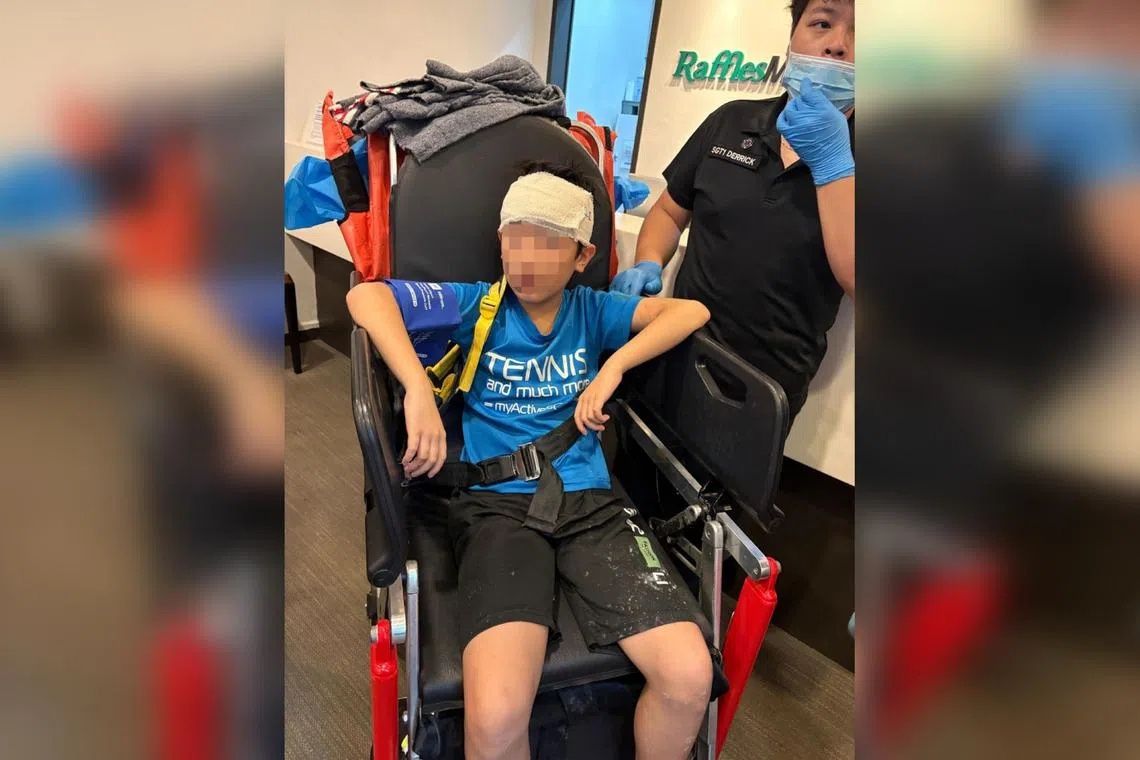
A young boy was rushed to hospital following the collapse of a signboard at a Food Junction outlet situated in Rivervale Mall in Singapore's Sengkang district on Saturday morning. The Singapore Civil Defence Force attended to the incident after receiving a distress call at approximately 10.30am on June 20, transporting the injured child to KK Women's and Children's hospital for medical evaluation and treatment.
The collapse occurred without warning at the foodcourt establishment, which occupies space on the mall's ground floor. Video footage shared on social media platform TikTok captured the aftermath of the structural failure, showing debris scattered across the entrance area of the Food Junction outlet. The extent of the damage visible in the footage suggested a significant portion of the signage had given way, with other sections of the ceiling appearing to remain partially intact as bystanders and emergency personnel maintained a safe distance from the fallen material.
Food Junction's management moved swiftly in response to the emergency. A company spokesperson confirmed awareness of the incident and outlined the measures taken during the immediate aftermath. The outlet's team collaborated with Rivervale Mall's management and emergency response personnel to provide prompt assistance to the affected customer. The spokesperson did not elaborate on the specific injuries sustained but indicated that the young patron received comprehensive medical assessment following admission to hospital.
Recovery appears to have proceeded favourably based on the limited updates released by the food operator. The injured child's condition stabilized sufficiently to permit discharge from hospital care, with the patient now recuperating at home following the thorough evaluation conducted by medical professionals at KK Women's and Children's hospital. This development suggests the injuries, while serious enough to warrant immediate hospitalization and assessment, were not severe enough to necessitate extended inpatient treatment.
In the aftermath of the incident, Food Junction undertook a detailed investigation to establish what caused the structural failure. The company emphasized that following completion of this review, it had implemented comprehensive reinforcement of safety measures across its outlets to align with regulatory requirements and best-practice standards. The spokesperson's statement suggested that while the initial cause remained under examination, the company had moved proactively to prevent similar occurrences rather than awaiting completion of formal investigations.
Operations at the affected foodcourt location resumed following the necessary clearance and safety assessments, indicating that authorities and mall management determined the remaining structure posed no immediate hazard to future patrons. The resumption of business came after appropriate protocols had been completed and debris had been cleared from the entrance area. Food Junction issued a formal apology to customers and the public regarding the unexpected incident, acknowledging the distress caused to those present during the occurrence.
For Malaysian readers, this incident underscores broader questions about maintenance standards and safety oversight at commercial food outlets across Southeast Asia. Many foodcourts in Malaysia operate under similar management structures and face comparable wear-and-tear challenges, raising legitimate concerns about whether comparable facilities here maintain equivalent safety inspection regimes. The incident at Rivervale Mall demonstrates that even in Singapore, where building standards are rigorously enforced, structural failures can still occur without adequate preventive maintenance protocols.
The involvement of Singapore's Building and Construction Authority in the investigation highlights the multi-agency approach taken to such incidents in the city-state. Malaysian equivalents, including local authorities and relevant government departments, would likely conduct parallel investigations should similar incidents occur domestically. The regulatory framework governing commercial premises and foodcourt operations differs across the region, though the fundamental obligation to maintain safe environments for customers remains universal.
This episode also raises awareness among diners in the region regarding potential hazards within seemingly routine dining environments. While catastrophic structural failures remain statistically rare, the Rivervale Mall incident serves as a reminder that commercial establishments must prioritize ongoing maintenance and regular safety inspections rather than addressing problems only when they become critical. Many Southeast Asian food operators and mall managements would benefit from reviewing their maintenance schedules and inspection protocols in light of this incident.
The rapid response by Singapore's emergency services and the cooperation between Food Junction, mall management, and relevant authorities presents a model for incident response across the region. However, the underlying issue remains one of prevention rather than emergency management. Investment in preventive maintenance, particularly for overhead structures and signage that could pose risks to customers, represents a far more cost-effective and safer approach than managing the consequences of structural failures.
The incident also demonstrates the speed with which information spreads across social media platforms, with TikTok footage quickly providing public visibility into the event. This digital transparency can serve as a catalyst for improvements in safety standards, as incidents gaining widespread attention tend to prompt faster corporate and regulatory responses than those that receive limited public exposure.
For Food Junction and other operators in the region, incidents such as this underscore the importance of comprehensive insurance coverage, rapid incident response protocols, and transparent communication with customers and authorities. The company's swift action in this case—providing immediate assistance, cooperating with emergency services, and subsequently implementing enhanced safety measures—likely helped minimize potential legal and reputational fallout from the incident.