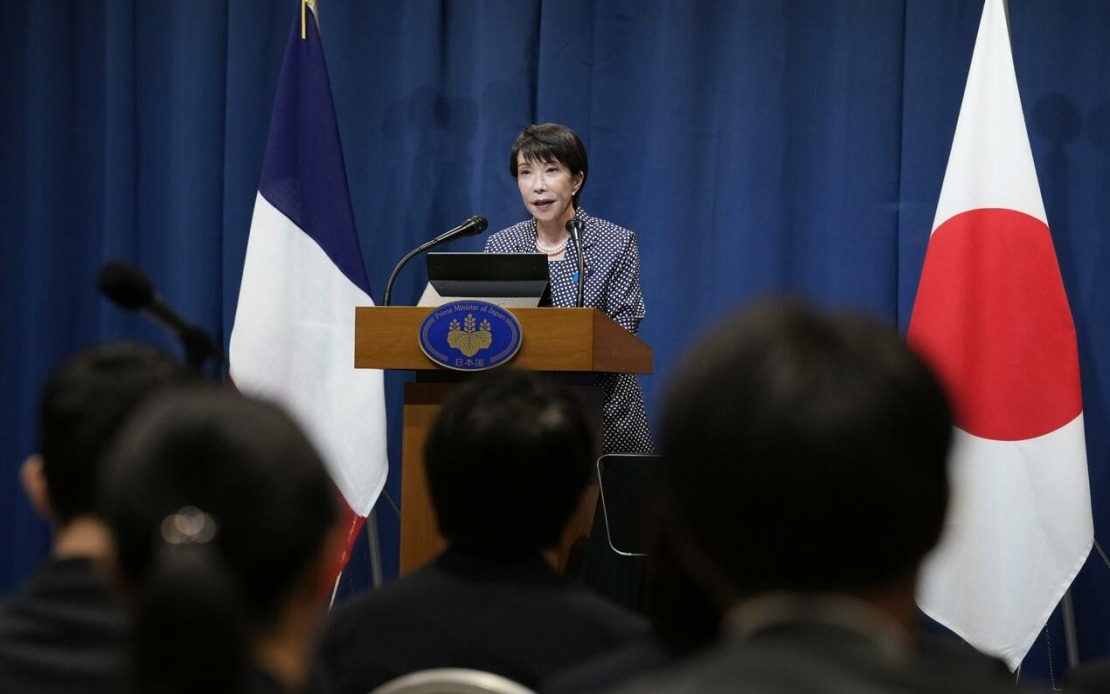
Japanese Prime Minister Sanae Takaichi's Cabinet has seen its public backing erode to 55.8 per cent, the lowest point since she assumed office in October, according to a Kyodo News poll released on Sunday. The declining approval trajectory reflects mounting public discontent with the government's handling of economic pressures, particularly as Japanese households grapple with persistent inflation that continues to affect everyday purchasing power across the nation.
The latest survey captures a pivotal moment for Takaichi's administration, which has faced headwinds from multiple directions since her inauguration. The erosion of support, though still maintaining the majority threshold, signals that public confidence requires careful management and suggests voters are scrutinising her government's policy responses more critically than during her initial honeymoon period.
Regional geopolitical uncertainty continues to weigh on Japanese public sentiment, particularly regarding potential military involvement in distant conflicts. When surveyed about whether Japan should deploy the Self-Defence Forces to critical maritime passages to safeguard commercial shipping, a substantial 54.7 per cent of respondents expressed opposition to such intervention. However, a meaningful 36.6 per cent advocated for such deployment, indicating a divided public opinion on Japan's appropriate role in securing global trade routes. This divide reflects the complex calculations facing Japan as a major trading nation dependent on stable maritime corridors, balanced against public wariness about military commitments abroad.
The timing of the survey is noteworthy, arriving shortly after the United States and Iran announced preliminary peace negotiations that included provisions for Iran to reopen the Strait of Hormuz. This development potentially reduces immediate concerns about disruption to one of the world's most critical shipping channels, through which approximately one-third of global maritime-traded petroleum passes. For Japan, which relies heavily on energy imports from the Middle East and throughout the Indo-Pacific region, such geopolitical developments carry significant implications for economic stability and long-term strategic planning.
The poll reveals that cost-of-living pressures remain the dominant concern shaping public evaluation of government performance. Food and beverage expenses, which affect household budgets directly and regularly, have emerged as a focal point for consumer frustration. When questioned about consumption tax policy, 43.9 per cent of respondents viewed a reduction in the food and beverage tax from the current 8.0 per cent to 1.0 per cent as a reasonable compromise if it enables swift implementation. This substantial plurality suggests public support for targeted tax relief that balances fiscal necessity with immediate household relief.
The survey also uncovered more ambitious preferences within the electorate regarding tax relief. An additional 22.6 per cent of respondents favoured complete elimination of the consumption tax on food and beverages, aligning with campaign pledges made by Japan's ruling coalition parties. This combined 66.5 per cent supporting some form of consumption tax reduction on essential food items demonstrates broad political consensus among voters that the current tax burden on these necessities warrants adjustment.
These polling results carry implications extending beyond Japan's borders, particularly for Southeast Asian economies and regional trading partners. Japan's economic trajectory and policy decisions influence regional growth dynamics, investment flows, and supply chain configurations that affect nations throughout the Indo-Pacific. Malaysian exporters and manufacturers, many of whom depend on Japanese markets and are integrated into Japanese-anchored supply networks, are attentive to shifts in Japanese domestic economic policy and consumer demand patterns.
The apparent disconnect between Takaichi's government and public sentiment on economic management suggests that standard policy responses may be insufficient to restore confidence. While her Cabinet still maintains majority support, the downward trend indicates that voters are becoming increasingly vocal about their economic anxieties and expect more decisive action. The focus on consumption tax reduction reflects recognition that ordinary families perceive inflation as a persistent threat rather than a temporary phenomenon.
For policymakers across Asia-Pacific, the Takaichi Cabinet's experience underscores the political salience of inflation management and consumer purchasing power. Even in an advanced, wealthy economy like Japan, sustained price pressures on everyday necessities erode government popularity and narrow political space for other policy initiatives. This pattern has been evident across numerous democracies in recent years, suggesting a universal challenge rather than a Japan-specific problem.
Looking ahead, Takaichi's administration faces the challenge of translating economic policy adjustments into meaningful improvements in household finances within a timeframe that resonates with voters. Tax modifications alone may prove insufficient if underlying inflation dynamics persist. The government's broader economic strategy, including wages, productivity investments, and labour market reforms, will determine whether public approval can stabilise or whether further erosion occurs in coming months.
%22%2F%3E%3C%2Fpattern%3E%3C%2Fdefs%3E%3Crect%20width%3D%22100%25%22%20height%3D%22100%25%22%20fill%3D%22url(%23phur18g)%22%2F%3E%3Crect%20width%3D%22100%25%22%20height%3D%22100%25%22%20fill%3D%22url(%23phur18p)%22%2F%3E%3Ctext%20x%3D%2250%25%22%20y%3D%2250%25%22%20text-anchor%3D%22middle%22%20dominant-baseline%3D%22central%22%20fill%3D%22rgba(255%2C255%2C255%2C0.95)%22%20font-family%3D%22Georgia%2C%20'Times%20New%20Roman'%2C%20serif%22%20font-weight%3D%22700%22%20font-size%3D%22320%22%20letter-spacing%3D%22-0.02em%22%3E24%3C%2Ftext%3E%3C%2Fsvg%3E)
%22%2F%3E%3C%2Fpattern%3E%3C%2Fdefs%3E%3Crect%20width%3D%22100%25%22%20height%3D%22100%25%22%20fill%3D%22url(%23ph2s5vng)%22%2F%3E%3Crect%20width%3D%22100%25%22%20height%3D%22100%25%22%20fill%3D%22url(%23ph2s5vnp)%22%2F%3E%3Ctext%20x%3D%2250%25%22%20y%3D%2250%25%22%20text-anchor%3D%22middle%22%20dominant-baseline%3D%22central%22%20fill%3D%22rgba(255%2C255%2C255%2C0.95)%22%20font-family%3D%22Georgia%2C%20'Times%20New%20Roman'%2C%20serif%22%20font-weight%3D%22700%22%20font-size%3D%22320%22%20letter-spacing%3D%22-0.02em%22%3EData%3C%2Ftext%3E%3C%2Fsvg%3E)