The government's initiative to establish a formal accreditation system for religious teachers operating on online platforms and social media has received endorsement from a key Islamic organisation, signalling official support for what advocates describe as a necessary safeguard against religious misinformation in the digital age. Yayasan Dakwah Islamiah Malaysia, the government-backed dakwah agency operating under the Prime Minister's Department, has publicly backed the proposal as a constructive step towards maintaining both the authenticity of Islamic instruction and public confidence in religious institutions across Malaysia's increasingly digitised information landscape.
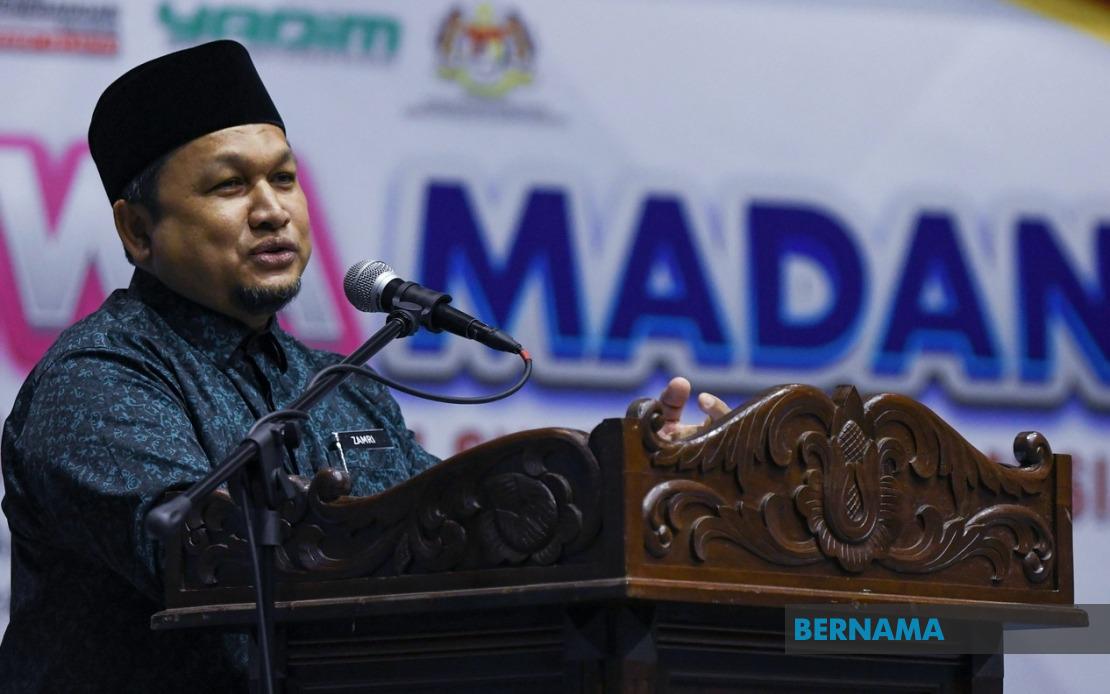
Zamri Zainal Abidin, the foundation's chief executive officer, articulated the core reasoning behind the framework when he explained that the measure would function as a credibility filter in an environment where theological authority has become democratised. The digital sphere, he noted, has fundamentally transformed how Malaysians access religious knowledge, creating an unprecedented platform for Islamic instruction to reach audiences. Yet this accessibility comes with a significant vulnerability: the absence of established gatekeeping mechanisms means individuals with minimal Islamic scholarship can present themselves as qualified teachers, potentially misleading the public and distorting established religious principles.
The concern, as articulated by YADIM's leadership, extends particularly to younger demographics who have come to rely substantially on social media platforms for their religious education and spiritual guidance. In an environment where algorithmic promotion can elevate any voice, regardless of qualifications, teenagers and young adults may encounter religious interpretations that diverge from mainstream Islamic scholarship or contain factual inaccuracies. Such exposure, left unaddressed systematically, risks gradually eroding public trust in official religious institutions and their scholarly representatives, effectively fragmenting the unified voice of Islamic teaching across Malaysia.
Zamri emphasised that the proposed accreditation framework would not function as a mechanism to suppress dakwah activities or impose restrictive barriers for genuine religious educators. Rather, the design intent centres on distinguishing between qualified instructors and those operating without adequate foundational knowledge. He characterised the framework as enabling rather than limiting, since it would actually facilitate the work of properly trained preachers by establishing them as credible voices against a backdrop of unvetted content. This distinction matters considerably in a multicultural society where religious authority carries significant social weight and misrepresentation can foster interfaith tensions or community confusion.
YADIM itself has already implemented comparable standards through its own institutional structures, according to Zamri's statement. The foundation's trained preachers, including those participating in the Daie Muda programme, undergo formal accreditation processes administered through the Federal Territories Mufti Department. This existing practice demonstrates both the feasibility of establishing such systems and the foundation's commitment to professionalising dakwah work. By expanding this model across a broader framework applicable to online platforms generally, the government would essentially be scaling an approach that has proven workable within institutional settings.
The initiative aligns with recent announcements by Dr Zulkifli Hasan, the Minister in the Prime Minister's Department responsible for religious affairs, who introduced the accreditation review proposal to address growing concerns about theological accuracy in digital spaces. His department, working in coordination with YADIM and presumably with the various state mufti departments, would likely oversee implementation of any standardised accreditation regime. This governmental positioning suggests the initiative reflects deliberate policy rather than reactive crisis management, indicating recognition that religious communication in digital contexts requires proactive governance structures.
From a Southeast Asian perspective, Malaysia's approach to this challenge differs from responses in other regional democracies grappling with similar issues. While some nations have experimented with content moderation through social media platforms themselves, Malaysia's proposed framework targets the source—the credibility of the individuals disseminating religious content. This institutional approach places responsibility on formalised gatekeeping rather than algorithmic filtering, reflecting the particular role Islamic authorities play in Malaysia's constitutional framework and social structure. The religious credentials system essentially replicates offline hierarchies of Islamic scholarship within the digital realm.
Implementing such accreditation across online platforms does present practical challenges worth considering. Enforcement mechanisms would require coordination between religious authorities and social media companies, whose content moderation policies often resist alignment with national regulatory frameworks. Additionally, defining the threshold of Islamic knowledge required for accreditation demands careful calibration to avoid either being so stringent that it excludes legitimate grassroots educators or so permissive that it fails to meaningfully filter unqualified individuals. The technical question of how to display or verify credentials on social media platforms, which currently lack standardised systems for religious qualifications, also remains unresolved.
Nevertheless, YADIM's commitment to serving as a strategic partner in implementation suggests the foundation envisions a collaborative approach rather than a top-down mandate. As the government's primary dakwah agency, YADIM possesses institutional experience, networks within religious communities, and existing credibility that could facilitate smoother adoption among online preachers. The organisation's statement notably frames accreditation not as punitive regulation but as recognition of legitimate expertise, potentially encouraging voluntary participation from educators confident in their qualifications.
The broader context involves Malaysia's ongoing effort to balance religious freedom with social cohesion in an increasingly digital society. Previous years have witnessed periodic tensions over religious interpretation in online spaces, from debates over theological legitimacy to concerns about extremist content. An accreditation framework could address the middle category—not outright dangerous material but potentially misleading teaching from unqualified individuals. By establishing clearer professional standards for Islamic instruction, the government essentially aims to create a trusted ecosystem where young people accessing religious content online encounter vetted, knowledgeable teachers rather than self-appointed authorities.
The proposal also reflects emerging consensus among Malaysian religious authorities that digital spaces require distinct governance approaches from traditional physical environments. A mosque sermon occurs within a defined space under established authority structures, whereas online teaching operates in decentralised, borderless contexts where traditional hierarchies prove ineffective. Creating portable accreditation that follows individuals across platforms and jurisdictions represents a pragmatic adaptation of religious governance to technological realities. Whether such accreditation systems ultimately gain widespread adoption among online preachers, however, will depend on balancing enforcement mechanisms with voluntary incentives for compliance.

