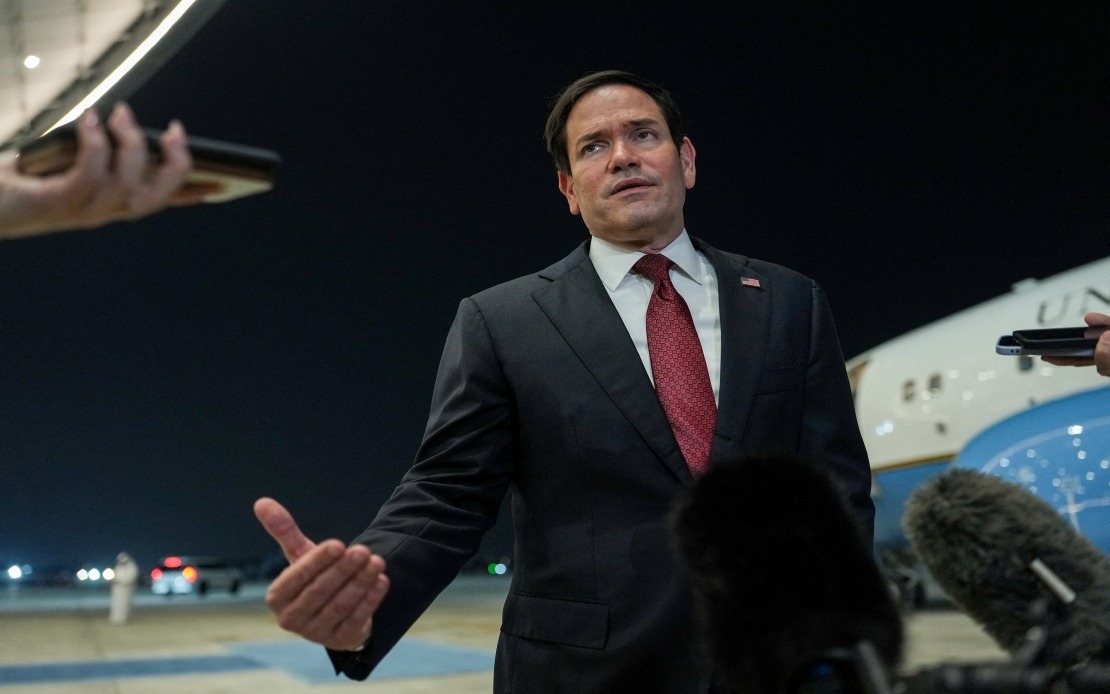
Chinese President Xi Jinping's highly anticipated visit to the United States is moving forward as planned, according to US Secretary of State Marco Rubio, who on Sunday emphasized that preparations for the September journey remain on track despite mounting tensions between the world's two largest economies. Speaking to reporters at Joint Base Andrews before departing for meetings with Southeast Asian foreign ministers, Rubio indicated that American officials have received no signals suggesting the visit might be postponed or cancelled, and that Chinese teams continue their groundwork to prepare for the high-level engagement.
The planned visit, initially extended as a reciprocal gesture following US President Donald Trump's May trip to Beijing, is scheduled for September 24 at the White House. During that earlier visit, Trump personally invited Xi to return the courtesy, and both governments have publicly maintained their commitment to this significant diplomatic encounter. Rubio's comments suggest that despite the caustic rhetoric exchanged between the two nations in recent days, the foundational framework for top-level dialogue remains intact, underscoring the continued importance both capitals place on maintaining channels of communication.
However, the diplomatic landscape has grown considerably more fraught in recent weeks. Trump accused China on Thursday of interfering in the 2020 US presidential election, an allegation that Beijing has flatly rejected. Such explosive charges would normally threaten the viability of high-profile state visits, yet American officials are signalling through their public statements that the September engagement will proceed regardless. This apparent compartmentalisation reflects the delicate balance both nations must maintain—acknowledging deep disagreements whilst preserving the formal diplomatic infrastructure necessary for managing their complex relationship.
Rubio's reassurances carry particular significance given his position as the chief architect of American foreign policy under the Trump administration. His explicit statement that Chinese officials maintain active preparation teams for the visit, and his acknowledgement that he has "heard nothing otherwise," serves as a clear signal to both domestic and international audiences that, despite rhetorical conflicts, the machinery of state diplomacy continues functioning. This distinction between public posturing and private diplomatic engagement reflects the reality of great-power relations, where nations must simultaneously compete and cooperate.
The timing of Rubio's comments is noteworthy, coming just days before the Association of Southeast Asian Nations foreign ministers' gathering in Manila scheduled for Tuesday. At that same meeting, Chinese Foreign Minister Wang Yi will be present, providing an immediate opportunity for the two powers to engage directly and test the temperature of their relationship. For Southeast Asian nations, the maintenance of US-China dialogue is of paramount importance, as escalating hostilities between the superpowers inevitably creates pressure on regional governments to choose sides or manage competing interests.
Rubio's broader framing of US-China relations as inherently competitive but capable of being managed through dialogue offers a pragmatic philosophy for handling differences between great powers. He acknowledged that disagreements are inevitable when major nations interact, but stressed that both Washington and Beijing bear responsibility to maintain functional relations "for the sake of their people and the wider world." This perspective suggests the Trump administration views sustained high-level engagement not as weakness but as a necessary mechanism for preventing miscalculation or unintended escalation in an already tense relationship.
For Malaysia and other Southeast Asian nations, Xi's planned visit holds strategic implications. The region has long sought to maintain balanced relations with both the United States and China, and the continued viability of top-level US-China engagement suggests neither power seeks a complete rupture that might force regional allies to abandon their hedging strategies. Should Xi's visit proceed as scheduled, it would demonstrate that despite surface tensions and pointed accusations, the two countries retain sufficient mutual interest to preserve formal diplomatic protocols and high-profile state encounters.
China's Foreign Ministry has confirmed ongoing coordination with Washington regarding the planned meeting, offering Beijing's own endorsement of the visit's continuation. This bilateral confirmation from both parties reinforces the impression that beneath the public disagreements over electoral interference and other contentious issues, institutional commitments to diplomatic engagement persist. The presence of such diplomatic redundancy—with both nations publicly restating their commitment to the visit—suggests considerable effort is being invested in preventing any misunderstanding that might derail the September encounter.
The stakes surrounding Xi's potential visit extend beyond mere ceremony or symbolic gesture. Such meetings provide rare opportunities for direct dialogue between the heads of state, enabling discussion of matters too sensitive or complex for lower-level officials. Trade tensions, technology competition, and regional disputes across the Indo-Pacific all potentially fall within the scope of conversation between Trump and Xi. For Southeast Asia, any progress in managing these bilateral tensions could have stabilizing effects throughout the region, whilst conversely, any deterioration in US-China relations would likely intensify pressure on regional powers to choose alignment.
The ASEAN foreign ministers' meeting later this week may serve as a preliminary test case for whether the two superpowers can maintain constructive engagement. The presence of Wang Yi alongside American officials and their Southeast Asian counterparts will offer observers an opportunity to gauge the actual state of US-China relations beyond the rhetorical volleys. If the atmosphere remains corrosive or if either side signals unwillingness to engage, concerns about the September visit might intensify.
Rubio's confidence in the visit's continuation also reflects practical considerations. Cancelling or postponing a state visit of this magnitude would require explicit decision-making at the highest levels and would carry significant diplomatic costs for whichever party initiates the change. The accumulation of preparation efforts, the public commitments made by both presidents, and the symbolic importance of maintaining engagement all create substantial inertia supporting the visit's execution. Unless circumstances deteriorate dramatically in the coming weeks, the September encounter appears likely to proceed.

