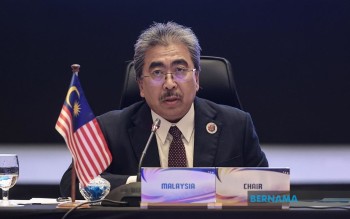
The World Trade Organization faces mounting pressure to reinvent itself for an era dominated by geopolitical rivalry and supply chain vulnerabilities rather than the straightforward trade liberalisation principles that guided its founding. Investment, Trade and Industry Minister Datuk Seri Johari Abdul Ghani articulated this challenge at the 39th Asia-Pacific Roundtable in Kuala Lumpur, emphasizing that the WTO's continued viability depends on its capacity to grapple with the complexities of 21st-century commerce rather than remain tethered to 20th-century assumptions about open markets.
When the WTO was established, the global consensus held that reducing tariffs and dismantling trade barriers would automatically generate prosperity and reinforce international stability. That premise underpinned decades of negotiation and shaped trade architecture across Asia and beyond. Yet the operating assumptions of contemporary policymakers have shifted fundamentally. Officials now navigate an environment where economic strategy intertwines inseparably with technological competition, security calculations, and the imperative to safeguard critical production networks from external shocks or adversarial disruption.
Johari's intervention reflects a broader Malaysian position that supports the multilateral trading system while acknowledging its institutional limitations. He stressed that the WTO retains essential value as a mechanism for resolving disputes and preventing trade tensions from metastasising into wider geopolitical confrontation. However, the organisation cannot fulfil this stabilising role effectively unless it evolves beyond its classical trade-opening mandate to accommodate the realities that now preoccupy governments across the region and globally.
The minister identified a decisive pivot in economic policymaking: the debate has migrated from market-opening strategies toward frameworks for protecting strategic capabilities. Nations increasingly ask not simply how to liberalise sectors, but which industries, technologies, and supply chains require shielding from external vulnerability or competitive encroachment. This reorientation reflects lessons learned from pandemic-induced disruptions that exposed the fragility of globalised production systems, alongside intensifying technological competition between major powers that influences decisions about semiconductor manufacturing, rare earth processing, and advanced materials.
Without substantive reform, Johari warned, the WTO faces a gradual erosion of relevance. As governments pursue unilateral or preferential strategies to achieve resilience and strategic autonomy, multilateral rules risk becoming marginalized constraints rather than accepted frameworks. The stakes extend beyond trade statistics: institutions that cannot mediate disputes or establish credible common standards allow economic tensions to percolate unchecked, potentially triggering broader conflicts that threaten regional stability and prosperity.
Malaysia's position carries particular weight in this discussion, given its role as a significant trading nation and ASEAN's representative voice on global economic matters. The country has long advocated for an open, rules-based trading system while navigating pressures from competing great powers and the need to diversify supply chains away from concentrated dependencies. Johari's remarks signal that Malaysia recognises the WTO's current frameworks as insufficient for addressing these dual imperatives simultaneously.
The Asia-Pacific Roundtable, organised annually by the Institute of Strategic and International Studies on behalf of the ASEAN Institutes of Strategic & International Studies network, provides an influential platform for airing such perspectives. The conference, convening policymakers, diplomats, military officials, academics, and business leaders under the theme "Accelerating Agency and Action", creates space for candid discussion about regional challenges without the formal constraints of official negotiations. Johari's keynote intervention signals Malaysian concern that reform discussions must accelerate before institutional paralysis becomes irreversible.
The challenge facing the WTO mirrors broader tensions within the multilateral system. Developing nations, including ASEAN members, require functioning dispute mechanisms and transparent rules to protect against discriminatory trade practices by larger economies. Yet the same nations also pursue legitimate objectives around supply chain diversification, technological development, and industrial policy that classical trade law struggles to accommodate. The organisation must somehow reconcile competitive openness with strategic autonomy—a conceptual tension that existing frameworks were not designed to manage.
For Southeast Asian readers, Johari's comments underscore why WTO modernisation carries direct relevance. The region's economies depend substantially on international trade and global supply chains. Any collapse in multilateral disciplines would create uncertainty that regional producers, exporters, and investors cannot easily absorb. Simultaneously, ASEAN governments confront pressures to develop domestic capabilities in critical sectors, reducing reliance on imports from concentrated sources. The WTO must accommodate these legitimate concerns rather than treating them as violations of free-trade principles.
The minister's remarks also reflect growing recognition that trade governance cannot be divorced from security considerations. Semiconductors, for instance, are simultaneously commercial commodities and strategic assets whose availability shapes military capabilities and technological dominance. A reformed WTO would need frameworks acknowledging this dual character rather than forcing governments to choose between economic openness and national security. Such recognition does not require abandoning multilateralism but rather updating its philosophical foundations.
Looking forward, Johari's intervention suggests Malaysia will advocate for WTO discussions that address supply chain resilience, discriminatory practices masquerading as security measures, and mechanisms for managing technological competition without fragmenting global commerce. The position reflects growing consensus across ASEAN that the existing system requires renovation, not replacement—a reform agenda that could appeal to diverse membership while addressing contemporary challenges that the original institutional design could not foresee.

