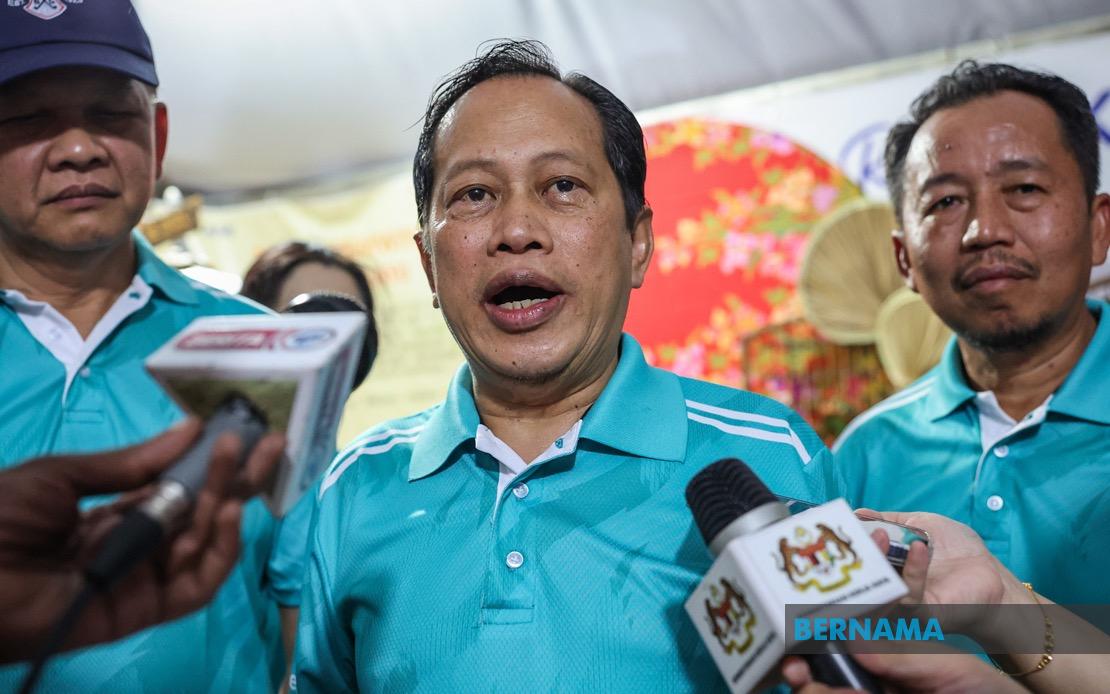
The Ministry of Works (KKR) has signalled its ambition to secure the largest development budget among all government ministries for the 2027 fiscal year, aiming to accelerate infrastructure projects and maintenance work nationwide. Deputy Works Minister Datuk Seri Dr Ahmad Maslan made the appeal in Batu Kawan on August 8, emphasising the ministry's case as it enters final preparations for the upcoming budget submission to the Finance Ministry.
The KKR is currently consolidating funding requests from its subsidiary agencies ahead of a scheduled meeting with Finance Minister II on August 28. Agencies such as the Malaysian Highway Authority (LLM), Construction Industry Development Board Malaysia (CIDB) and Public Works Department (JKR) have been tasked with preparing their budgetary submissions and project priorities. This coordinated approach reflects the ministry's determination to present a compelling case for increased allocation, with instructions to divisions and agencies issued to gather their input last week.
Ahmad disclosed that the ministry received approximately RM10 billion in the previous budget cycle, with RM9 billion designated for development spending. The emphasis on seeking higher allocation underscores growing infrastructure demands across Malaysia, where maintaining and upgrading the nation's extensive highway network and public infrastructure systems require sustained investment. The minister's public call for increased funding signals that KKR views the current budget level as insufficient to meet the country's infrastructure modernisation and maintenance requirements.
Beyond traditional construction and maintenance work, the ministry is advancing a digital transformation agenda aimed at modernising Malaysia's highway systems. Through the LLM, KKR is pioneering what it describes as smart highway initiatives that leverage artificial intelligence, closed-circuit television networks, intelligent lane management systems and mobile navigation technology. This technological shift represents a strategic pivot toward data-driven infrastructure management and improved motorist safety across the country's expanding road network.
A key component of this digital strategy is TuJu, Malaysia's homegrown navigation application developed by the LLM. Positioned as the nation's third major navigation platform alongside Waze and Google Maps, TuJu offers highway-specific functionality tailored to Malaysian drivers' needs. The application aggregates real-time CCTV feeds from the LLM Traffic Control Centre, which monitors hundreds of cameras across all 34 national highways, toll rate information, rest and recreation facilities, emergency service availability and current traffic conditions. By linking to companion applications including the KKR and MYJalan platforms, TuJu enables motorists to report road hazards and lodge complaints about infrastructure conditions, creating a feedback loop that enhances traffic management and road safety.
The scale of Malaysia's highway infrastructure underscores the ministry's resource requirements. The country operates 34 highways managed by 28 concessionaires spanning more than 2,000 kilometres, with PLUS Malaysia Berhad controlling more than 1,000 kilometres of this network. Maintaining, upgrading and intelligently managing this sprawling infrastructure demands considerable capital and operational investment, explaining the KKR's push for enhanced budget allocation.
The ministry is also pursuing innovations in toll collection technology through Multi Lane Free Flow (MLFF) systems that enable vehicles to pass through toll points without stopping. Currently in proof-of-concept phase, MLFF implementation will proceed through business-to-business arrangements between highway concessionaires rather than relying on government funding. This public-private approach allows individual operators to choose whether to use their own subsidiaries or engage external service providers. PLUS Malaysia has already begun testing MLFF functionality through its JustGo payment system, demonstrating the commercial viability of the technology among major highway operators.
Ahmad's comments were made during the Cultural Night Run 2026 event at the Sultan Abdul Halim Mu'adzam Shah Bridge in Penang, which drew 5,000 participants including 114 international visitors from 18 countries. The event exemplified the ministry's broader engagement with the public and regional stakeholders in promoting infrastructure awareness and investment priorities. Such platforms allow ministry officials to articulate their policy objectives while demonstrating commitment to community wellbeing and regional development.
The CNR 2026 event itself reflected extensive interagency coordination, organised through partnership between the Works Ministry, the Entrepreneur Development and Cooperatives Ministry (KUSKOP), Youth and Sports Ministry (KBS), Penang state government, Malaysia Co-operative Societies Commission (SKM), aviation association ANGKASA, Penang Amateur Athletics Association (PAAA), Seberang Perai City Council (MBSP), and the bridge operator Jambatan Kedua Sdn Bhd (JKSB), alongside numerous corporate and government partners. This institutional collaboration mirrors the ministry's broader operational approach.
For Malaysian motorists and the logistics sector, the outcome of the budget negotiations carries tangible implications. Enhanced infrastructure spending could accelerate highway maintenance cycles, expand smart technology deployment and improve traffic flow management on critical commercial routes. However, the success of KKR's budget bid will depend on how compellingly it makes its case against competing ministry priorities in a fiscally constrained environment. The ministry's dual emphasis on traditional infrastructure delivery and digital innovation suggests a modernisation strategy responsive to both immediate maintenance needs and longer-term technological requirements shaping the future of Malaysian transportation networks.

