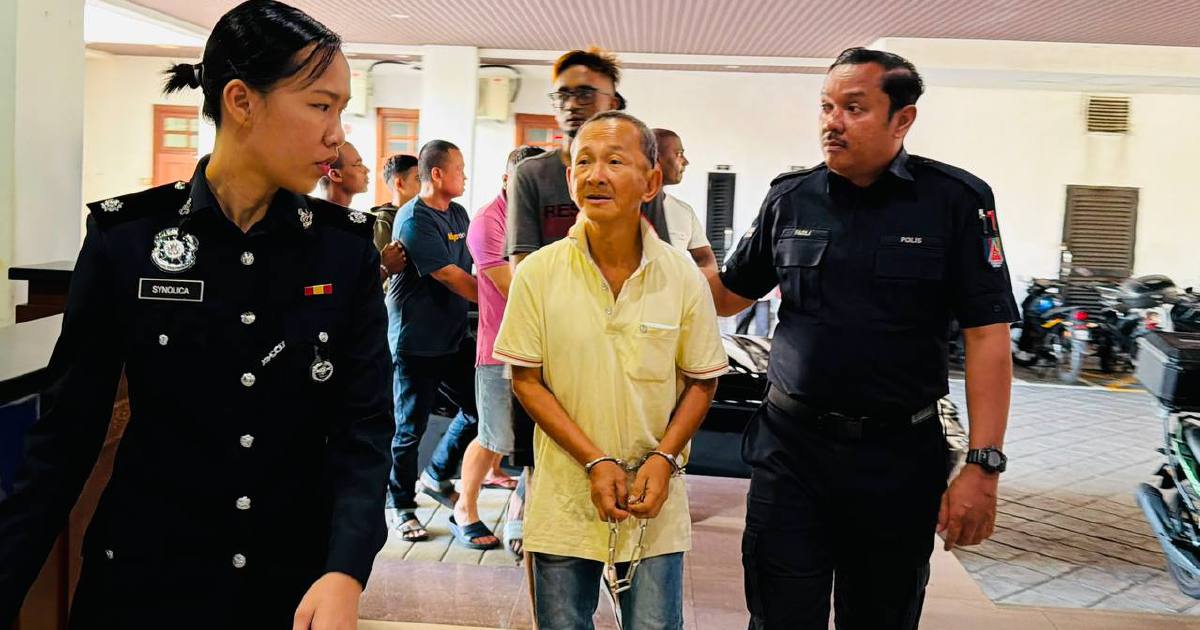
A 62-year-old wireman has claimed trial after being accused of wounding his older brother with a parang in an incident that occurred in Paya Terubong, Penang. The man appeared before a magistrate in George Town, where the charge was formally presented against him relating to the assault that took place during the previous week.
The charge carries serious implications under Malaysian criminal law, as weapon-related assault cases involving family members often signal underlying domestic tensions or disputes that have escalated into violence. The use of a parang, a large agricultural tool commonly found in Malaysian households, underscores the potentially severe nature of the alleged injury inflicted on the victim.
Family violence incidents involving bladed weapons continue to present significant challenges for law enforcement and social services across Malaysia. These cases frequently reveal patterns of accumulated grievances, unresolved conflicts, or festering disputes within households that boil over into physical confrontations. The fact that the alleged perpetrator and victim are brothers suggests this may stem from property disputes, financial disagreements, or longstanding personal animosity rather than spontaneous violence.
In Penang, where the incident occurred, authorities have been working to address rising concerns about domestic violence and family-related assault cases. The state's magistrate courts handle numerous such matters annually, reflecting broader societal challenges in conflict resolution within Malaysian families. Cases involving weapons elevate the severity classification and typically result in more stringent legal proceedings.
The defendant's occupation as a wireman, a skilled tradesperson typically engaged in electrical installation work, suggests he is a working professional rather than someone with a criminal history, though such details remain unconfirmed pending court disclosure. His decision to claim trial rather than accept a guilty plea indicates he contests the charges, meaning the burden of proof will rest entirely with prosecutors to establish his culpability beyond reasonable doubt.
The Paya Terubong area of George Town, like many residential neighbourhoods in Penang's urban core, has experienced various criminal incidents over recent years. The precise circumstances surrounding this brother-to-brother confrontation remain unclear from available information, including what triggered the alleged assault, whether witnesses were present, and the extent of injuries sustained by the alleged victim.
Courts in Malaysia have historically taken a serious view of weapon-related assaults, particularly those involving family members, recognising the vulnerability of victims in domestic settings and the psychological trauma accompanying such incidents. Sentencing guidelines typically reflect the nature of the weapon used and the severity of injuries inflicted, with parang attacks potentially resulting in substantial prison sentences if conviction occurs.
Family support organisations and counselling services across Malaysia have emphasised the importance of early intervention in cases of household conflict escalation. Many assaults that turn violent could potentially be prevented through mediation, counselling, or family therapy services addressing underlying disputes before they manifest as physical violence. The presence of weapons in Malaysian homes raises additional risks that require careful management and awareness.
The case highlights ongoing challenges within Malaysia's criminal justice system in handling inter-family violence matters sensitively while maintaining due process. Courts must balance the need for victim protection with fair trial procedures for the accused, particularly in cases where family reconciliation might be possible alongside legal accountability.
As the case progresses through the magistrate's court, additional details regarding evidence, witness statements, and the precise nature of injuries will likely emerge during trial proceedings. The outcome will depend on the evidence presented, witness testimony, and the defendant's defence arguments concerning the alleged incident in Paya Terubong.

