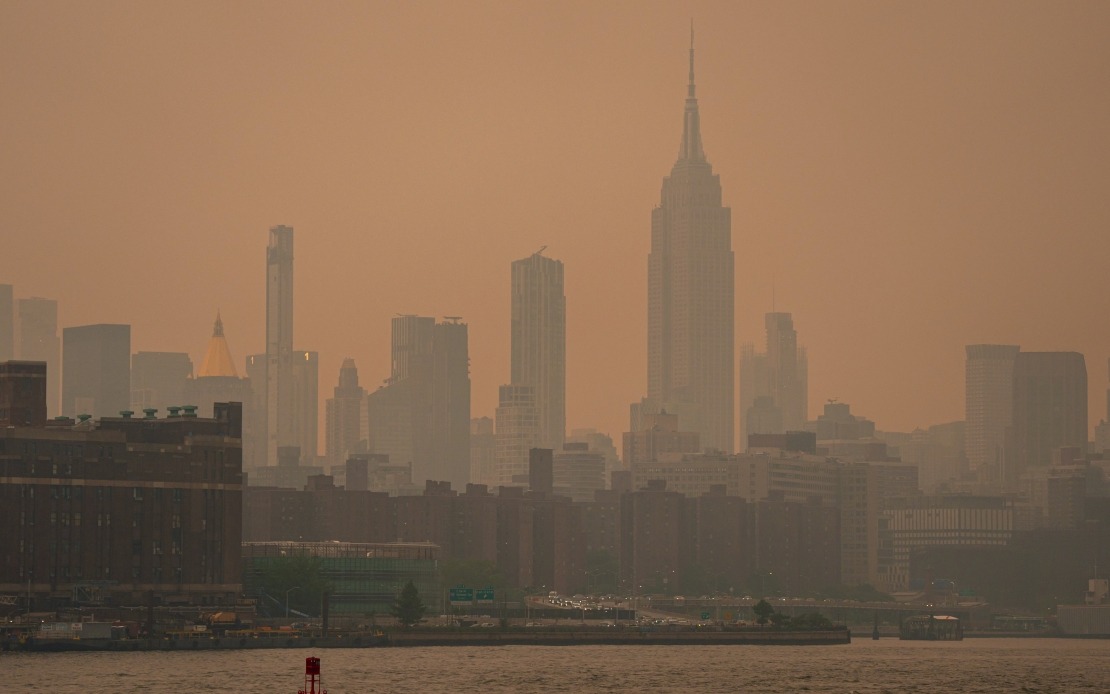
Mexican President Claudia Sheinbaum encountered unexpected travel complications on her way to attend the Argentina-Spain World Cup final in New Jersey, as deteriorating air conditions stemming from Canadian wildfires rendered conventional commercial travel untenable. The severe atmospheric pollution that has blanketed parts of North America in recent weeks forced authorities to scrap her initial journey, compelling her administration to scramble for alternative arrangements to ensure her timely arrival at the match.
Sheinbaum's scheduled flight departing from Cancún to New York on Saturday faced an initial two-hour postponement as meteorological conditions worsened. The mounting smoke concentration in the New York area, a direct consequence of ongoing wildfires ravaging parts of Canada, ultimately rendered the journey impractical. Rather than attempt the journey, Mexican authorities took the decision to abandon the original itinerary entirely, recognising that conditions made the route unfeasible.
Rather than miss the fixture entirely, Mexico's government arranged alternative transportation for the president. Sheinbaum departed late Sunday aboard an aircraft operated by Mexico's Defence Ministry, enabling her to reach the venue in East Rutherford, New Jersey, despite the atmospheric challenges that had initially thwarted her plans. This improvised solution, whilst unconventional, ensured her presence at what stands as a significant diplomatic occasion.
The World Cup final itself represents far more than a sporting contest in this context. The match brings together three host nations—Argentina, Spain, and Canada, with the latter co-hosting the tournament alongside the United States and Mexico. The attendance of leaders from these three countries underscores the geopolitical dimensions of the tournament, transforming what might otherwise be a sporting event into a diplomatic gathering of continental significance.
Sheinbaum received her invitation to the final directly from US President Donald Trump, a notable gesture given the complex state of Mexico-US relations. The relationship between the two neighbouring nations remains fraught with tensions centred on trade negotiations and cross-border security challenges. This diplomatic overture, extending to the Mexican president an invitation to witness the final from the American side of the continent, carries undertones of rapprochement amid broader strategic uncertainties.
The personal history between Sheinbaum and Trump remains limited. Their single previous meeting occurred in Washington the previous December, when the two leaders convened for the World Cup draw. That encounter provided only a brief window for dialogue, and little substantive engagement has transpired since. The invitation to the final thus represents a rare opportunity for the two leaders to interact, albeit in an informal sporting context rather than through formal diplomatic channels.
Canadian Prime Minister Mark Carney's participation alongside Sheinbaum reflects Canada's status as a co-host nation. The wildfires that disrupted Sheinbaum's travel originate within Canadian territory, creating an ironic situation wherein one host nation's environmental crisis inadvertently complicated another's logistical arrangements. This convergence of circumstances—environmental disruption across borders affecting the attendance of those representing those same nations—exemplifies the interconnected challenges facing North American governments.
The broader context of North American relations provides essential perspective for understanding the significance of this gathering. Mexico and the United States maintain intricate economic ties whilst simultaneously grappling with migration pressures and drug trafficking concerns that strain diplomatic relations. Canada, meanwhile, occupies a distinct position, maintaining generally closer ties with the US whilst managing its own distinct relationship with Mexico. The World Cup final thus becomes a venue where these three leaders may engage, however informally, amid an atmosphere focused nominally on sporting achievement.
From a Southeast Asian vantage point, this situation underscores how global sporting events transcend their athletic dimensions, functioning instead as platforms for diplomatic engagement and relationship-building among participating nations. The manner in which governments mobilise resources—including military aircraft—to ensure their leaders' attendance at such events demonstrates the symbolic importance assigned to these gatherings. It also reveals how environmental challenges, even those originating in distant regions, cascade across borders to affect international travel and diplomatic arrangements.

