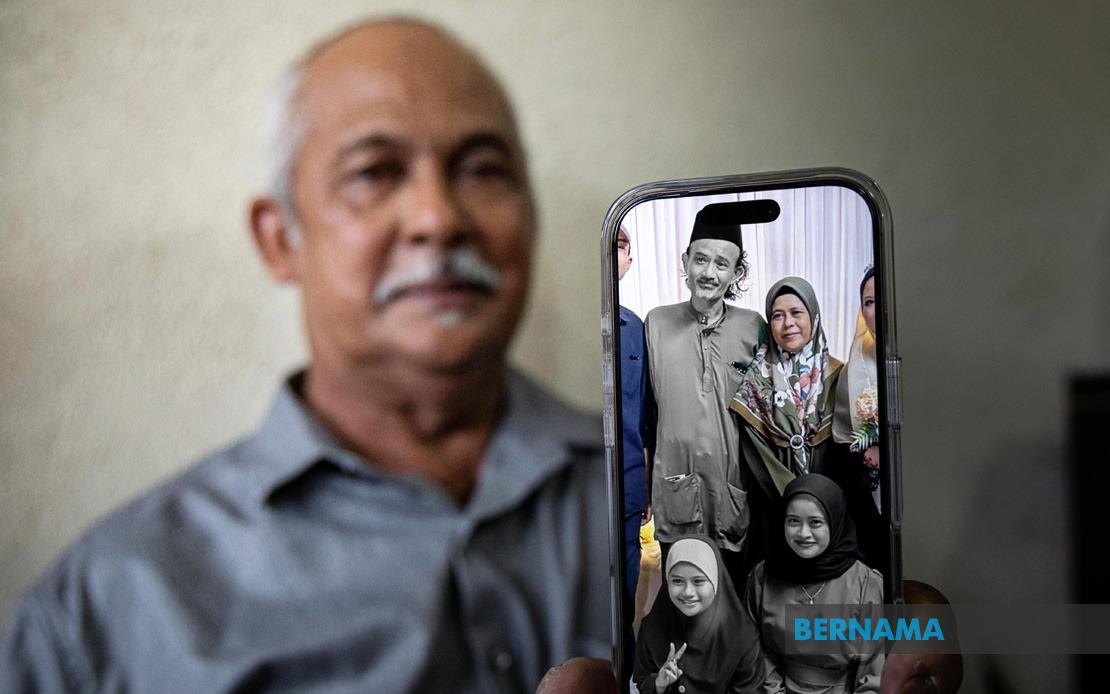
Norhayati Razali, 55, is gradually recovering from severe injuries sustained in a collision involving a Malaysian Immigration Department truck on Jalan Sultan Ismail in Kuala Lumpur on August 19, but her journey toward healing remains fraught with psychological and physical challenges. Having been transferred from the Intensive Care Unit to a regular ward at Kuala Lumpur Hospital, she has begun to regain basic bodily functions—able to consume food and liquids independently without feeding tubes. Yet this physical progress masks a deeper trauma: the loss of her husband and two children in the same accident, and a troubling inability to reliably retain information about what happened to them.
The cognitive impact of her injuries has become a central concern for her family. According to her brother, Mohd Nadzri Razali, 69, Norhayati sustained head injuries in addition to trauma across multiple body regions including her hands, waist, knees, and legs. These head injuries appear to have triggered memory disturbances that transcend ordinary post-accident confusion. Family members took the difficult step of bringing her to view the bodies of her deceased loved ones and explaining what had transpired, to which she responded only with silent nods. However, the following day brought troubling evidence that these explanations may not have consolidated in her memory: she inquired where her husband and children were, suggesting either no retention of the explanation or an inability to process the permanence of her loss.
This pattern of memory dysfunction presents a profound emotional and practical dilemma for the Razali family. The uncertainty about whether Norhayati consciously remembers events immediately after being told them, or whether she must confront the tragedy repeatedly as new information, raises difficult questions about her psychological wellbeing and the best way to support her recovery. Medical staff at Kuala Lumpur Hospital have not yet determined the full extent of her cognitive recovery or whether her memory problems will prove temporary or lasting. Mohd Nadzri indicated that doctors have also not yet cleared her for transfer to a facility closer to her family in Perak, which would substantially ease the logistical burden on relatives attempting to provide support.
The family faces considerable practical obstacles in maintaining a presence during her hospitalization and recovery. Mohd Nadzri, himself based in Ipoh, lacks reliable transportation to Kuala Lumpur and expressed concern about navigating the capital's road network, revealing a wider challenge that many families from smaller towns encounter when dealing with medical emergencies in the federal capital. He had arranged to visit his sister over the weekend through assistance from others, underscoring how medical crises in major urban centres can strain the resources and mobility of provincial families. This geographical divide compounds the emotional weight of the family's grief and their ability to provide continuity of care.
The accident itself occurred under circumstances that have drawn scrutiny from the family and, implicitly, from transportation safety advocates. The Malaysian Immigration Department's Black Maria truck was en route to Chow Kit to conduct an operation targeting undocumented migrants when it allegedly proceeded through a red traffic light at the intersection on Jalan Sultan Ismail. The vehicle, equipped with an active beacon and siren, collided with a Proton Saga driven through a green light, triggering a chain reaction that left the truck unable to control its trajectory. The vehicle then veered into pedestrians and struck an Inokom Matrix, leaving three family members dead and Norhayati critically injured.
The mechanics of the collision raise important questions about emergency protocol compliance and public safety in Kuala Lumpur's traffic environment. While the truck was operating with lights and siren activated, suggesting an attempt to signal its passage through the intersection, the apparent disregard for the signal phase created a deadly conflict with legally proceeding traffic. This tension between emergency operations and traffic safety has long been a concern in Malaysian road safety discourse, particularly in densely trafficked urban areas where intersection collisions carry amplified consequences due to pedestrian concentration and vehicle density.
Mohd Nadzri has called explicitly for a thorough and transparent investigation, expressing hope that traffic camera footage from the intersection will be reviewed to establish the precise sequence of events and responsibility. His appeal touches upon a broader Malaysian concern regarding accident investigations and accountability—the family's faith in procedural transparency appears cautious, reflected in his conditional phrasing that truth be determined through evidence rather than assumption. This reflects skepticism that sometimes characterizes public perception of official investigations, though Mohd Nadzri's framing also suggests a willingness to accept outcomes supported by clear documentation.
From a regional perspective, this accident exemplifies persistent challenges in urban traffic management across Southeast Asia. Kuala Lumpur, like Bangkok, Jakarta, and other major metropolitan areas in the region, continues to grapple with the intersection of emergency services operations and civilian road safety. The incident raises questions about driver training for emergency vehicle operators, intersection design, and the protocols governing right-of-way in complex traffic scenarios. Many Southeast Asian cities are gradually implementing stricter regulations around emergency vehicle operations following high-profile accidents.
The family's ordeal also illuminates the often-invisible aftermath of fatal accidents, beyond initial casualty figures and investigative procedures. Norhayati's cognitive struggles represent a form of secondary trauma—not only has she lost immediate family members, but her capacity to process and cope with that loss is compromised by the very injuries that allowed her to survive. The psychological dimensions of recovery in cases involving family fatalities have received increased attention in trauma medicine, yet support systems for such patients in Malaysian hospitals may vary significantly by institution.
Looking forward, several questions remain unresolved regarding Norhayati's long-term trajectory. Medical professionals will need to assess whether her memory disturbances will resolve as brain swelling reduces and neural pathways stabilize, or whether she will retain permanent cognitive deficits. The feasibility of transferring her to a Perak-based hospital could substantially alter the family's ability to provide continuous support during what promises to be an extended and multifaceted recovery process. Additionally, her psychological adaptation to the permanent loss of her husband and children—complicated by her current inability to reliably retain information about their deaths—will likely require specialist mental health support extending well beyond her hospitalization.
The tragedy also serves as a reminder of the fragility of daily life in bustling urban centres and the cascading consequences of traffic incidents that extend far beyond statistical casualty counts. While Norhayati's immediate survival demonstrates medical advances in trauma care, her struggle with memory and meaning-making underscores the comprehensive human cost of accidents that claim multiple family members. As the investigation proceeds and Norhayati continues her physical and cognitive recovery, her family's pursuit of transparent accountability reflects the broader Malaysian expectation for institutional responsibility in public safety matters, an expectation that will likely influence how such incidents are examined and prevented in the future.

