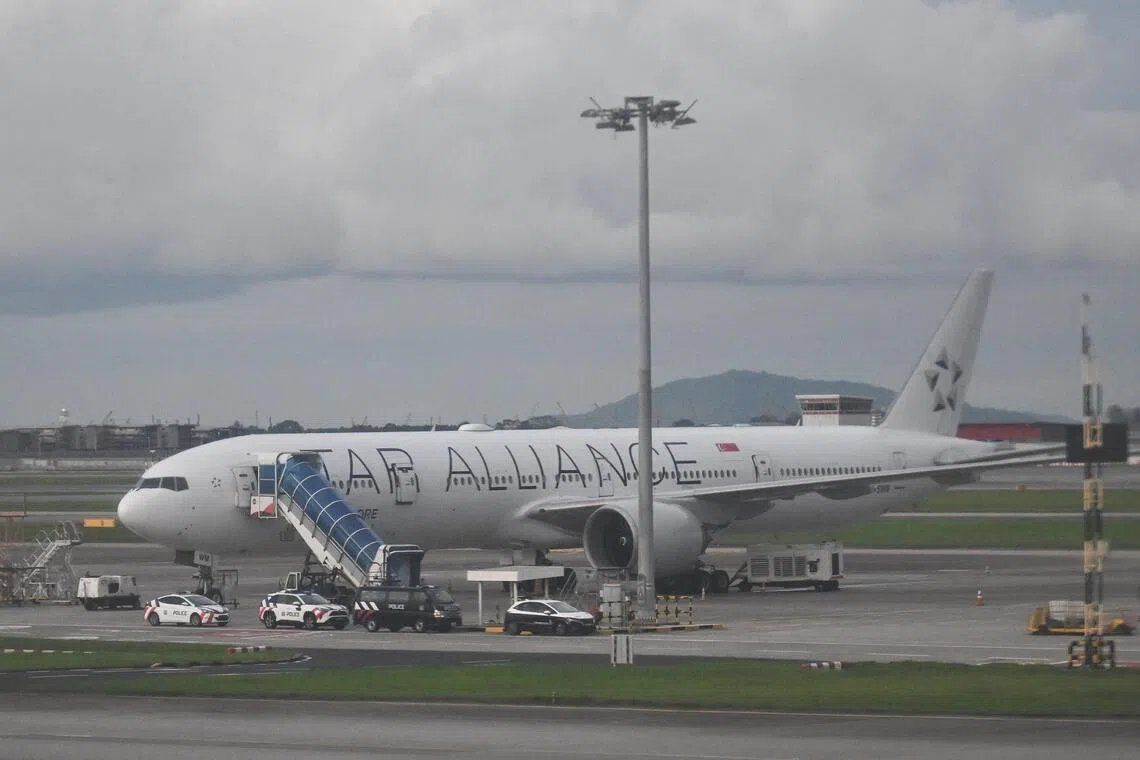
Linda Kitchen, a 74-year-old widow, has begun legal proceedings at Britain's High Court against Singapore Airlines following a devastating incident aboard Flight SQ321 in May 2024 that claimed her husband's life and left her with severe spinal injuries requiring ongoing specialist care. The case represents one of the most significant personal injury claims to emerge from the incident, which has already prompted multiple passengers to pursue legal action against the airline over the past two years.
The tragic event unfolded on May 21, 2024, when Flight SQ321, travelling from London to Singapore, encountered sudden and severe turbulence while flying over Myanmar. In what eyewitnesses described as a horrifying moment during a routine breakfast service, the aircraft plunged approximately 54 metres in just five seconds, sending passengers and crew hurtling through the cabin. The sudden loss of altitude and violent movements caught everyone aboard unprepared, including Geoffrey Kitchen, Linda's husband of 52 years and a theatre director by profession. The couple had been enjoying what was meant to be a leisurely six-week holiday exploring Singapore, Indonesia, and Australia when the tragedy struck.
During the catastrophic turbulence, Geoffrey fell directly onto Linda, crushing her body against the armrest of her seat with considerable force. The impact caused severe damage to her spine, injuries that would require extensive medical intervention and long-term care. Other passengers helped to free Geoffrey from on top of his wife, and a physician travelling aboard the aircraft immediately began cardiopulmonary resuscitation. Despite these emergency efforts, Geoffrey could not be saved. The aircraft, carrying 211 passengers and 18 crew members, was urgently diverted to Suvarnabhumi Airport in Bangkok, Thailand, where emergency services awaited. Across the entire flight, 79 people sustained injuries of varying severity.
Linда was transported to hospital in Bangkok where she remained for ten days before being airlifted back to the United Kingdom. She spent an additional week hospitalised in Bristol upon her return and subsequently required substantial in-home assistance during her recovery. She learned of her husband's death two days after the incident, a delayed notification that compounded her trauma. In comments to British media outlets, she described the emotional devastation of losing her life partner of more than five decades in such sudden and violent circumstances, noting that the shock of his death overshadowed even her own excruciating physical suffering.
Anthe Korelidou, the aviation law specialist representing Kitchen's case, emphasised that more than two years after Geoffrey's death, the family continues to harbour significant questions and concerns regarding the sequence of events. The legal team has suggested that an examination of preventative measures may reveal whether the tragedy could have been avoided or mitigated. By initiating High Court proceedings, Kitchen's legal representatives argue they are pursuing the thorough investigation and accountability that the family deserves, while also securing financial resources to address her substantial ongoing medical and care requirements.
The High Court papers reveal that Kitchen's family has lodged two distinct claims: one representing Linda's personal injuries and losses, and another on her behalf as executor of Geoffrey's estate. The legal action forms part of a broader pattern of litigation against Singapore Airlines, with at least six other identifiable passengers—Bradley Richards, Jack Jenkins, Hannah Fullerton, Andrew Dawood, Bryan Matthews, and Pauline and Michael Rainey—also pursuing legal claims against the carrier. This coordinated legal response reflects the scale of harm experienced aboard the flight and suggests growing dissatisfaction with the airline's initial compensation offers among affected passengers.
Singapore Airlines responded to inquiry by declining to comment on ongoing court matters, a standard position for any defendant in active litigation. However, the airline has previously outlined its approach to addressing passenger claims. In 2024, SIA announced a compensation scheme offering US$10,000 to passengers who sustained minor injuries and an advance payment of US$25,000 for those requiring long-term medical care. Beyond monetary compensation, the carrier committed to refunding all airfares for passengers on the flight. The airline also issued a formal apology, stating that the safety and well-being of passengers and crew remain paramount priorities, though critics argue such assurances ring hollow given the incident's severity.
Singapore's Transport Safety Investigation Bureau (TSIB), operating under the Ministry of Transport, conducted an official investigation into the incident and identified weather as the probable cause. The investigation concluded that storm clouds responsible for the severe turbulence escaped detection by the aircraft's onboard weather radar system, catching the captain by surprise and preventing any opportunity for preventative action. However, the TSIB's findings also highlighted a critical ambiguity: the investigation could not definitively establish whether technical faults within the radar system itself contributed to the failure to detect the storm formation. This inconclusive technical assessment has fuelled further questions about whether systemic improvements to aircraft equipment or maintenance protocols might have prevented the disaster.
For Malaysian and Southeast Asian readers, the Flight SQ321 incident and its aftermath highlight several pressing considerations for regional air travel. Singapore Airlines operates extensively throughout the region, and the airline's handling of this crisis—from the initial incident response to the subsequent compensation process—will likely influence regional perceptions of safety protocols and passenger protection standards. The case also underscores the importance of comprehensive travel insurance for regional and international flights, particularly for older travellers undertaking extended journeys. Furthermore, the ongoing litigation demonstrates how serious aviation incidents can generate complex legal proceedings spanning multiple jurisdictions, potentially affecting how airlines and manufacturers address safety concerns across Southeast Asian operations.
The incident also raises broader questions about weather radar technology and its limitations in detecting rapidly developing atmospheric phenomena. As climate patterns continue to evolve, the aviation industry faces mounting pressure to enhance its ability to predict and respond to severe turbulence. For passengers throughout Southeast Asia and beyond, the tragedy represents a sobering reminder of the inherent risks of air travel, however statistically rare such catastrophic incidents may be. Linda Kitchen's legal action, supported by other affected passengers' claims, may ultimately contribute to industry-wide improvements in safety protocols, radar technology, and pilot training that could benefit millions of future travellers in the region.

